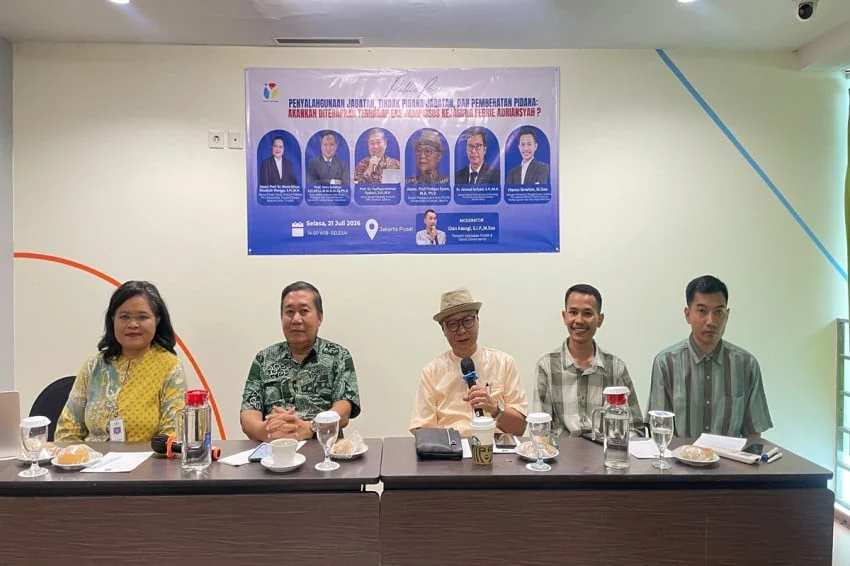
JAKARTA – The spotlight has intensified on former Deputy Attorney General for Special Crimes (Jampidsus), Febrie Adriansyah, following serious allegations regarding his suspected involvement in concealing an extraordinary cache of assets at his residence. These accusations have prompted sharp scrutiny from legal experts, notably Maria Silvya E Wangga, a distinguished Professor of Criminal Law at Universitas Trisakti. Professor Wangga, speaking at a recent public review titled "Abuse of Power, Official Misconduct, and Aggravated Punishment: Will It Be Applied to Febrie Adriansyah?", voiced profound concern over the willingness of a high-ranking state official to harbor assets purportedly derived from illicit criminal activities. Her questioning underscores the gravity of the situation and its potential implications for the integrity of Indonesia’s legal and anti-corruption frameworks.
The case has gained significant traction following extensive police operations that have led to the seizure of assets estimated to be worth over Rp540 billion (approximately US$34.5 million based on current exchange rates) across twelve distinct locations. Among the substantial evidence confiscated are Rp7.2 billion in cash, denominated in sixteen different foreign currencies, recovered from a money changer. Furthermore, hundreds of billions of rupiah in Singaporean Dollars (SGD) and US Dollars (USD) were unearthed from a hidden safe within the "Cafe de’Clan Signature" in Cipete, and a luxurious residence situated in Sentul, Bogor. Beyond monetary assets, authorities also seized tens of kilograms of gold bars, further amplifying the scale and complexity of the alleged illicit wealth.
Context of the Underlying Criminal Investigations
These vast sums and valuable commodities are not believed to be isolated findings. According to Professor Wangga, who also heads the Criminal Law Study Center at the Faculty of Law, Universitas Trisakti, these assets are strongly suspected of being linked to money laundering activities stemming from three colossal corruption cases that have rocked Indonesia. These cases include the scandalous management of investments by PT Asabri (Armed Forces Social Insurance Fund), allegations of corruption within the state-owned steel giant PT Krakatau Steel, and irregularities concerning the governance of coal supply for Steam Power Plants (PLTU) between 2018 and 2026. Each of these cases represents significant state losses and has been a focal point of the Attorney General’s Office (Kejagung) and other law enforcement agencies in their ongoing battle against corruption.
The PT Asabri scandal, for instance, involved allegations of massive corruption in the management of soldiers’ and police officers’ insurance funds, leading to estimated state losses running into tens of trillions of rupiah. The scheme typically involved fraudulent investments, stock manipulation, and illicit transactions designed to enrich a select few at the expense of military and police personnel. Similarly, the PT Krakatau Steel corruption allegations often center on procurement fraud, mark-ups, and mismanagement that inflated project costs and siphoned off state funds. The PLTU coal supply case, on the other hand, points to potential collusion, price manipulation, and illegal transactions in the critical energy sector, impacting national electricity supply and state revenue. The alleged connection of Febrie Adriansyah’s concealed assets to these high-profile cases raises serious questions about the potential depth and breadth of corruption networks involving state officials.
Febrie Adriansyah’s Former Role and the Significance of the Allegations
Febrie Adriansyah’s former position as Jampidsus at the Attorney General’s Office makes these allegations particularly alarming. The Jampidsus office is at the forefront of Indonesia’s fight against white-collar crime and corruption, responsible for investigating and prosecuting major financial crimes that inflict substantial losses on the state. For an individual who once held such a pivotal role in upholding justice and combating corruption to now face accusations of asset concealment linked to massive criminal proceeds creates a profound crisis of public confidence. It suggests a potential betrayal of public trust and a serious breach of ethical conduct expected from a top law enforcement official.
The Jampidsus is tasked with ensuring that those who exploit their positions for personal gain are brought to justice, and that state assets are recovered. If proven true, the allegations against Febrie Adriansyah would not only tarnish his personal reputation but also cast a shadow over the institutions he served, potentially undermining the public’s faith in the impartiality and effectiveness of anti-corruption efforts.
Chronology of Events Leading to the Current Scrutiny (Inferred)
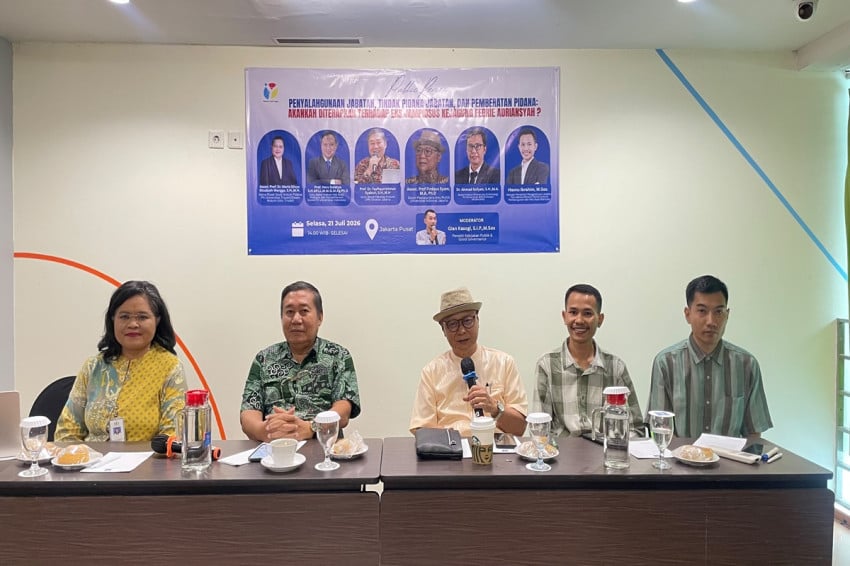
While the article highlights the public review on July 21, 2026, the events leading to this point suggest a complex investigation unfolding over an extended period.
- Early 2025 – Late 2025: Initial investigations into the PT Asabri, PT Krakatau Steel, and PLTU coal supply cases likely intensified, with law enforcement agencies meticulously tracing financial flows and identifying potential beneficiaries of illicit schemes.
- Late 2025 – Early 2026: As investigations progressed, intelligence gathering and financial forensics would have pointed towards unusual asset movements and hidden wealth. It is plausible that initial leads connected certain illicit proceeds to individuals or proxies, eventually leading to Febrie Adriansyah’s alleged involvement in harboring these assets.
- March – May 2026: Covert surveillance and further investigative steps would have been undertaken to confirm the presence of significant assets at the identified locations. This period would likely involve meticulous planning for coordinated raids.
- June 2026: Coordinated police raids and asset seizures commence across the twelve locations, leading to the discovery of the Rp540 billion in cash, foreign currencies, and gold bars. The scale of the seizures would immediately elevate the case to national prominence.
- Early July 2026: The Attorney General’s Office issues a new Surat Perintah Penyidikan (Sprindik – Investigation Order) specifically targeting Febrie Adriansyah in connection with the asset concealment. Simultaneously, the Immigration Directorate General confirms the imposition of a travel ban on Adriansyah, preventing him from leaving the country, as indicated by a related report. This action underscores the seriousness of the charges and the need to secure his presence for ongoing investigations.
- July 21, 2026: The public review is held in Jakarta, where legal experts like Maria Silvya E Wangga publicly dissect the legal implications of the allegations, particularly focusing on the application of laws concerning abuse of power, official misconduct, and aggravated punishment for state officials involved in such crimes.
Official Responses and Legal Framework
The Attorney General’s Office (Kejagung), though not directly quoted in the provided snippet, would likely emphasize its unwavering commitment to upholding the rule of law and ensuring that justice is served, irrespective of the individual’s past position. A spokesperson for Kejagung might issue a statement reaffirming the institution’s full cooperation with police investigations and its dedication to eradicating corruption from all levels of government, including within its own ranks. The issuance of a new Sprindik against Febrie Adriansyah by Kejagung itself signals an internal commitment to pursue the truth.
The National Police, responsible for the asset seizures, would likely confirm the meticulous nature of their investigation, citing robust evidence linking the seized assets to the aforementioned major corruption cases. They would stress the inter-agency cooperation involved in such high-profile investigations and their determination to trace and recover all illicitly gained wealth.
The Immigration Directorate General, having confirmed the travel ban, would reiterate its standard operating procedure for preventing individuals under active investigation from fleeing the country, a crucial measure to ensure accountability.
From a legal standpoint, the charges against Febrie Adriansyah, if proven, could fall under multiple statutes. These include Article 3 of Law No. 8 of 2010 concerning the Prevention and Eradication of Money Laundering, which criminalizes the act of knowingly concealing or disguising the origin of assets derived from criminal acts. Furthermore, depending on the direct involvement and how he acquired the assets, he could potentially face charges under Law No. 31 of 1999 juncto Law No. 20 of 2001 concerning the Eradication of Corruption Crimes, particularly provisions related to illicit enrichment or aiding and abetting corruption. The public review’s theme specifically mentions "Abuse of Power, Official Misconduct, and Aggravated Punishment," indicating that the legal community is considering the application of harsher penalties given his former high-ranking position.
Broader Impact and Implications
The allegations against Febrie Adriansyah carry profound implications for Indonesia’s ongoing fight against corruption and for public trust in state institutions.
- Erosion of Public Trust: When a former top anti-corruption prosecutor is implicated in such a scandal, it can severely erode public confidence in the justice system. It raises questions about who can be trusted and whether anti-corruption efforts are truly impartial.
- Challenges in Asset Recovery: The case highlights the persistent challenge of asset recovery in corruption cases. Corrupt officials often employ sophisticated methods to hide their illicit gains, making it difficult for law enforcement to trace and seize these assets. The discovery of hidden safes, multiple currencies, and gold bars exemplifies the complexity involved.
- Strengthening Anti-Money Laundering Measures: This case underscores the critical importance of robust anti-money laundering (AML) regulations and their rigorous enforcement. It necessitates enhanced vigilance from financial institutions, money changers, and real estate agencies to detect suspicious transactions and report them to authorities.
- Accountability for High-Ranking Officials: The willingness of authorities to investigate and potentially prosecute a former Jampidsus sends a powerful message that no one is above the law. This commitment to accountability, regardless of past status, is vital for the long-term credibility of the anti-corruption campaign.
- Judicial Reform Advocacy: Legal experts and civil society organizations may leverage this case to advocate for further judicial reforms, greater transparency within law enforcement agencies, and stricter ethical guidelines for public officials. The "public review" itself is a mechanism for such advocacy and scrutiny.
- International Cooperation: Given the involvement of multiple foreign currencies, the investigation may require international cooperation to trace cross-border financial flows and ensure comprehensive asset recovery.
The unfolding situation surrounding Febrie Adriansyah represents a critical juncture in Indonesia’s battle against corruption. It tests the resolve of its institutions, the robustness of its legal frameworks, and its commitment to transparency and accountability at the highest levels of government. The outcome of this investigation and the subsequent legal proceedings will undoubtedly shape public perception and influence future anti-corruption strategies in the nation.