
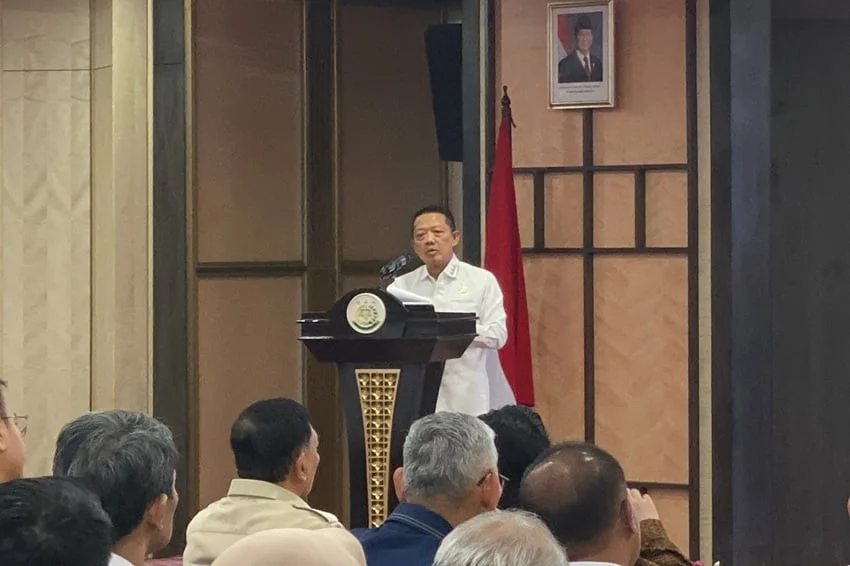
The legal instrument of money laundering (TPPU) is emerging as the most effective pathway to thoroughly investigate and dismantle the complex case involving former Deputy Attorney General for Special Crimes (Jampidsus), Febrie Adriansyah. This assessment comes from Afi Kamilia, a prominent criminologist from the Institute Andi Sapada, who emphasized the unique capabilities of TPPU charges in navigating intricate corruption allegations. Her statement, delivered on Monday, July 20, 2026, highlights a critical juncture in Indonesia’s ongoing fight against high-level corruption, particularly given the institutional shifts surrounding Adriansyah’s case.
The initial designation of Febrie Adriansyah as a suspect by the National Police’s Anti-Corruption Directorate (Kortas Tipikor Polri, as referenced in the original report) marked a significant development, signaling a new phase in law enforcement efforts targeting high-ranking officials. However, the subsequent transfer of the case’s handling to the Attorney General’s Office (AGO) has introduced a layer of institutional complexity, prompting deeper scrutiny into the inter-agency dynamics at play within Indonesia’s justice system. This shift has ignited discussions among legal experts and civil society organizations about jurisdiction, coordination, and the ultimate pursuit of justice.
The Strategic Role of Money Laundering Charges
Afi Kamilia’s assertion about the efficacy of the TPPU delict is rooted in its distinct legal characteristics under Indonesian law. "It can stand alone as a separate offense from its predicate crime," Kamilia explained. "This means investigators are not necessarily required to fully prove the underlying corruption offense before proceeding with allegations of money laundering." This legal autonomy is a cornerstone of Law No. 8 of 2010 concerning the Prevention and Eradication of Money Laundering, which grants investigators significant latitude in pursuing financial trails regardless of the immediate status of the predicate crime investigation.
The predicate crime in question, in cases involving public officials like Adriansyah, typically involves corruption, bribery, or other forms of illicit enrichment. Proving these predicate crimes can often be arduous, involving extensive forensic accounting, witness testimonies, and navigating complex bureaucratic layers. Money laundering charges, conversely, focus on the illicit origin, transfer, concealment, or disguise of assets derived from criminal activities. By tracing the flow of illicit funds, investigators can bypass some of the direct evidentiary hurdles associated with proving the initial corruption act, instead concentrating on the financial movements themselves. This approach not only streamlines the investigative process but also significantly enhances the potential for asset recovery, a crucial component of anti-corruption efforts aimed at restoring state losses.
Unpacking the Case of Febrie Adriansyah
Febrie Adriansyah, as the former Jampidsus, held one of the most powerful and sensitive positions within the Attorney General’s Office. The Jampidsus is responsible for investigating and prosecuting high-profile corruption cases that often involve significant state losses and powerful political or economic figures. Adriansyah’s tenure would have seen him at the forefront of numerous major corruption probes, making his own investigation particularly significant and potentially fraught with challenges. The specific allegations against Adriansyah have not been fully detailed in public reports, but given his former role, they are widely presumed to involve some form of corruption, abuse of power, or illicit enrichment related to his official duties.
The process that led to Adriansyah being named a suspect by the National Police’s Anti-Corruption Directorate (an entity often referred to as a special unit or task force within the broader National Police, focused on high-level corruption) would have involved an initial phase of intelligence gathering, preliminary investigations, and the collection of sufficient evidence to establish reasonable suspicion. This step itself is a testament to the willingness of law enforcement to pursue allegations against even the highest echelons of power. The naming of a suspect is a formal legal step that signifies the commencement of a formal investigation, allowing for coercive measures such as interrogations, searches, and seizures. For an official of Adriansyah’s stature, such a designation carries immense public and institutional weight.
Institutional Dynamics: Police to Attorney General’s Office
The subsequent transfer of Adriansyah’s case from the National Police to the Attorney General’s Office is a critical element that has drawn considerable attention and analysis. While specific reasons for such transfers can vary, they often involve jurisdictional considerations, internal agreements between law enforcement agencies, or strategic decisions aimed at consolidating related investigations. In Indonesia’s legal framework, both the National Police and the Attorney General’s Office possess investigative powers for corruption cases, with the AGO also holding prosecutorial authority. The potential for overlap or even friction between these powerful institutions is a perennial concern.
Legal experts have noted that such institutional shifts, while sometimes procedurally sound, can raise questions about consistency, transparency, and the potential for perceived interference. The public’s trust in the integrity of the investigation can be sensitive to these dynamics. For instance, renowned legal scholar Yusril Ihza Mahendra, in an earlier statement, suggested that the Corruption Eradication Commission (KPK) could also potentially take over the case, highlighting the multi-layered institutional landscape for anti-corruption efforts in Indonesia. The involvement of multiple agencies, each with distinct mandates and capabilities, underscores the complexity of high-profile corruption cases and the ongoing challenge of inter-agency coordination. Ensuring that the transfer of the case does not impede the investigative momentum or compromise its impartiality is paramount for maintaining public confidence.
The Power of TPPU: A Broader Investigative Lens
The strategic application of the TPPU delict provides investigators with a potent tool for several reasons. Firstly, its focus on asset tracing and recovery directly addresses the core objective of anti-corruption efforts: not just to punish offenders but also to retrieve illicitly gained wealth. Corruption often results in significant financial losses for the state, and TPPU charges allow authorities to freeze, seize, and ultimately confiscate assets that are proven to be the proceeds of crime, regardless of whether the predicate crime itself has been fully adjudicated. This is particularly relevant in cases where assets might have been moved offshore, hidden through complex corporate structures, or laundered through various financial instruments.
Secondly, TPPU charges can circumvent the often-difficult task of proving the predicate crime beyond a reasonable doubt, especially when direct evidence of bribery or embezzlement is scarce. By focusing on the unexplained wealth or the unusual financial transactions of a suspect, investigators can build a case based on circumstantial evidence related to asset accumulation. If a public official’s declared income cannot reasonably account for their wealth, and there are suspicious financial activities, TPPU can be invoked. This shifts the burden in a practical sense, requiring the suspect to explain the legitimate source of their assets. This approach has proven effective in numerous high-profile cases globally, where the illicit gains were easier to trace than the original corrupt act.
Finally, the deterrent effect of TPPU cannot be overstated. The knowledge that illicit gains can be relentlessly pursued and confiscated, even if the direct corruption act is hard to prove, serves as a powerful disincentive for potential offenders. It reinforces the message that crime does not pay, and that ill-gotten wealth will not be allowed to remain with its perpetrators.
Expert Perspectives and Legal Commentary
Beyond Afi Kamilia’s insights, the broader legal community in Indonesia has long recognized the critical role of TPPU in tackling sophisticated financial crimes. Legal experts frequently point to the robustness of Law No. 8/2010, which provides a comprehensive framework for identifying, tracing, freezing, and confiscating assets derived from a wide range of predicate offenses, including corruption. The law also mandates reporting obligations for financial institutions and other professions, creating a network of vigilance against money laundering activities.
However, challenges remain. These include the capacity of law enforcement agencies to conduct complex financial investigations, the need for enhanced inter-agency data sharing, and ensuring consistent interpretation and application of the law across different jurisdictions. Critics sometimes argue that while TPPU is powerful, its effectiveness hinges on the political will and technical expertise of the investigators. In a high-profile case involving a former Jampidsus, these factors become even more pronounced, as the investigation will undoubtedly face intense scrutiny and potential pressures.
Broader Implications for Anti-Corruption Efforts in Indonesia
The investigation into Febrie Adriansyah, particularly with the strategic emphasis on money laundering charges, carries profound implications for Indonesia’s ongoing anti-corruption campaign. Firstly, it signals a renewed commitment to holding even the most powerful individuals accountable, irrespective of their former positions. This is crucial for restoring public trust in governmental institutions and demonstrating that no one is above the law. When high-ranking officials are implicated, it often erodes public confidence and fuels cynicism about the justice system. A transparent, thorough, and effective investigation can counteract these negative perceptions.
Secondly, the case underscores the evolving sophistication of anti-corruption strategies in Indonesia. The move to prioritize TPPU highlights a shift towards a more financially-focused investigative approach, recognizing that corruption is fundamentally about illicit financial gain. This approach is more likely to recover state assets and dismantle the financial networks that enable corruption. It also encourages a broader, more holistic view of corruption, extending beyond the initial act to encompass the subsequent concealment and enjoyment of ill-gotten wealth.
Finally, the institutional dynamics observed in this case — the initial police investigation, the transfer to the AGO, and the potential for other agencies like the KPK to be involved — serve as a crucial test of inter-agency cooperation and the overall coherence of Indonesia’s anti-corruption architecture. Effective collaboration, clear jurisdictional boundaries, and a shared commitment to justice are essential to avoid duplication of efforts, potential conflicts, or, worse, the perception of institutional maneuvering that could undermine the credibility of the entire process.
In conclusion, the strategic deployment of the money laundering delict in the investigation of former Jampidsus Febrie Adriansyah represents a critical and potentially decisive phase in this high-profile case. As highlighted by criminologist Afi Kamilia, its unique legal standing offers a powerful avenue to trace and recover illicit assets, potentially circumventing some of the inherent complexities in proving predicate corruption crimes. The institutional shifts surrounding the case underscore the intricate landscape of anti-corruption enforcement in Indonesia, emphasizing the need for unwavering commitment to transparency, impartiality, and inter-agency synergy to ensure that justice is not only served but also seen to be served, thereby strengthening the nation’s resolve against corruption at all levels.


