
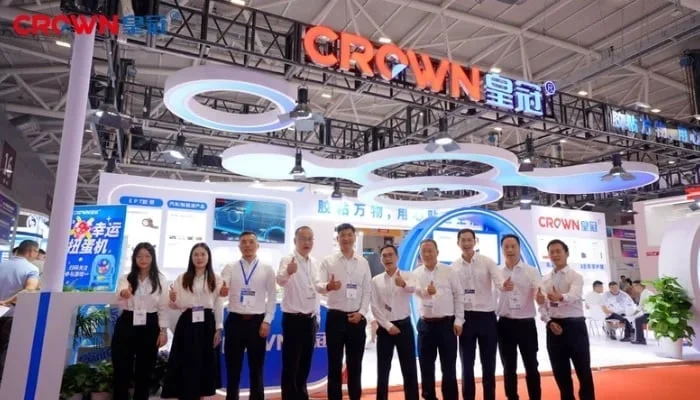
The landscape of China’s billionaire class has seen a remarkable addition with the ascent of Michael Mai, a former elementary school teacher whose transition from the classroom to the boardroom has culminated in his status as a newly minted billionaire. This financial milestone follows the highly successful initial public offering (IPO) of his company, Crown New Materials Technology, which recently debuted on the Shenzhen Stock Exchange. The surge in the company’s valuation, driven by its critical role in the global supply chains of technology giants such as Apple and Tesla, has cemented Mai’s position as one of the most successful entrepreneurs in the specialized materials sector.
The Meteoric Rise of Crown New Materials Technology
The trajectory of Crown New Materials Technology, headquartered in Zhongshan, a city in southern China’s Guangdong province, is a study in industrial precision. Founded by Mai in the year 2000, the company initially focused on the production of industrial-grade adhesive tapes and protective films. Over the past two decades, the firm evolved from a local manufacturing outfit into a sophisticated provider of advanced materials essential for modern consumer electronics and automotive engineering.
On the day of its market debut, Crown New Materials Technology witnessed an extraordinary performance. The share price surged by an unprecedented 787%, climbing from its initial offering price of 16.98 yuan (approximately USD 2.55) to a peak of 150.58 yuan (USD 22.57) per share during intraday trading. This staggering increase, recorded on the Shenzhen Stock Exchange—China’s second-largest bourse—catapulted the market capitalization of the firm into a new echelon. For Michael Mai, who serves as the chairman and chief executive officer, this surge translated into a net worth estimated at USD 2.5 billion, according to data corroborated by Forbes.
Chronology of an Entrepreneurial Journey
The story of Michael Mai is not one of overnight success but rather one of methodical growth. Before establishing his corporate empire, Mai spent his formative years as an educator. Teaching elementary school students in Zhongshan provided him with a perspective on discipline and long-term planning, traits that he later applied to the volatile manufacturing industry.
- The Early Years (1980s – 1990s): Mai began his career in the public education sector in Guangdong province. During this period, he observed the rapid industrialization of China’s Pearl River Delta, recognizing that the growth of manufacturing would require high-quality secondary components, such as specialized adhesives and protective materials.
- The Foundation (2000): Mai transitioned into the private sector, establishing Crown New Materials Technology. He identified a niche market for high-performance tapes that could withstand the rigorous heat and pressure requirements of mass-produced electronics.
- Strategic Expansion (2010 – 2020): During this decade, the company secured major contracts by aligning its production standards with international requirements. By integrating into the supply chains of Tesla and Apple, the company proved its reliability in the high-stakes world of global hardware manufacturing.
- The IPO (Present): After years of preparation and regulatory vetting, the company successfully launched its IPO on the Shenzhen Stock Exchange, resulting in the massive valuation jump that secured Mai’s billionaire status.
The Mechanics of a Billion-Dollar Supply Chain
The secret to Crown New Materials Technology’s success lies in the indispensability of its products. In the manufacturing of smartphones, laptops, and electric vehicles (EVs), adhesive tapes and protective films are not merely secondary components; they are critical for structural integrity, heat dissipation, and the insulation of sensitive internal circuitry.
As an Apple supplier, the company produces materials that allow for the thin, lightweight designs characteristic of modern mobile devices. Simultaneously, its role as a vendor for Tesla signifies a pivot toward the automotive sector, where specialized adhesives are required for battery pack assemblies and screen displays. This dual exposure—to both the consumer electronics and the EV markets—has made Crown New Materials a darling of institutional investors who seek exposure to the "picks and shovels" of the tech boom.
Market Analysis and Investor Sentiment
The 787% surge in share price during the company’s debut is indicative of broader market sentiment regarding the "new economy" in China. Investors are increasingly looking beyond traditional sectors like real estate and banking, focusing instead on high-tech manufacturing and advanced materials.
Financial analysts point out that the Shenzhen Stock Exchange has become a hub for companies that, like Crown New Materials, operate in the mid-stream of the industrial supply chain. While these companies often lack the brand recognition of an Apple or a Tesla, they possess high barriers to entry due to the specialized nature of their manufacturing processes. The high valuation of Mai’s company reflects a market premium placed on firms that can successfully navigate the stringent quality control protocols required by global technology conglomerates.
However, the rapid escalation in stock price also invites scrutiny. Regulators in China have been increasingly vigilant regarding "excessive speculation" during IPO debuts. While the surge confirms the company’s strong fundamentals, it also underscores the high expectations placed upon the firm to maintain its growth trajectory in the coming quarters.
Official Responses and Corporate Strategy
In his public statements following the listing, Michael Mai has emphasized that the influx of capital will be directed toward research and development (R&D) and the expansion of production capacity. The company has maintained a relatively low profile compared to other Chinese tech moguls, focusing heavily on operational efficiency rather than public relations.
Industry observers note that Mai’s background as an educator has influenced his management style. He is described as a detail-oriented leader who emphasizes the importance of employee training and technical precision. By maintaining his headquarters in Zhongshan, he has successfully utilized the regional ecosystem of skilled labor and efficient logistics to remain competitive against both domestic and international rivals.
Broader Economic Implications
Michael Mai’s ascent highlights the ongoing transformation of the Chinese economy. The shift from low-cost, mass-market manufacturing to high-tech, precision-engineered products is the cornerstone of the "Made in China 2025" initiative. Companies like Crown New Materials are the beneficiaries of this transition.
Furthermore, Mai’s status as an Australian citizen and a Hong Kong permanent resident adds a layer of international complexity to his success. It reflects the globalized nature of China’s modern corporate environment, where international talent and cross-border investment play a significant role in industrial development.
The implications for the broader materials sector are clear: as global technology leaders continue to push the boundaries of what is possible in hardware design—from foldable screens to long-range electric vehicle batteries—the demand for advanced chemical and material solutions will continue to grow. Crown New Materials Technology is positioned at the intersection of these trends, and its performance on the stock market serves as a bellwether for the health of the industrial components sector.
Future Outlook and Challenges
While the initial success of the IPO is undeniable, the road ahead for Michael Mai and his company involves navigating the complexities of a shifting global geopolitical landscape. Supply chain diversification and the rising costs of raw materials are challenges that face every major industrial player.
Additionally, as the company enters the public spotlight, it will be subject to increased transparency requirements and the scrutiny of international shareholders. The ability to maintain the high margins associated with its specialized adhesive products will depend on continuous innovation. If Crown New Materials can continue to secure its position within the Apple and Tesla supply chains, it is likely to remain a significant player in the global technology ecosystem.
In conclusion, the story of Michael Mai is a quintessential modern success story. It represents the intersection of individual perseverance, strategic timing, and the immense scale of China’s technological manufacturing sector. As he transitions from his past life as a teacher to his new role as a billionaire, the market will be watching closely to see if he can translate his initial market success into long-term, sustainable value for his stakeholders. The case of Crown New Materials Technology stands as a testament to the fact that in the modern digital age, the most critical innovations are often the ones that hold everything together.
