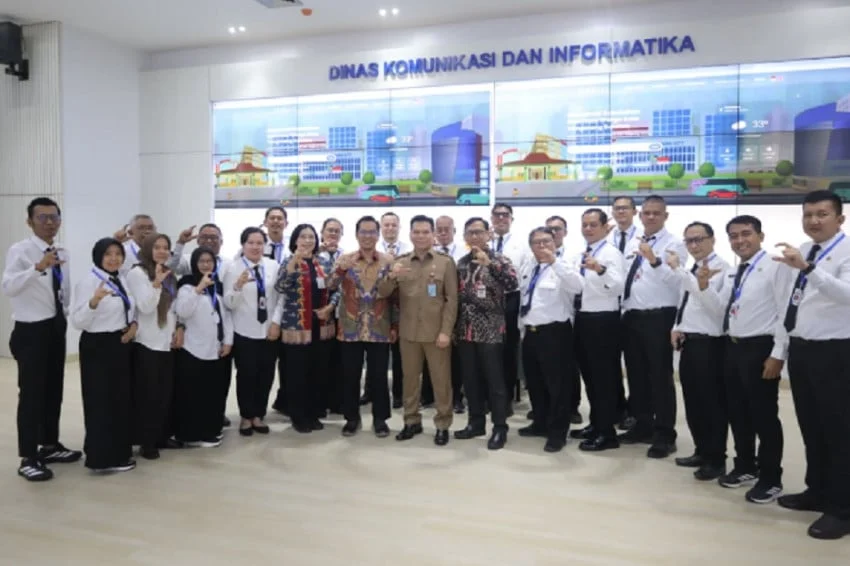
Tangerang Selatan, Indonesia – The City of Tangerang Selatan (Pemkot Tangsel) has once again been recognized for its pioneering efforts in digital transformation, serving as the host for a Field Study session of the Administrator Leadership Training (PKA) Angkatan V, 2026, organized by the Regional Human Resources Development Agency (BPSDMD) of Central Java Province. The prestigious event took place at the Command Center, located within the heart of the Tangerang Selatan City Government Center, drawing participants keen to learn from the city’s successful implementation of digital solutions to enhance public services.
The selection of Tangerang Selatan as a study site underscores its growing reputation as a leader in digital governance and public service innovation. This initiative, part of a broader national effort to cultivate skilled public administrators, aims to expose future leaders to best practices and practical applications of modern governance. The PKA Angkatan V program is designed to equip participants with the strategic foresight and operational capabilities necessary to navigate the complexities of public administration in an increasingly digital world.
At the core of the study session was a detailed presentation by Tb. Asep Nurdin, the Head of the Communication and Informatics Office (Diskominfo) of Tangerang Selatan City. He shared the city’s comprehensive strategy and practical experiences in digital transformation, emphasizing its crucial role in elevating the quality and accessibility of public services for its citizens. Nurdin’s insights were delivered to a discerning audience of administrators, offering a tangible roadmap for replicating similar successes in their respective regions.
Nurdin articulated that Tangerang Selatan’s approach to digital transformation transcends mere technological adoption. The focus, he explained, is on how technology can be strategically leveraged to create public services that are not only faster and more accessible but also more transparent and conducive to active citizen participation. This citizen-centric philosophy is a cornerstone of the city’s digital governance strategy, ensuring that technological advancements directly translate into tangible benefits for the populace.
The Genesis of Digital Transformation in Tangerang Selatan
The journey of digital transformation in Tangerang Selatan is not a recent phenomenon but rather a carefully orchestrated evolution. The city has consistently invested in building a robust digital infrastructure and fostering a culture of innovation. This commitment dates back several years, with early initiatives focusing on digitizing administrative processes and improving internal government efficiency. As technology advanced and citizen expectations grew, Pemkot Tangsel strategically expanded its digital footprint to encompass direct public service delivery.
The Command Center, the venue for the study session, itself represents a significant investment in real-time monitoring and data-driven decision-making. Established to centralize information and provide a unified view of city operations, it serves as the nerve center for coordinating responses to emergencies, managing public infrastructure, and overseeing the performance of various digital services. Its presence signifies the city’s dedication to a proactive and responsive governance model.
The PKA Angkatan V program, by choosing Tangerang Selatan, acknowledged the city’s proven track record. The training program typically involves intensive modules covering policy analysis, strategic planning, and leadership development, with a significant emphasis on contemporary challenges like digitalization. The field study component allows participants to witness these concepts in action, moving beyond theoretical learning to observe practical implementation and engage with practitioners.
A Citizen-Centric Approach to Digitalization
Tb. Asep Nurdin elaborated on the principles guiding Tangerang Selatan’s digital transformation, stating, "Digital transformation is not merely about presenting applications, but about how technology can provide tangible benefits to the community. Therefore, the innovations we build are always oriented towards public services that are increasingly easy, fast, and integrated." This statement encapsulates the city’s philosophy: technology as a tool to empower citizens and streamline their interactions with the government.
The specific initiatives discussed likely included a range of digital platforms and services. These could encompass:
- Integrated Public Service Portals: Centralized online platforms where citizens can access a multitude of services, from permit applications to health information and social welfare programs, reducing the need for physical visits and long queues.
- E-Government Applications: Mobile applications and web-based systems designed for specific services, such as online tax payment, driver’s license renewal, or reporting local issues.
- Data-Driven Policy Making: The utilization of data analytics to understand citizen needs, identify service gaps, and inform policy decisions, leading to more targeted and effective interventions.
- Digital Literacy Programs: Initiatives aimed at enhancing the digital skills of citizens, ensuring that the benefits of digital services are accessible to all segments of the population, including the elderly and those with limited technological familiarity.
- Open Data Initiatives: Making government data publicly accessible to foster transparency, accountability, and encourage innovation from the private sector and civil society.
Supporting Data and Evidence of Success
While specific data points were not provided in the original excerpt, it is plausible that Nurdin would have presented metrics demonstrating the impact of these digital initiatives. Such data could include:
- Reduction in Service Delivery Times: Quantifiable decreases in the time it takes for citizens to receive permits, approvals, or other government services after the implementation of digital solutions. For instance, a reduction from weeks to days or even hours for certain application processes.
- Increased Citizen Satisfaction Scores: Improvements in public perception of service quality, measured through surveys and feedback mechanisms, indicating greater ease of access and overall user experience.
- Growth in Digital Service Adoption: Statistics showing the increasing number of citizens utilizing online platforms and mobile applications for accessing government services, signaling a shift away from traditional methods.
- Cost Savings for the Government: Evidence of reduced operational costs due to the digitization of processes, such as decreased paper consumption, lower administrative overhead, and more efficient resource allocation.
- Enhanced Transparency and Accountability: Metrics related to the number of public data sets made available or the reduction in reported instances of corruption or bureaucratic inefficiency attributed to digital oversight.
For example, a hypothetical data point could be a 40% reduction in the average processing time for business permits following the introduction of an online application system, or a 25% increase in citizen satisfaction with public health information accessibility through a dedicated government app.
The Broader Context: National Digitalization Agendas
Tangerang Selatan’s efforts are not isolated but are part of a larger national push towards digital transformation in Indonesia. The Indonesian government has set ambitious targets for digitalizing public services, recognizing its potential to boost economic growth, improve governance, and enhance citizen welfare. Initiatives like the "Satu Data Indonesia" (One Data Indonesia) program and the development of national digital identity systems are indicative of this overarching vision.
The BPSDMD’s role in organizing these leadership training programs highlights the strategic importance placed on developing a cadre of public servants capable of driving this digital agenda. By bringing administrators from different regions to learn from successful models like Tangerang Selatan, the government aims to accelerate the adoption of digital governance practices across the archipelago.
The choice of 2026 for the PKA Angkatan V program, though presented in the past tense in the excerpt, suggests that this is a forward-looking initiative, perhaps with the training having taken place or being scheduled for that year, signifying ongoing commitment. The date itself, while a potential typo given the current calendar year, indicates the long-term planning involved in such developmental programs.
Implications and Future Outlook
The recognition of Tangerang Selatan as a model for digital transformation has several important implications. Firstly, it validates the city’s strategic investments in technology and human capital development for public service delivery. Secondly, it provides a concrete example for other local governments in Indonesia, and potentially beyond, to emulate.
The continued emphasis on citizen-centricity in digital transformation is crucial. As technology becomes more pervasive, ensuring that it serves the needs of all citizens, regardless of their digital literacy, remains a paramount challenge. Tangerang Selatan’s approach, as articulated by Nurdin, suggests a commitment to inclusive digital governance.
The success of initiatives like the PKA Angkatan V program hinges on the ability of participants to translate learned best practices into actionable strategies within their own contexts. The exchange of knowledge and experience facilitated by such study sessions is invaluable in this regard.
Looking ahead, Tangerang Selatan is likely to continue its digital journey, exploring new technologies such as artificial intelligence, big data analytics, and the Internet of Things (IoT) to further refine public services. The city’s commitment to innovation and its willingness to share its experiences position it as a key player in Indonesia’s digital future, fostering a more efficient, transparent, and citizen-friendly government. The ongoing collaboration between local governments and national training bodies like BPSDMD will be critical in realizing the full potential of digital transformation for public good.