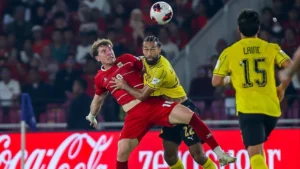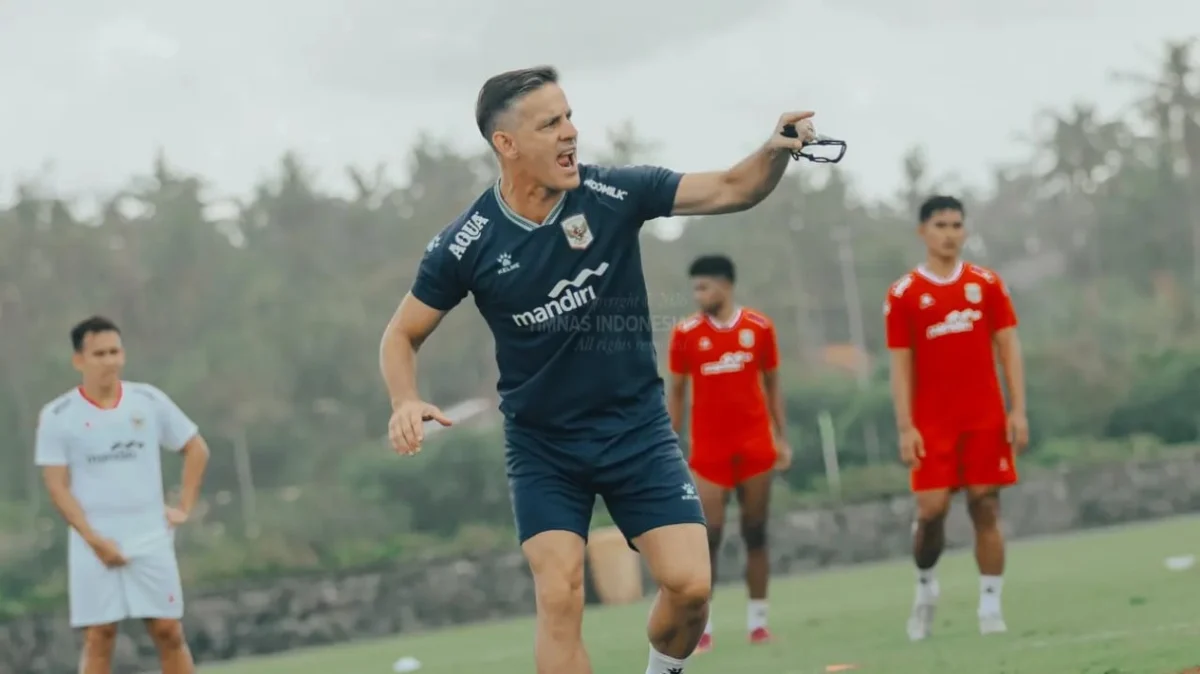
Jakarta, Indonesia – July 22, 2026 – The Indonesian national football team, affectionately known as the Garuda, is grappling with significant personnel challenges just days before the commencement of the highly anticipated AFF Cup 2026. Head coach John Herdman has been dealt a further blow with the withdrawal of winger Yakob Sayuri due to injury, adding to an already growing list of unavailable players. This development casts a shadow over the team’s preparations as they aim to finally clinch the Southeast Asian championship title they have long pursued.
Sayuri, a dynamic winger for Malut United, announced his premature departure from the national team’s training camp in Bali via his Instagram Story on Saturday, July 18, 2026. The 28-year-old expressed his disappointment at being unable to continue with his teammates, citing the need for rest and recovery. His absence means Herdman must finalize his 23-man squad without one of his potentially influential attacking options.
"Thank you for the incredible camaraderie and support you’ve all shown," Sayuri posted. "This injury requires me to rest earlier than planned. While I cannot fight directly on the field for now, I will always carry your support and spirit with me. See you at a better time." He also extended his well wishes to the squad, expressing hope for their success in achieving the team’s ultimate goal of winning the AFF Cup this year. "My prayers are for your continued success and that the target we set together can be achieved this year. God bless you all, Timnas Indonesia. Amen."
A Growing List of Absences
The injury to Yakob Sayuri is not an isolated incident. The Garuda squad has already seen the departure of other key players, significantly impacting Herdman’s strategic options. Mauro Zijlstra, a naturalized forward, has also been sidelined with a hamstring injury sustained during training at the Bali United Training Center. Medical assessments indicate that Zijlstra requires a recovery period that makes his participation in the AFF Cup 2026 highly improbable. The 21-year-old’s absence removes a promising attacking talent from the roster.
Adding to the woes, Luke Vickery, who recently officially became an Indonesian citizen, will also not be available for the tournament. His club, Macarthur FC, has refused to release him, citing that the AFF Cup does not fall within the official FIFA international calendar. This decision by the Australian club highlights a recurring challenge for many national teams whose players are based abroad, particularly in leagues with non-FIFA sanctioned tournament commitments.
These multiple withdrawals place an immense burden on John Herdman, who is tasked with identifying and nurturing a winning formula for the Indonesian team. The competition for the remaining 23 coveted spots in the final squad is now intensified, with players vying to impress the coaching staff and earn their place in what is considered the most prestigious football tournament in Southeast Asia.
The AFF Cup: A Long-Awaited Prize
The AFF Cup, previously known as the Tiger Cup and the Suzuki Cup, has been a focal point for Southeast Asian footballing nations since its inception in 1996. It is contested by the men’s national teams of the members of the ASEAN Football Federation (AFF). The tournament serves as a platform for regional pride and has historically seen a strong rivalry between nations like Thailand, Singapore, Vietnam, and Malaysia.
Indonesia, despite its passionate football fanbase and a history of producing talented players, has never managed to win the AFF Cup. The nation has reached the final on multiple occasions, most notably in 2000, 2002, 2010, and 2016, but has consistently fallen short of lifting the coveted trophy. This persistent near-miss has amplified the desire within the country to finally achieve continental glory, making the 2026 edition a particularly significant campaign.
The tournament’s format typically involves a group stage followed by a knockout phase, culminating in a two-legged final. The AFF Cup 2026 is scheduled to begin on July 25, 2026, with Indonesia set to kick off their campaign against Cambodia on July 27, 2026, at the Pakansari Stadium in Bogor. This opening fixture will be the first test for Herdman’s squad as they aim to navigate the challenges of the group stage and progress towards their ultimate objective.
John Herdman’s Challenge and Tactical Adjustments
John Herdman, a respected figure in international football known for his success with the Canadian women’s national team and the New Zealand men’s national team, was appointed as the head coach of the Indonesian national team with the explicit mandate of leading them to their maiden AFF Cup title. His arrival brought a wave of optimism, with many believing his tactical acumen and leadership would finally bridge the gap to regional dominance.
However, the current injury crisis presents Herdman with his most significant test to date. He must now devise strategies and select a squad that can compensate for the loss of key players like Sayuri and Zijlstra. The tactical implications are substantial. Sayuri’s absence from the wing means Herdman might need to rely on different attacking combinations or adjust his team’s width. Zijlstra’s unavailability as a forward could necessitate a shift in offensive strategy, perhaps focusing more on midfielders making runs into the box or utilizing a different type of striker.
The coach’s ability to adapt and inspire the remaining players will be crucial. The depth of the Indonesian league and the quality of emerging talents will be put to the test. Herdman’s experience in building competitive teams from diverse player pools suggests he is well-equipped to handle such situations, but the pressure to deliver an immediate impact in a high-stakes tournament is undeniable.
Supporting Data and Historical Context
Indonesia’s performance in previous AFF Cups has been characterized by promising starts and heartbreaking finishes. In the 2016 edition, they reached the final, only to lose to Thailand over two legs with a cumulative score of 3-2. The 2020 tournament saw them again finish as runners-up, this time losing to a dominant Thailand side 6-2 on aggregate in the final. These past results underscore the consistent challenge Indonesia has faced in overcoming established regional powerhouses.
The Indonesian league, Liga 1, has seen a steady rise in quality and competitiveness in recent years, contributing to a deeper pool of domestic talent. However, the integration of naturalized players like Zijlstra and the reliance on players based abroad, as seen with Vickery, reflect a broader strategy to enhance the national team’s competitive edge. The current setbacks highlight the vulnerabilities inherent in such an approach when player availability becomes unpredictable.
The AFF Cup itself is a significant event in the region, often drawing large crowds and substantial media attention. For countries like Indonesia, it represents a major opportunity to achieve international recognition and galvanize national pride through sporting success. The financial implications for football federations and sponsors are also considerable, with increased viewership translating into greater commercial opportunities.
Reactions and Broader Impact
While official statements from the Football Association of Indonesia (PSSI) are expected to address the situation, the mood among fans is likely to be one of concern mixed with resilience. Indonesian football supporters are known for their unwavering passion and have historically rallied behind the national team, even in the face of adversity. Social media platforms are already abuzz with discussions about potential replacements and tactical adjustments.
The withdrawal of these players could have a ripple effect on the team’s morale. However, it also presents an opportunity for other players to step up and prove their worth. Herdman’s task will be to foster a strong sense of unity and belief within the squad, emphasizing that collective effort can overcome individual absences.
From a tactical perspective, the injuries might force Herdman to adopt a more pragmatic approach in the initial stages of the tournament, focusing on defensive solidity and capitalizing on counter-attacking opportunities. The development of players who might not have been first-choice options previously could also be a silver lining, potentially unearthing new talents for the future.
The AFF Cup 2026 is more than just a tournament; it is a national aspiration for Indonesia. As the Garuda prepares to embark on this crucial journey, the resilience and adaptability of John Herdman and his squad will be tested like never before. The path to their long-awaited title has become significantly more arduous, but the spirit of Indonesian football remains determined to overcome these challenges. The coming days will be critical for Herdman to finalize his strategies and instill the necessary confidence in his players to represent the nation with pride and achieve their ultimate goal.