The Communist Party of Indonesia (Partai Komunis Indonesia, or PKI) stands as one of the most polarizing and influential political entities in modern Southeast Asian history, evolving from an early 20th-century anti-colonial movement into a dominant electoral force before its catastrophic collapse and ultimate prohibition in 1966. Its trajectory reflects the tumultuous currents of nationalism, ideological polarization, and geopolitical maneuvering that characterized Indonesia’s transition from Dutch colonial rule through the parliamentary democracy era, the turbulent years of Guided Democracy, and the birth of the New Order under General Suharto. Decades after its dissolution, the legacy of the PKI and the tragic events surrounding the 1965 crisis remain subjects of intense academic research, archival examination, and national introspection, intersecting with critical dialogues on human rights, historical memory, and political stability.
Genesis and Early Radicalization: From ISDV to Anti-Colonial Insurgency
The ideological roots of Indonesian communism can be traced back to the Dutch East Indies during the pre-independence era. In May 1914, a small group of Dutch socialists—most notably Henk Sneevliet—established the Indische Sociaal-Democratische Vereeniging (ISDV), translating European Marxist theories into the colonial context of Southeast Asia. As local anti-colonial sentiment surged, the organization sought alliances with indigenous mass movements, most notably the Sarekat Islam (Islamic Association).
Ideological friction soon emerged between the religious nationalists and the radical socialists within the Sarekat Islam, leading to a split. By December 1920, the faction aligned with Sneevliet’s vision transformed the ISDV into the Perserikatan Komunis di Hindia (PKH), which was subsequently renamed the Partai Komunis Indonesia (PKI) in 1924.
Seeking to challenge the Dutch colonial administration directly, radical elements within the PKI launched a series of armed uprisings in late 1926 and early 1927, targeting infrastructure in West Java and West Sumatra. The rebellion lacked unified planning, broad popular backing, and adequate military preparedness. The Dutch colonial authorities suppressed the revolts swiftly and ruthlessly, arresting thousands of members, executing ringleaders, and exiling hundreds of political cadres to the notorious Boven Digoel concentration camp in remote Papua. This decisive crackdown crippled the organization, forcing the communist movement underground and into exile for the remainder of the colonial period and the subsequent Japanese occupation (1942–1945).
The Madiun Affair of 1948: A Fractured Republic at War
Following the proclamation of Indonesian independence on August 17, 1945, the PKI reemerged as a legal political party, swiftly integrating into the republican political landscape. However, the young republic was locked in a bitter diplomatic and military struggle against the returning Dutch forces attempting to re-impose colonial control.
By 1948, deep ideological and strategic rifts materialized within the nationalist movement. The left wing of Indonesian politics—comprising the PKI, the Socialist Party (PSI), and the Labour Party under the umbrella of the Front Demokrasi Rakyat (FDR)—grew increasingly hostile to the cabinet of Prime Minister Mohammad Hatta, criticizing his government’s economic concessions to the Dutch and its diplomatic compromises.
On September 18, 1948, leftist elements and military units loyal to the FDR seized control of Madiun, East Java, proclaiming the establishment of a "Soviet Republic of Indonesia." The move triggered a brief yet brutal civil conflict within the broader Indonesian National Revolution. President Sukarno broadcast an urgent appeal to the public, asking citizens to choose between him and Muso, the veteran PKI leader who had recently returned from Moscow to direct the party.
The republican military, led by Colonel General Abdul Haris Nasution, moved rapidly to crush the rebellion. Within months, the Madiun Affair was suppressed. Muso was killed in combat, thousands of communist cadres were executed or imprisoned, and the party suffered its second major structural annihilation. Despite this devastating setback, the PKI would not remain politically dormant for long.
Resurgence in the 1950s: Electoral Triumph Under D.N. Aidit
The early 1950s witnessed one of the most remarkable organizational recoveries in political history. A dynamic new generation of leaders—led by Dipa Nusantara Aidit, Njoto, M.H. Lukman, and Sudisman—revitalized the PKI, shifting its tactical focus from radical armed insurrection to mass mobilization within the legal parliamentary framework.
Instead of relying solely on urban factory workers, the revitalized PKI strategically targeted the rural peasantry, fishermen, women’s groups, and youth organizations through massive mass fronts such as Berdari (peasant union) and SOBSI (labor federation). The party projected an image of a clean, efficient, and pro-poor organization that championed land reform and stood firmly against Western imperialism.
This strategic pivot bore fruit during Indonesia’s historic 1955 general elections—the country’s first democratic national polls. According to official data from the General Elections Commission (KPU), the PKI secured an astonishing 6,179,914 votes, translating to 16.36 percent of the national vote share for the People’s Representative Council (DPR) and capturing 39 seats. This performance placed the PKI fourth nationally, trailing only the Indonesian National Party (PNI), Masyumi, and Nahdlatul Ulama (NU). In the concurrent elections for the Constituent Assembly, the party expanded its footprint further, drawing approximately 6.23 million votes and securing 80 seats. The PKI had cemented its status as an indispensable pillar of Indonesia’s parliamentary democracy.
Guided Democracy, Nasakom, and Growing Polarization
As parliamentary democracy buckled under political instability and regional rebellions, President Sukarno issued the Presidential Decree of July 5, 1959, dismantling the constitutional democracy system and inaugurating the era of "Guided Democracy." Power became increasingly concentrated in the executive branch, anchored by an uneasy tripartite balance of power among President Sukarno, the military (led by the Indonesian Army), and the PKI.
To maintain national unity, Sukarno championed the concept of Nasakom—an acronym fusing Nasionalisme (Nationalism), Agama (Religion), and Komunisme (Communism). While conservative Muslim groups and the military viewed the rising tide of communism with deep alarm, Sukarno integrated the PKI into his governing coalition as a counterweight to the political influence of the military.
By the early 1960s, the PKI claimed millions of registered members, making it the largest communist party outside the Soviet Union and China. Its escalating influence manifested in intense ideological and social friction across the archipelago. Land reform disputes (Aksi Sepihak) in rural Java and Bali pitted poor peasants against landowners and religious institutions, particularly elements associated with the Nahdlatul Ulama. Simultaneously, tensions soared between the PKI and the Indonesian Army over ideological orientation, foreign policy alignments, and PKI proposals for the establishment of a "Fifth Force"—an armed civilian militia composed of peasants and workers—which the military rejected as a direct challenge to its monopoly on legitimate violence.
The 1965 Crisis: The G30S Incident and Historical Interpretations
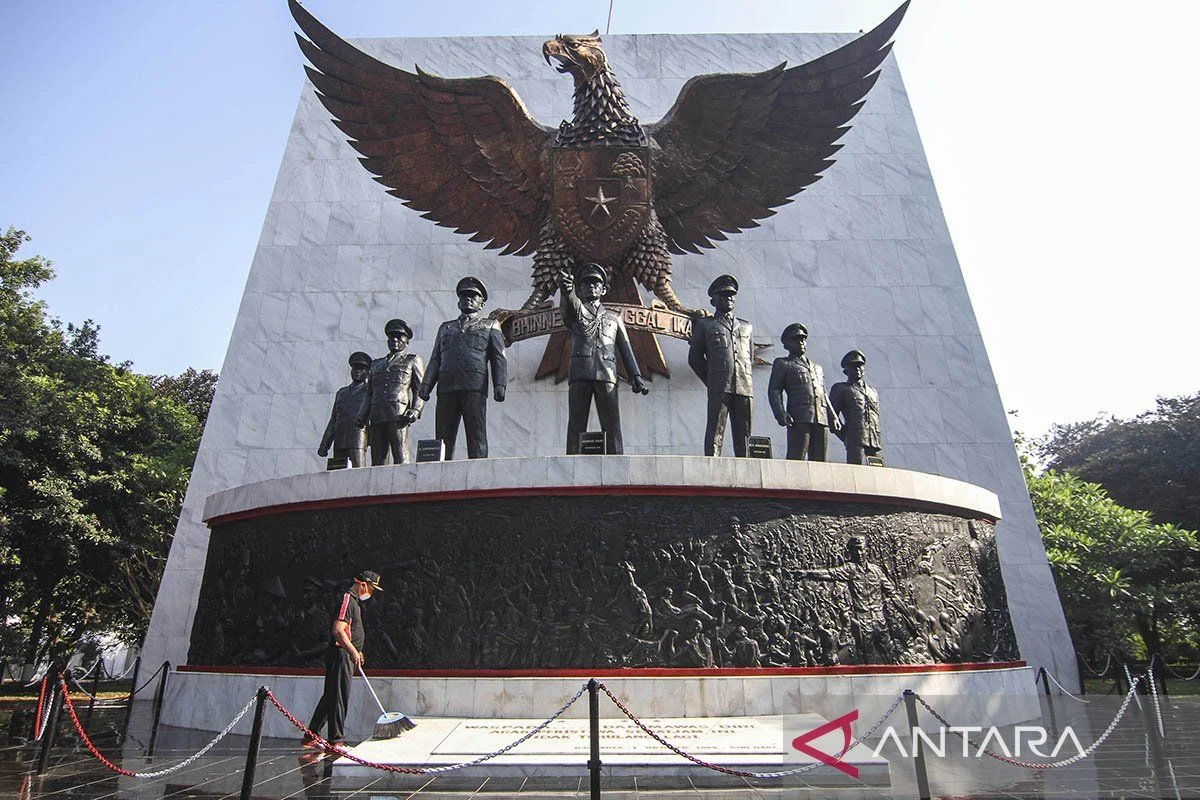
The fragile political equilibrium shattered on the night of September 30 to October 1, 1965. A faction of the military calling itself the September 30 Movement (G30S), led by Lieutenant Colonel Untung Syamsuri of the Presidential Guard, abducted and assassinated six high-ranking Army generals and one officer in Jakarta, dumping their bodies at a well in the Lubang Buaya area on the outskirts of the capital.
The exact motivations, orchestrators, and extent of the PKI’s organizational involvement in the G30S incident remain a subject of deep historical debate and divergent historiography. The official narrative constructed during the subsequent New Order era cast the PKI as the singular mastermind behind a treasonous coup attempt designed to overthrow the state ideology, Pancasila.
Conversely, modern historical scholarship and international archival disclosures—including diplomatic cables and intelligence files from the United States, Great Britain, and Japan—suggest a multifaceted conspiracy involving disgruntled mid-ranking military officers, factional intelligence maneuvering, and ideological maneuvering by the PKI leadership, whose extent of complicity continues to be reassessed. The National Archives of Republic Indonesia (ANRI) has consistently emphasized the necessity of examining multi-national archival collections to distinguish between documented historical facts, wartime propaganda, state-sanctioned narratives, and academic interpretations.
The Fall, Anti-Communist Purges, and State Prohibition
In the immediate aftermath of the aborted G30S movement, Major General Suharto assumed operational control of the military, moving rapidly to neutralize the perceived communist threat. What followed was one of the darkest chapters in modern Indonesian history.
Between late 1965 and 1966, a massive anti-communist purge swept across Java, Bali, and parts of Sumatra. Backed by the military, civilian vigilante groups, religious militias, and anti-communist youth organizations carried out systemic mass arrests, detentions, and extrajudicial executions of individuals accused of belonging to or sympathizing with the PKI.
According to findings by the National Commission on Human Rights (Komnas HAM), these events constituted gross violations of human rights, characterized by mass killings, forced disappearances, arbitrary detentions, torture, sexual violence, and forced labor. The violence devastated not only active party cadres and leaders but also decimated trade unionists, educators, artists, women’s rights activists, and entire families associated with left-leaning organizations.
The political collapse of the PKI was formalized on March 12, 1966, when General Suharto issued a presidential decree banning the PKI and its affiliated mass organizations. This executive action was subsequently ratified and elevated to constitutional permanence through MPRS Decree Number XXV/MPRS/1966, enacted on July 5, 1966. The decree explicitly dissolved the PKI across the entire territory of Indonesia and outlawed the dissemination or propagation of Communist, Marxist, and Leninist doctrines—a legal prohibition that remains enshrined in contemporary Indonesian law.
Historical Implications and Legacy
The eradication of the PKI fundamentally altered the geopolitical and domestic landscape of Indonesia. The power vacuum left by the collapse of the communist movement accelerated the political decline of President Sukarno and paved the way for the establishment of the authoritarian New Order regime under President Suharto, which governed the archipelago for over three decades until its collapse in 1998.
More than six decades after the watershed events of 1965, the legacy of the PKI continues to reverberate in Indonesian public discourse. Academic institutions, human rights organizations, and government bodies navigate a delicate balance between acknowledging the historical trauma of the 1965-1966 mass violence and upholding legal prohibitions against communist ideology.
Efforts by institutions like ANRI to release declassified archival documents serve to deepen academic understanding, ensuring that the history of the PKI is studied not merely through the prism of a single night in October 1965, but as a complex, century-long historical process defined by colonial resistance, parliamentary ambition, ideological polarization, and the profound human cost of political extremism.