The Indonesian Communist Party (Partai Komunis Indonesia, or PKI) remains one of the most polarizing and scrutinized political entities in modern Indonesian history. Before its eventual dissolution and designation as a banned organization in 1966, the PKI evolved from a modest colonial-era leftist movement into a formidable political powerhouse. Its trajectory spanned early anti-colonial resistance, revolutionary internal strife, parliamentary resurgence during the 1950s, and a catastrophic collapse in the wake of the 30 September 1965 movement. Today, the historiography of the PKI and the tumultuous events of the mid-1960s continues to be shaped by archival revelations, ongoing academic debates, and critical human rights evaluations, reflecting a complex legacy that still echoes within the nation’s political consciousness.
Roots of Leftist Politics in the Dutch East Indies
The ideological foundations of Indonesian communism trace back to the early 20th century, a period defined by rising national consciousness and anti-colonial sentiment against Dutch rule. In 1914, Dutch socialist Hendricus Sneevliet and several local activists established the Indische Sociaal-Democratische Vereeniging (ISDV). Initially operating within the Indies Social Democratic Association framework, the group sought to introduce Marxist theories to the indigenous population and the Dutch colonial workforce.
As the organization radicalized and absorbed local anti-colonial elements, it underwent a crucial transformation. In 1920, the ISDV was renamed the Perserikatan Komunis di Hindia (PKH), later officially adopting the name Partai Komunis Indonesia (PKI) in 1924. The newly minted party quickly integrated itself into the broader nationalist movement, gaining traction among urban laborers, railway workers, and rural peasants.
However, the party’s early militancy brought it into direct confrontation with the colonial administration. In 1926, segments of the PKI launched a series of armed uprisings against the Dutch colonial government in parts of Java and Sumatra. The rebellions were poorly coordinated and quickly suppressed by the Dutch military. The aftermath was devastating for the party: thousands of members and suspected sympathizers were arrested, imprisoned, or exiled to the notorious Boven Digoel concentration camp in remote Papua. Crippled by colonial repression, the PKI operated underground or in exile for the remainder of the Dutch colonial era and the subsequent Japanese occupation during World War II.
The 1948 Madiun Affair and Early Republican Friction
Following Indonesia’s declaration of independence in August 1945, the political landscape opened dramatically, allowing surviving and returning communist leaders to re-establish the PKI. Operating within the newly formed republican state, the party sought to leverage the chaotic post-revolutionary environment to advance its socialist agenda. Tensions between left-wing factions and the central government led by President Sukarno and Vice President Mohammad Hatta soon reached a boiling point, culminating in the Madiun Affair of September 1948.
On 18 September 1948, armed clashes erupted in Madiun, East Java, involving the PKI and various radical left-wing groups operating under the umbrella of the Front Demokrasi Rakyat (FDR, or People’s Democratic Front). Historical records, including documents preserved by the National Archives of Indonesia (ANRI) and the Ministry of Culture’s Historical Encyclopedia, note that radical leftist leaders proclaimed a "Soviet Republic of Indonesia" in Madiun, triggering an open military confrontation with the republican armed forces.
The Republican government, determined to maintain national unity while fighting off returning Dutch colonial forces, launched a swift and decisive military campaign. Within months, the rebellion was crushed. Key communist leaders, including Musso, were killed, while thousands of rank-and-file members were detained. The Madiun Affair left deep scars in the collective memory of the young republic, cementing a permanent rift between the military, religious groups, and the Indonesian left.
Parliamentary Resurgence and the 1955 Elections
Despite the catastrophic setback of 1948, the PKI demonstrated remarkable organizational resilience. By the early 1950s, under the dynamic leadership of Dipa Nusantara (D.N.) Aidit, Njoto, Lukman, and Mohammed Yusufrief, the party underwent a comprehensive internal restructuring. Eschewing immediate armed insurrection, the new leadership adopted a strategy of peaceful, legal political participation, rooting the party deeply in grassroots mobilization.
The PKI successfully expanded its base by championing the daily economic grievances of workers, farmers, youth, and women. Mass organizations affiliated with the party—such as the trade union federation SOBSI (Sentral Organisasi Buruh Seluruh Indonesia), the peasant organization BTI (Barisan Tani Indonesia), and the women’s movement Gerwani—grew exponentially, boasting millions of members nationwide.
This meticulous grassroots strategy paid off dramatically during Indonesia’s first nationwide parliamentary elections in 1955. Official data from the General Elections Commission (KPU) revealed that the PKI secured an astonishing 6,179,914 votes, translating to 16.36 percent of the total national vote and 39 seats in the House of Representatives (DPR). The party finished fourth overall, trailing only the Indonesian National Party (PNI), Masyumi, and Nahdlatul Ulama (NU). In the concurrent elections for the Constituent Assembly (Konstituante), the PKI performed even stronger, garnering roughly 6.23 million votes and securing 80 seats. These electoral milestones proved that the PKI had successfully transformed itself into a major, legitimate political force within Indonesia’s parliamentary democracy.
The Guided Democracy Era and the Rise of Nasakom
The mid-1950s parliamentary system was plagued by cabinet instability and regional rebellions, prompting President Sukarno to dismantle the system and decree the transition to "Guided Democracy" on 5 July 1959. This political pivot concentrated executive power heavily in the hands of Sukarno while creating a fragile three-way power balance among the President, the military (specifically the Indonesian Army), and the PKI.
To maintain national unity under his own stewardship, Sukarno introduced the socio-political concept of Nasakom—an acronym uniting Nasionalis (Nationalism), Agama (Religion), and Komunisme (Communism). The PKI enthusiastically embraced Nasakom, using the presidential endorsement to shield itself from conservative and military opposition while rapidly expanding its political influence.
Throughout the early 1960s, the PKI enjoyed unprecedented state patronage. Its membership swelled into the millions, and its leaders occupied advisory roles within state bodies. However, this expansion heightened domestic tensions. The party clashed increasingly with the Indonesian Army over ideological differences, land reform policies (Aksi Sepihak), and the PKI’s persistent lobbying for the creation of a "Fifth Force"—an armed civilian militia composed of peasants and workers. By 1965, Indonesia was a pressure cooker of competing ideological factions, economic hyperinflation, and escalating military-civilian friction.
The 1965 Crisis: The 30 September Movement (G30S)
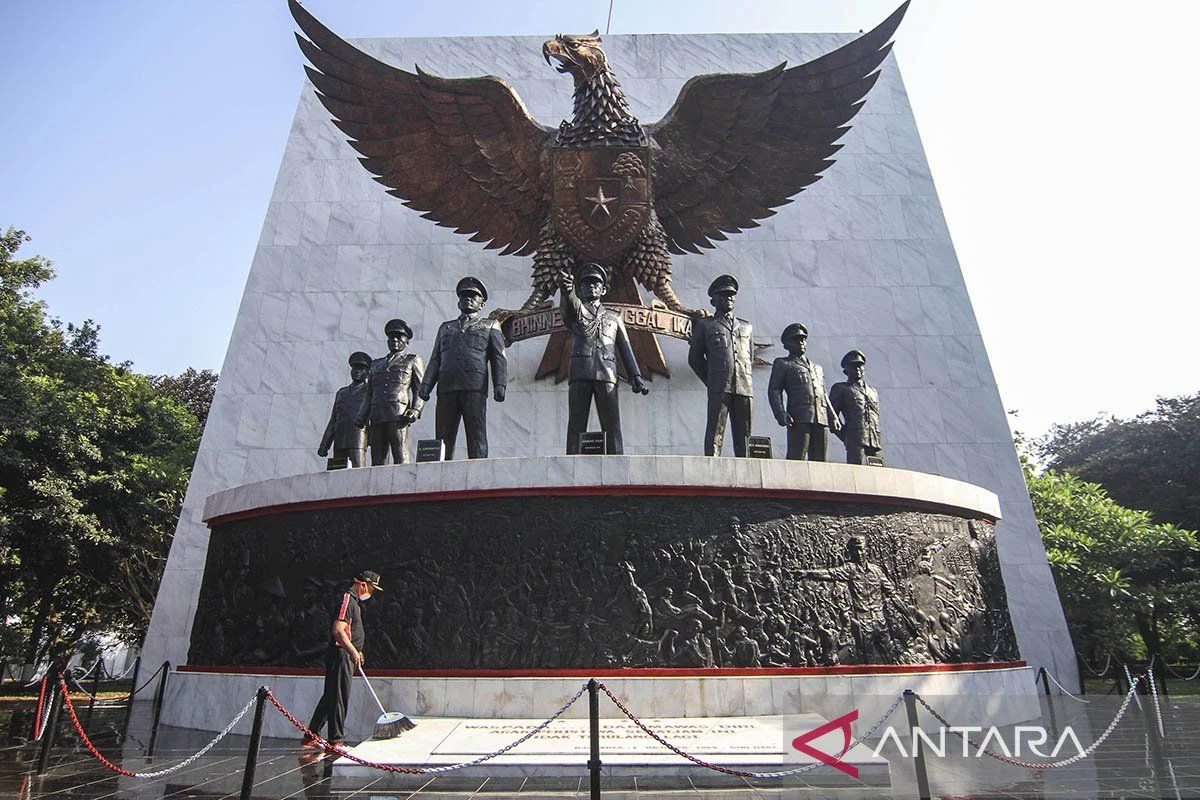
The fragile political equilibrium shattered violently on the night of 30 September and the early hours of 1 October 1965. A faction of the Indonesian military, calling itself the 30 September Movement (Gerakan 30 September, or G30S) and led by Lt. Col. Untung Syamsuri, launched a series of coordinated kidnappings targeting top-ranking Army generals. Seven senior officers were abducted, and six of them were murdered, their bodies subsequently dumped in an abandoned well in the Lubang Buaya area on the outskirts of Jakarta.
The morning of 1 October saw the movement broadcast proclamations over national radio, claiming to have preempted a coup by a CIA-backed "Generals’ Council." However, Major General Suharto, commander of the Army’s Strategic Reserve Command (Kostrad), swiftly mobilized loyal troops, neutralized the mutinous units within days, and reclaimed control of the capital.
The exact nature of the PKI’s institutional involvement in G30S remains a subject of intense historical debate and varied historiographical interpretations. While the official narrative of the New Order regime directly blamed the PKI as the sole mastermind behind the murders and the attempted coup, subsequent independent historical research, declassified international archives from the United States, Britain, and Japan, and modern scholarly analysis present a more nuanced picture involving factional military plotting, opportunistic political alignments, and divergent levels of party complicity. The National Archives of Indonesia (ANRI) has repeatedly emphasized the necessity of examining multi-source archival materials to construct a comprehensive, objective understanding of the crisis.
Fallout, Purges, and Human Rights Violations
The failure of the 30 September Movement triggered a cataclysmic political earthquake. Major General Suharto and the Army leadership capitalized on the crisis to systematically dismantle the PKI and purge its extensive network of affiliated organizations.
In the final months of 1965 and throughout 1966, a massive wave of violence swept across Java, Bali, and parts of Sumatra. Armed military units, working in tandem with religious militias and civilian vigilante groups, launched sweeping crackdowns. According to findings by the National Commission on Human Rights (Komnas HAM), this period witnessed gross violations of fundamental human rights on a staggering scale. Hundreds of thousands of individuals accused of being members, sympathizers, or associates of the PKI—as well as innocent civilians caught in the sweep—were subjected to mass killings, arbitrary arrests, prolonged detention without trial, forced labor, sexual violence, and forced displacement. The humanitarian tragedy extended generationally, placing a lifelong social stigma on the families and descendants of those targeted.
Legal Banning and the Birth of the New Order
The political collapse of the left culminated in decisive legal measures in early 1966. On 12 Maret 1966, Suharto, wielding emergency powers granted via the controversial Supersemar (Surat Perintah Sebelas Maret), issued a presidential decree officially dissolving the PKI and banning all of its mass organizations.
This executive decision was institutionalized on 5 July 1966, when the Provisional People’s Consultative Assembly (MPRS) ratified MPRS Decree No. XXV/MPRS/1966. This landmark legal instrument officially outlawed the PKI throughout the territory of the Republic of Indonesia and explicitly prohibited any efforts to propagate or develop the teachings of Marxism, Leninism, and communism. To this day, the decree remains a foundational legal reference point within the Indonesian legal architecture, subject to ongoing legal and constitutional discourse regarding civil liberties and human rights compliance.
The elimination of the PKI paved the way for the complete dismantling of Sukarno’s Guided Democracy. By March 1968, Suharto was officially inaugurated as the second President of Indonesia, ushering in the authoritarian, military-backed New Order regime that would govern the archipelago for over three decades until its collapse in 1998.
Historical Reflection and Modern Implications
More than half a century after the watershed events of 1965–1966, the legacy of the PKI continues to occupy a sensitive position in Indonesian society and historiography. While the party itself has long been relegated to the annals of history, discussions surrounding its rise, the complexities of the 1930 and 1960s conflicts, and the subsequent human rights violations remain subjects of academic study, public discourse, and institutional policy.
Efforts by archival bodies such as ANRI to compile, release, and digitize multi-national historical sources—drawing from Indonesian, American, Japanese, and European collections—underscore a collective academic push toward a more transparent, evidence-based historical record. By carefully separating documented empirical facts, official state decrees, and evolving historical interpretations, modern researchers aim to provide a comprehensive understanding of a era that fundamentally shaped modern Indonesia’s national identity, political structure, and enduring commitment to Pancasila.