JAKARTA — Within the vast ecosystem of modern automotive engineering, few nameplates carry as much historical weight, off-road pedigree, and consumer recognition as Mitsubishi’s Pajero. However, as the automotive market has matured and segmented over the past few decades, brand familiarity has occasionally led to consumer confusion. A prime example of this dynamic involves two distinct vehicles sharing a foundational heritage: the iconic Mitsubishi Pajero and its wildly popular sibling, the Mitsubishi Pajero Sport. Despite sharing a legendary nomenclature, these two machines are fundamentally different products engineered with distinct design philosophies, built on separate platforms, and targeted at completely divergent consumer demographics and price points.
The structural differences between these two automotive icons have gained renewed attention following the global debut of the next-generation flagship model. Industry observers, brand ambassadors, and corporate executives alike have stepped forward to clarify the positioning of both vehicles, ensuring that automotive enthusiasts and prospective buyers understand the unique value propositions offered by each model within Mitsubishi Motors’ global and regional lineups.
Class Distinction: Flagship Luxury Versus Medium Utility
The demarcation between the two vehicles is most clearly articulated by prominent figures within the automotive community. Rifat Sungkar, Brand Ambassador for Mitsubishi Motors Indonesia, has frequently emphasized that the Pajero and the Pajero Sport occupy entirely different segments of the sport utility vehicle market.
"Pajero is an exclusive SUV featuring a significantly larger body and higher-end positioning, whereas the Mitsubishi Pajero Sport falls firmly into the medium SUV class," Sungkar explained via his official social media channels, addressing a common point of confusion among everyday motorists who often view the two as interchangeable variations of the same vehicle.
This classification is not merely a matter of marketing semantics; it is rooted in physical dimensions, mechanical architectures, engineering investments, and target use cases. The standard Pajero has traditionally served as Mitsubishi’s halo product—a vehicle designed to conquer the harshest terrains on Earth, such as the grueling Dakar Rally, while simultaneously offering luxurious comfort and commanding road presence. The Pajero Sport, on the other hand, is engineered as a versatile, rugged, yet family-friendly multi-purpose vehicle designed to balance daily urban commuting capabilities with dependable off-road prowess.
The Rebirth of a Legend: The All-New Pajero Generation
The distinction between the two models became even more pronounced following a major milestone in the automotive world: the global debut of the next-generation Pajero on September 2, 2026. Unveiled initially in Thailand, this latest iteration marked a dramatic departure from its immediate predecessors, breathing new life into a legendary nameplate that had seen varied production statuses in different global markets over prior years.
The newly redesigned flagship has been completely overhauled to embody the spirit of a true cross-country SUV. Positioned at the absolute pinnacle of Mitsubishi’s lineup, the All-New Pajero has grown in stature and capability. According to official specifications released during its debut, the vehicle boasts an imposing physical footprint: a length of 4,920 mm, a width of 1,925 mm, and a height of 1,910 mm when equipped with 20-inch wheels. Its robust stance is further reinforced by a generous wheelbase measuring 2,870 mm, which translates to expansive interior cabin space and superior ride stability over undulating terrain.
Beneath its muscular exterior, the All-New Pajero packs serious mechanical muscle. It is propelled by an advanced 2.4-liter diesel power plant capable of generating a formidable 480 Nm of maximum torque (with specific regional variants tuned to 470 Nm). Power is delivered through Mitsubishi’s sophisticated Super Select 4WD-II system, seamlessly integrated with the brand’s proprietary Super All-Wheel Control (S-AWC) vehicle dynamics management system. Naturally, exact features, interior appointments, and technical specifications are subject to regional adaptations and market-specific homologation requirements.
The Pillar of Regional Markets: The Mitsubishi Pajero Sport
While the arrival of the All-New Pajero represents the cutting edge of Mitsubishi’s flagship engineering, the Pajero Sport remains a vital, deeply entrenched pillar of the brand’s commercial success, particularly in Southeast Asian markets like Indonesia.
The Pajero Sport currently dominating roads across the archipelago belongs to its third generation, which originally made its commercial debut in 2016. Demonstrating remarkable longevity and adaptability, the vehicle has undergone significant refreshes—most notably receiving comprehensive facelifts in 2021 and 2024 to keep pace with evolving consumer expectations regarding styling, infotainment technology, and active safety systems.
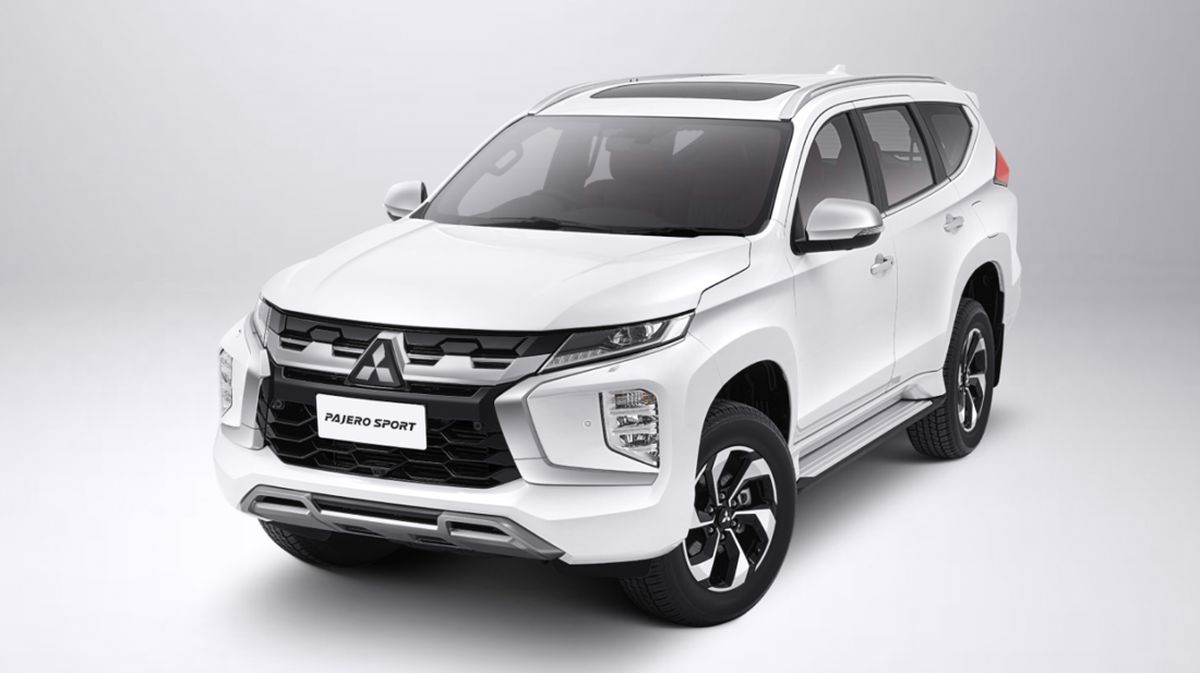
Significantly, the Pajero Sport sold in Indonesia is manufactured locally, rolling off domestic assembly lines to cater specifically to regional preferences. In terms of dimensions, the Pajero Sport is notably more compact than its flagship sibling, measuring 4,840 mm in length, 1,815 mm in width, and 1,835 mm in height, with a slightly shorter wheelbase of 2,800 mm. Under the hood, it also relies on a capable 2.4-liter diesel engine delivering 430 Nm of maximum torque, paired with the dependable Super Select 4WD-II system to ensure that its off-road credentials remain uncompromised.
Corporate Strategy and Market Positioning in Indonesia
Executives at PT Mitsubishi Motors Krama Yudha Sales Indonesia (MMKSI), the official distributor of Mitsubishi passenger and light commercial vehicles in the country, have been proactive in addressing how the two models coexist within the national market. Irwan Kuncoro, Director of Sales & Marketing Division at MMKSI, noted that while both vehicles share a common lineage of rugged dependability, they serve distinct strategic purposes.
"Both the All-New Pajero and the Pajero Sport carry strong DNA and traditional heritage, yet they arrive with completely different characters, market positioning, and intended applications to comprehensively answer the diverse needs of our customers," Irwan stated. He further emphasized the profound trust that Indonesian consumers have placed in the Pajero Sport over the years, solidifying its status as an enduring volume driver for the brand.
This sentiment was echoed by Rifat Sungkar, who reassured domestic consumers that the introduction of the flagship All-New Pajero does not signal the phase-out or obsolescence of the Pajero Sport. Sungkar highlighted that the Pajero Sport established itself as an instant favorite among local SUV enthusiasts from the moment it arrived on showroom floors, carving out a permanent niche that relies on a balance of durability, passenger comfort, and competitive pricing within the medium SUV segment.
"For the Indonesian market, the Pajero Sport will remain readily available," Sungkar affirmed, cutting off potential speculation that the flagship model’s arrival might disrupt the local product portfolio.
Chronology of Evolution and Market Impact
To fully grasp the current landscape, it is helpful to look back at the historical trajectories of both nameplates. The original Pajero lineage dates back to the early 1980s, when Mitsubishi set out to build a robust, four-wheel-drive vehicle capable of conquering grueling global rallies while serving as a comfortable civilian transport. Over four decades, the Pajero earned a legendary reputation, dominating the Dakar Rally with a record-setting number of victories and cementing its status as an uncompromised adventure machine.
The Pajero Sport, conversely, was introduced much later—originally launched in the late 1990s in various global markets under names like Challenger or Montero Sport before standardizing into the Pajero Sport moniker. Built upon ladder-frame chassis shared with Mitsubishi’s utility pickup trucks (such as the Triton), the Pajero Sport was conceived to offer a more accessible, practical entry point into the world of rugged family adventure vehicles.
By the time the third generation of the Pajero Sport launched in 2016 and subsequently received its 2021 and 2024 facelifts, the market had evolved significantly. Mid-size ladder-frame SUVs transformed from utilitarian workhorses into sophisticated family haulers equipped with advanced driver-assistance systems (ADAS), premium leather upholstery, and state-of-the-art connectivity. Consequently, the Pajero Sport captured a massive share of emerging markets where consumers demanded high ground clearance and flood-conquering capabilities combined with executive-level cabin comforts.
Implications for Consumers and the Broader Automotive Industry
The deliberate separation of the Pajero and Pajero Sport into distinct marketing and engineering tiers reflects a broader maturation trend within the global automotive industry. As manufacturing costs rise and consumer preferences become hyper-specialized, legacy automakers can no longer rely on a one-size-fits-all approach to vehicle naming and segmentation.
By reintroducing the full-sized Pajero as an uncompromised, high-tech cross-country flagship, Mitsubishi is actively reclaiming its upper-tier luxury and performance heritage. This move appeals to affluent automotive purists, off-road expeditions enthusiasts, and buyers seeking exclusive engineering excellence without compromise. Simultaneously, by maintaining and supporting the locally assembled Pajero Sport, the manufacturer secures its stronghold in the high-volume medium SUV segment, ensuring robust sales, accessible spare parts, and widespread service networks for everyday families and business professionals.
Ultimately, the coexistence of the All-New Pajero and the Pajero Sport demonstrates a calculated harmonization of heritage and modern market strategy. Far from cannibalizing each other’s sales, these two nameplates work in tandem to capture different layers of consumer demand—proving that while they share a storied name, their journeys on and off the road are destined for entirely different horizons.