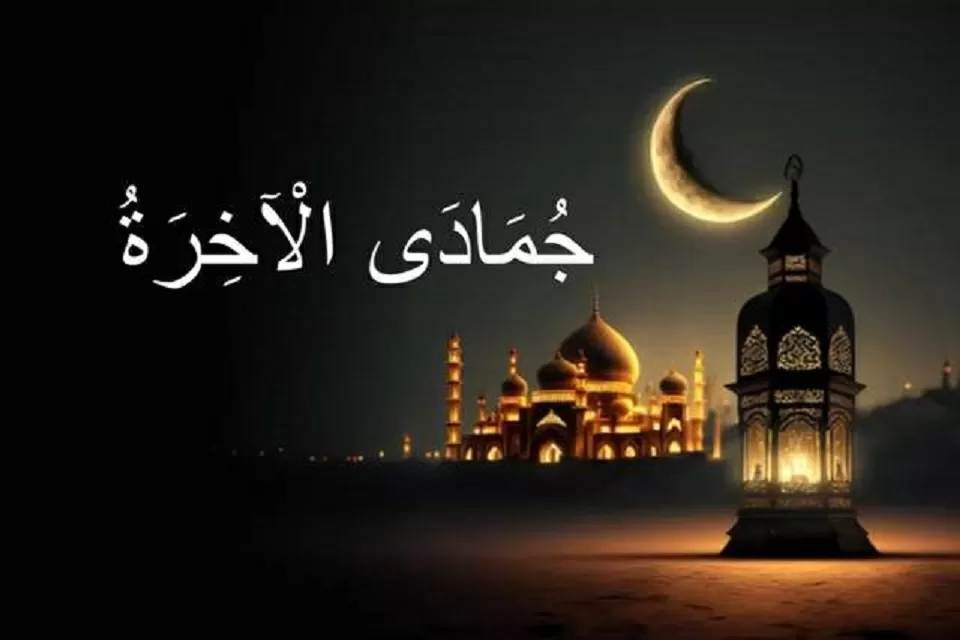
The global Islamic community has officially entered the sixth month of the Islamic lunar calendar, Jumadil Akhir 1448 Hijriah, corresponding to November 11, 2026. This transitional month serves not only as a crucial temporal marker bridging the colder winter months and the upcoming sacred month of Rajab, but it also holds profound historical weight for Muslims worldwide. Revered as a period filled with monumental milestones, Jumadil Akhir is inextricably linked to the lives of foundational figures in Islamic history, including the birth of Fatimah Az-Zahra, the beloved daughter of Prophet Muhammad, and the passing of Abu Bakar Ash-Shiddiq, the first Caliph of Islam.
As millions of Muslims worldwide transition into this new lunar month, religious scholars, historians, and community leaders emphasize the importance of reflecting upon the historical events embedded within Jumadil Akhir. Far from being a quiet interim period, the month offers valuable lessons in leadership, sacrifice, piety, and the early administrative evolution of the Islamic civilization.
Historical Context and the Establishment of the Hijri Calendar
To understand the positioning and significance of Jumadil Akhir within the Islamic calendar, historians often look back at the institutionalization of the Hijri system itself. The Islamic calendar was not formally standardized during the lifetime of Prophet Muhammad; rather, dating systems were typically descriptive, naming years after monumental local events, such as the Year of the Elephant.
The formalization of the Hijri calendar took place around the year 17 Hijriah, during the reign of the second Caliph, Umar bin Khattab. Administrative expansion across newly conquered territories generated a pressing need for a unified and standardized dating system. Official documents, administrative correspondence, and financial contracts lacked standardized year markers, leading to administrative confusion and logistical difficulties. Following consultation with his closest companions, Caliph Umar officially established the Hijri calendar, anchoring its starting point to the Hijrah (the migration of Prophet Muhammad from Makkah to Madinah). Consequently, the lunar calendar was structured into twelve distinct months, with Jumadil Akhir positioned precisely as the sixth month.
Etymology and Climate Origins of Jumadil Akhir
The nomenclature of the Islamic lunar months deeply reflects the environmental and climatic realities of the pre-Islamic and early Islamic Arabian Peninsula. The word "Jumadil" originates from the Arabic root verb jamada, which translates to freeze, solidify, or become rigid.
Historical records indicate that the Arabian Peninsula experienced distinct seasonal shifts, and the months bearing the root Jumada—namely Jumadil Awal (the first Jumada) and Jumadil Akhir (the second Jumada)—coincided with the harshest periods of the Arabian winter. During these months, temperatures plummeted significantly, causing water to freeze in certain regions. Jumadil Akhir thus earned its name as it marked the secondary and concluding phase of the freezing winter season, characterized by dry air and sustained low temperatures before the gradual warming trend leading into Rajab.
Key Historical Milestones Defining Jumadil Akhir
Islamic history records several pivotal turning points that occurred during the month of Jumadil Akhir. Among these, two events hold paramount importance in shaping the trajectory of early Islamic society, spiritual lineage, and governance.
The Birth of Fatimah Az-Zahra
One of the most revered observances historically associated with Jumadil Akhir is the birth of Fatimah Az-Zahra, the youngest daughter of Prophet Muhammad and Sayyidah Khadijah. Islamic tradition places her birth in Makkah on the 20th day of Jumadil Akhir, several years prior to the commencement of the Prophet’s mission.
Fatimah holds an exceptionally exalted status in Islamic theology, revered across both Sunni and Shia traditions as a paragon of patience, piety, resilience, and righteousness. Often referred to by honorifics such as Al-Zahra (The Luminous) and Sayyidat Nisa’ al-Alamin (Mistress of the Women of the Worlds), her life mirrored the struggles and triumphs of the early Muslim community. She stood steadfastly by her father during the intense persecution faced by early Muslims in Makkah, migrated to Madinah, and later married Ali ibn Abi Talib, the fourth Caliph and first Shia Imam. Her lineage, through her sons Hasan and Husayn, constitutes the prominent prophetic descendants (Ahl al-Bayt) who played defining roles in Islamic history.
The Passing of Abu Bakar Ash-Shiddiq
In addition to celebrating foundational births, Jumadil Akhir marks a period of profound mourning and political transition with the death of Abu Bakar Ash-Shiddiq, the first Caliph of Islam. Historical accounts document his passing on the 22nd day of Jumadil Akhir in the 13th year of Hijrah (634 CE), at the age of 63.
Abu Bakar’s brief but remarkably consequential caliphate spanned approximately two years and three months. Ascending to leadership immediately following the death of Prophet Muhammad in 632 CE, Abu Bakar faced unprecedented internal and external crises that threatened to fracture the nascent Muslim state. These included widespread apostasy movements (Ridda wars) and false prophets across the Arabian Peninsula. Through decisive military campaigns led by brilliant tacticians like Khalid ibn al-Walid, alongside his diplomatic acumen, Abu Bakar successfully consolidated the Arabian Peninsula under the banner of Islam. Furthermore, he initiated the critical task of compiling the scattered verses of the Holy Quran into a single manuscript.
Before his death, demonstrating profound political foresight and a commitment to preventing internal discord (fitnah) over succession, Abu Bakar engaged in extensive consultations with senior companions. He formally designated Umar bin Khattab as his successor. This seamless transition of power ensured the political stability and continued expansion of the Islamic state during a fragile period of its infancy.
Spiritual Reflections and Recommended Practices
While Jumadil Akhir is not classified as one of the four sacred months (al-ashhur al-hurum)—which include Dhu al-Qa’dah, Dhu al-Hijjah, Muharram, and Rajab—it is nonetheless viewed by contemporary Islamic scholars and spiritual leaders as a valuable preparatory window.
Religious authorities encourage Muslims to utilize the month for self-reflection, charity, increased voluntary prayers, and studying the biographies (Sirah) of early Islamic figures. By examining the steadfastness of Fatimah Az-Zahra and the immense administrative and spiritual burden carried by Abu Bakar Ash-Shiddiq, believers are encouraged to cultivate resilience in the face of contemporary personal and societal challenges.
Furthermore, because Jumadil Akhir immediately precedes Rajab—the month that initiates the spiritual buildup toward Ramadan—preachers and community leaders often advise congregants to use this time to clear spiritual and worldly debts, engage in repentance, and establish consistent habits of worship that can be sustained through the holy months ahead.
Socio-Economic and Institutional Implications
From a sociological and historical analysis perspective, the events commemorated in Jumadil Akhir offer deep insights into the institutional maturation of Islamic society. The smooth transition of power orchestrated by Abu Bakar Ash-Shiddiq highlighted the early development of consultative governance (shura), which prevented the collapse of the central authority in Madinah.
Similarly, the prominent socio-spiritual role embodied by figures like Fatimah Az-Zahra underscores the integral participation of women in the moral, intellectual, and social fabric of early Islamic civilization. Sociologists and historians frequently cite these historical precedents to demonstrate how early Islamic communities navigated complex crises of leadership, succession, and social cohesion.
As communities globally observe the progression of Jumadil Akhir 1448 H, mosques and educational institutions are rolling out special lecture series and study circles focusing on the lessons of the early Caliphate and the legacy of the Prophet’s household. Through these educational programs, modern generations continue to connect with the historical roots that defined the civilization and ethics of Islam across the centuries.