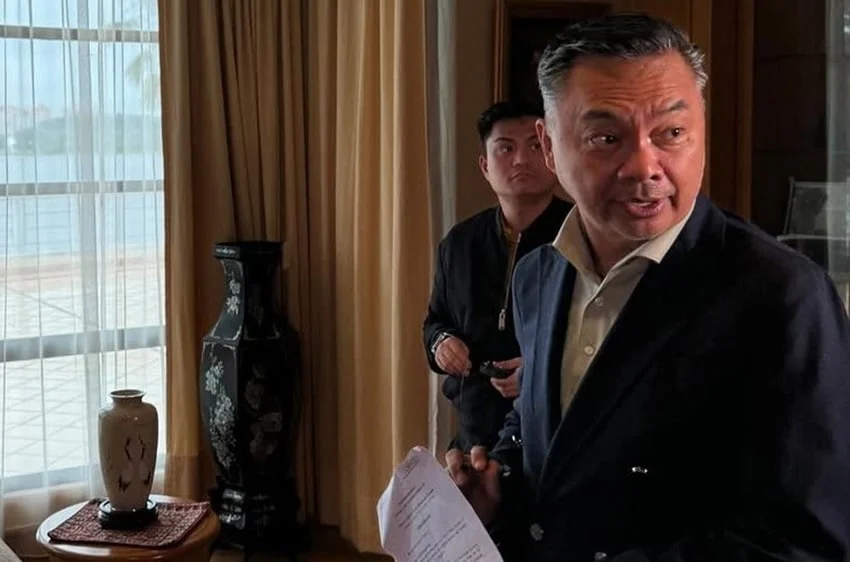
The political landscape in Jakarta has been jolted by explosive allegations involving the nation’s top security apparatus, as former Deputy Minister of Foreign Affairs Dino Patti Djalal publicly questioned the motives behind an alleged surveillance operation targeting President Prabowo Subianto. At the heart of the controversy is former National Police Chief, General Listyo Sigit Prabowo (LSP), whose tenure is now under intense scrutiny regarding the extent of intelligence operations conducted under his command. The discourse, which has sparked heated debates among political analysts and legal experts, centers on a perceived inconsistency in the application of surveillance authority between the administration of former President Joko Widodo and the current administration of President Prabowo Subianto.
The Core Allegation and Public Inquiry
Dino Patti Djalal, a seasoned diplomat and keen observer of Indonesia’s political trajectory, raised the issue through his official account on X (formerly Twitter). The core of his argument is a comparative analysis of institutional behavior. Djalal explicitly questioned why the police leadership, under General Listyo Sigit, appeared to exercise extreme caution or restraint during the administration of President Joko Widodo, yet reportedly engaged in high-stakes surveillance—or the intention thereof—against the current President, Prabowo Subianto.
"It is a compelling question: If LSP, in his capacity as National Police Chief, never intended or dared to surveil President Jokowi, why did he demonstrate the intent and boldness to surveil President Prabowo starting in 2024?" Djalal wrote in his post on November 9, 2026. This inquiry has opened a Pandora’s box regarding the limits of executive oversight, the politicization of the National Police, and the potential for intelligence assets to be weaponized against elected leadership.
Chronology of Events and Escalating Tensions
The allegations did not emerge in a vacuum. The current controversy is the latest in a series of developments that have strained the relationship between the executive branch and certain factions of the security establishment.
- Mid-2024: Rumors began circulating regarding internal friction within the National Police regarding the transition of power.
- Late 2024: Reports surfaced suggesting that sensitive communication channels of key political figures, including then-President-elect Prabowo Subianto, may have been compromised or monitored by unauthorized entities within the state apparatus.
- Early 2025: Investigations led by independent watchdogs and internal military intelligence units began to identify irregularities in digital monitoring protocols.
- November 2026: Public discourse reached a boiling point following public statements from prominent figures like former Police Commissioner Oegroseno, who explicitly suggested that the alleged surveillance operations were politically motivated and hinted at potential "makar" (treason or coup-plotting) undertones that require urgent judicial investigation.
Institutional Context: The Role of the National Police
The National Police (Polri) in Indonesia occupies a unique position as a security force that reports directly to the President. However, the operational autonomy of the police, particularly regarding intelligence gathering, has long been a subject of concern for democratic reformers. Under the Law on the National Police, the institution is tasked with maintaining public order and law enforcement. The use of surveillance is strictly regulated, intended for counter-terrorism, organized crime, and national security threats.
The current allegation against General Listyo Sigit suggests a departure from these legal boundaries. If established, the surveillance of a sitting or incoming President by the police chief would represent a significant breach of the constitutional order. It raises fundamental questions about the "checks and balances" mechanism. If the Chief of Police is capable of monitoring the Head of State without clear legal justification, it implies that the security apparatus has achieved a level of autonomy that threatens civilian oversight.
Comparative Analysis: Jokowi vs. Prabowo Era
The contrast highlighted by Dino Patti Djalal reflects a deeper anxiety within the Indonesian political elite regarding how state institutions shift their allegiances. During the Jokowi administration, the National Police were often perceived as being in lockstep with the President’s agenda. The stability of the relationship between the Palace and the Police was a hallmark of the 2014–2024 period.
In contrast, the transition to the Prabowo administration has been characterized by a restructuring of power dynamics. Analysts suggest that the "reluctance" to surveil Jokowi might have been rooted in a consolidated power structure where the police chief was a key stakeholder in the administration’s longevity. By contrast, the alleged surveillance of Prabowo could be interpreted as a defensive or preemptive measure by individuals within the police force who feared a loss of influence or were concerned about potential investigations into past conduct.
Reactions and Broader Implications
The statement by Oegroseno, the former National Police Chief, adds significant weight to the allegations. By calling for an investigation into the "political motives" behind the surveillance, Oegroseno has effectively signaled that this is not merely a technical error or a rogue operation, but a strategic move by high-ranking officials.

The implications are far-reaching:
- Trust Deficit: The public’s trust in the National Police is at risk. If the institution is perceived as a tool for internal political warfare rather than a neutral guardian of the state, public confidence in the rule of law will inevitably decline.
- Executive-Legislative Conflict: The executive branch will likely move to tighten control over the police, potentially leading to significant purges or legislative changes aimed at curbing the police chief’s discretionary powers.
- National Security Risks: If the President’s communications are compromised, the integrity of national security decision-making is jeopardized. This could invite foreign interference or exacerbate domestic instability.
Data and Transparency Concerns
While specific evidence—such as logs or intercepted files—has yet to be presented in a court of law, the gravity of the claim has forced a demand for greater transparency. Indonesia’s intelligence landscape is fragmented between the State Intelligence Agency (BIN), the National Police, and the Indonesian National Armed Forces (TNI). The lack of a unified parliamentary oversight committee that possesses real "teeth" has allowed these agencies to operate with varying degrees of opacity.
Independent observers argue that the only way to resolve this crisis is through an impartial, high-level investigative commission, potentially involving civilian oversight bodies such as the National Commission on Human Rights (Komnas HAM) or an ad-hoc committee from the House of Representatives (DPR).
Analytical Perspective: The "Deep State" Narrative
Some political scientists have categorized these events as a manifestation of the "deep state" phenomenon in Indonesia. This theory posits that there are entrenched bureaucratic and security interests that transcend specific administrations. When a new leader arrives—such as President Prabowo—who may seek to reorganize or investigate these interests, the apparatus may deploy surveillance as a leverage point or a deterrent.
The question of why surveillance was not directed at President Jokowi, therefore, is not just about the specific individuals involved, but about the survival of an institutional culture that thrived under the previous decade of governance. The transition period in 2024–2025 provided a window of vulnerability, which some within the security sector may have attempted to exploit to maintain their leverage.
Moving Forward: Accountability and Reform
As the nation waits for official responses from the current police leadership and the Palace, the pressure for accountability is mounting. The allegation that the National Police—an institution designed to protect the state—might be actively working against the interests of the elected President is a constitutional crisis of the highest order.
For the Prabowo administration, the path forward requires a delicate balance. A direct confrontation with the National Police could lead to systemic instability. However, failing to address the allegations could leave the President’s administration perpetually vulnerable to blackmail and espionage.
Legal experts suggest that if the accusations of illegal surveillance are substantiated, it would warrant a comprehensive overhaul of the National Police’s intelligence wing. This could include the introduction of mandatory judicial warrants for all forms of digital surveillance, the implementation of external auditing of intelligence budgets, and the strengthening of the Police Commission (Kompolnas) to provide meaningful civilian oversight.
Conclusion
The query posed by Dino Patti Djalal has successfully crystallized the anxieties of a nation watching its security institutions grapple with a volatile political transition. Whether the surveillance allegations are proven true or are found to be part of a broader political disinformation campaign, the debate itself has exposed the fragile nature of democratic oversight in Indonesia. The need for a transparent, legal, and structural reform of the security apparatus has never been more urgent. As the investigation into these claims continues, the Indonesian public remains watchful, waiting to see if the rule of law will prevail over the machinations of those tasked with its defense. The integrity of the presidency, and by extension the republic, hinges on the ability of the state to purge political partisanship from its most sensitive security functions.