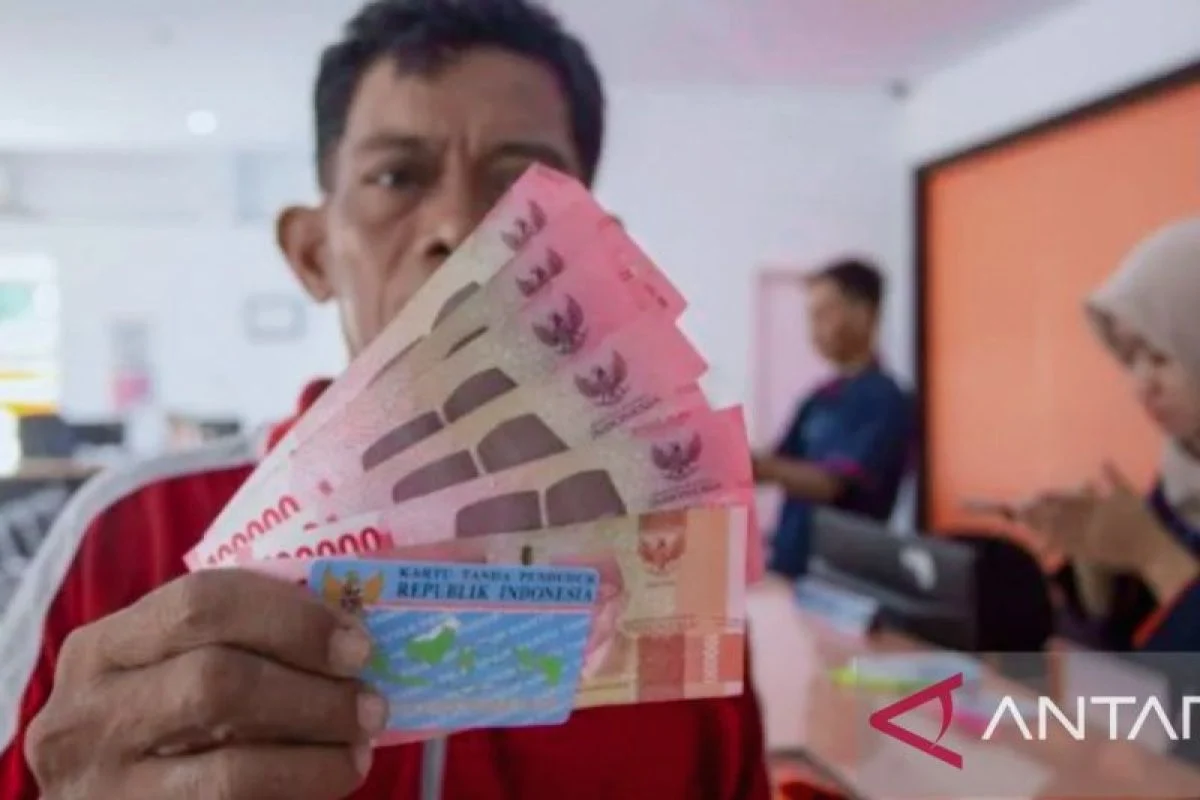
The Indonesian government has officially commenced preparations for the rollout of the Bantuan Subsidi Upah (BSU) 2026, a social protection program designed to safeguard the purchasing power and economic stability of formal sector workers. Amid ongoing global economic shifts and localized cost-of-living adjustments, this targeted fiscal intervention aims to alleviate financial pressures on low- and middle-income laborers. Eligible workers across the archipelago are slated to receive a total financial assistance package of Rp900,000, disbursed in a single lump-sum transfer covering a three-month period. As the Ministry of Manpower (Kemnaker) finalizes the regulatory framework and administrative procedures under Permenaker Number 16 of 2026, millions of employees anticipation mounts regarding verification protocols, eligibility criteria, and disbursement channels.
Understanding the Background and Economic Context of BSU 2026
The reintroduction of the Bantuan Subsidi Upah program in 2026 builds upon a proven policy instrument utilized during previous economic downturns and post-pandemic recovery phases. Wage subsidy schemes have historically served as a critical fiscal cushion, maintaining aggregate demand by injecting liquidity directly into households most vulnerable to inflationary pressures.
Economic analysts note that while national macroeconomic indicators demonstrate steady growth, localized disparities in purchasing power persist, particularly for workers earning around the minimum wage threshold. Rapid fluctuations in commodity prices and urban living expenses necessitate proactive governmental interventions. By targeting formal workers who contribute to the national social security framework, the BSU 2026 initiative not only provides immediate relief to individual households but also reinforces formal employment compliance among enterprises. This dual-purpose approach incentivizes companies to maintain accurate workforce registries within the national social security ecosystem.
Comprehensive Breakdown of BSU 2026 Eligibility Criteria
Not all workers automatically qualify for the wage subsidy. The Ministry of Manpower has established stringent criteria under Permenaker Number 16 of 2026 to ensure that government funds reach the most deserving recipients. According to the regulation, candidates must satisfy the following mandatory conditions:
- Citizenship Status: Applicants must be Indonesian Citizens (WNI), verified through a valid Population Identification Number (NIK) recorded on their official electronic identity card (KTP-el).
- Social Security Participation: Workers must be active members of the BPJS Ketenagakerjaan under the Wage Earner (Penerima Upah – PU) scheme as of August 2026. This requirement ensures that the subsidy supports formally registered employees whose employment status is verifiable.
- Wage Threshold: The recipient’s monthly salary or wage must not exceed Rp3.5 million. However, for workers situated in regions where the Minimum County/City Wage (UMK) surpasses Rp3.5 million, the maximum wage ceiling is dynamically adjusted to match the local UMK, rounded up to the nearest hundred thousand rupiahs. The basis for this calculation relies strictly on the latest wage data reported by employers to BPJS Ketenagakerjaan, encompassing both basic salary and fixed allowances.
- Exclusion of State Apparatus: Civil Servants (ASN), members of the Indonesian National Armed Forces (TNI), and personnel of the Indonesian National Police (Polri) are strictly excluded from the program to ensure the budget focuses exclusively on the private sector workforce.
- Non-Duplication of Social Assistance: Priority is granted to workers who are not simultaneously receiving benefits from the Family Hope Program (PKH) during the designated pre-disbursement period, ensuring equitable distribution of state resources across various welfare initiatives.
Crucially, the government has repeatedly emphasized that workers are not required to execute independent registrations. The database of potential beneficiaries is systematically pulled from BPJS Ketenagakerjaan records, subsequently undergoing rigorous multi-layered verification processes by the state.
Financial Quantum and Disbursement Timeline
The financial structure of the BSU 2026 program is straightforward yet impactful for the recipient base. The government has allocated funds amounting to Rp300,000 per month for a duration of three months. Rather than distributing the funds in monthly increments, the state will disburse the entire amount of Rp900,000 in a single lump-sum payment.
The operational window for this financial distribution is scheduled for November through December 2026. To facilitate smooth and transparent transactions, the disbursement mechanism relies on authorized financial institutions, specifically the state-owned banking syndicate known as the Association of State-Owned Banks (Himbara)—comprising Bank Mandiri, BNI, BRI, and BTN—alongside PT Pos Indonesia for regions lacking direct banking infrastructure.
Economic observers project that injecting this volume of liquidity into the retail and consumer goods sectors ahead of the year-end holiday season will generate a positive multiplier effect, stimulating local economic activity and supporting small and medium enterprises.
Verification Protocols and the Current Status of NIK Checking
A central concern among the workforce is the method for verifying individual beneficiary status. Historically, workers could check their eligibility online by inputting their NIK into the official portal managed by the Ministry of Manpower.
However, as of the latest updates in November 2026, the Ministry has clarified that the definitive online checking mechanism remains subject to official administrative rollout. While the official portal domain (https://bsu.kemnaker.go.id) is operational as an information hub, the active NIK validation feature for the 2026 allocation is undergoing final administrative synchronization between the Ministry of Manpower and the Ministry of Finance.
Labor authorities have urged the public to exercise patience and rely solely on official announcements. Workers are explicitly warned against utilizing unverified applications, third-party software, or unofficial links circulating on social media platforms that promise instant eligibility checks in exchange for sensitive personal data.
Step-by-Step Guide to Safely Check BSU Status Once Active
When the Ministry of Manpower officially activates the NIK verification feature for the 2026 disbursement cycle, workers should adhere to authorized digital procedures to safeguard their personal information:
- Open a secure web browser and navigate exclusively to the official Ministry of Manpower BSU portal at https://bsu.kemnaker.go.id.
- Review the on-screen announcements and verify that the status-checking feature has been officially enabled by the ministry.
- Input the exact 16-digit Population Identification Number (NIK) as printed on your official electronic KTP.
- Complete any required supplementary data fields or security captcha codes requested by the system interface.
- Click the inquiry or status-check button to prompt the database search.
- Review the system’s response detailing whether your profile has been successfully verified as an eligible BSU 2026 recipient.
Stakeholder Perspectives and Administrative Progress
Representatives from labor unions have expressed cautious optimism regarding the prompt administrative processing of the wage subsidy. Industry leaders note that while the bureaucratic coordination between the Ministry of Manpower, BPJS Ketenagakerjaan, and the Ministry of Finance involves complex data cleansing to prevent misallocation, timely execution remains essential to meet the year-end distribution target.
In recent official statements, coordinating economic authorities and labor ministers have underscored that data accuracy is the single most critical determinant of program success. Discrepancies between a worker’s actual identity, active tax or employment records, and the data submitted by corporate human resource departments can lead to verification delays. Consequently, employers have been strongly urged to update their employee registries continuously within the BPJS Ketenagakerjaan database.
Mitigating Fraud and Protecting Workers from Cyber Threats
With every announcement of large-scale financial assistance, cybercriminals and fraudulent entities often exploit public anticipation through phishing campaigns and social engineering schemes. The Ministry of Manpower has issued stern warnings regarding fraudulent links and misleading text messages claiming to facilitate immediate BSU registration or expedited cash withdrawals.
To protect personal data and financial assets, workers must observe strict security protocols:
- Access only the official domain ending in .go.id associated with the Indonesian government.
- Never disclose confidential credentials such as NIK, bank account numbers, passwords, or One-Time Passwords (OTP) to unauthorized callers or messaging accounts.
- Refuse any demands for administrative fees, processing charges, or deposits purported to accelerate the disbursement of the subsidy; BSU funds are entirely free of administrative deductions from the state.
- Report suspicious activities or request official clarifications by contacting the dedicated Ministry of Manpower call center hotline at 1500 630.
Broader Implications and Future Outlook of Wage Subsidies
The implementation of BSU 2026 reflects the government’s ongoing commitment to adaptive social protection policies. Beyond providing immediate monetary relief, the program highlights structural improvements in how state data systems integrate with employment registries. By anchoring welfare distribution to formal social security participation, Indonesia continues to incentivize labor formalization, enhance data transparency, and build a more resilient social safety net capable of withstanding future economic shocks.
As the administrative phases conclude and the disbursement window approaches in the coming weeks, millions of Indonesian workers await the final green light from state authorities to access the vital economic support they have earned through their contributions to the nation’s workforce.