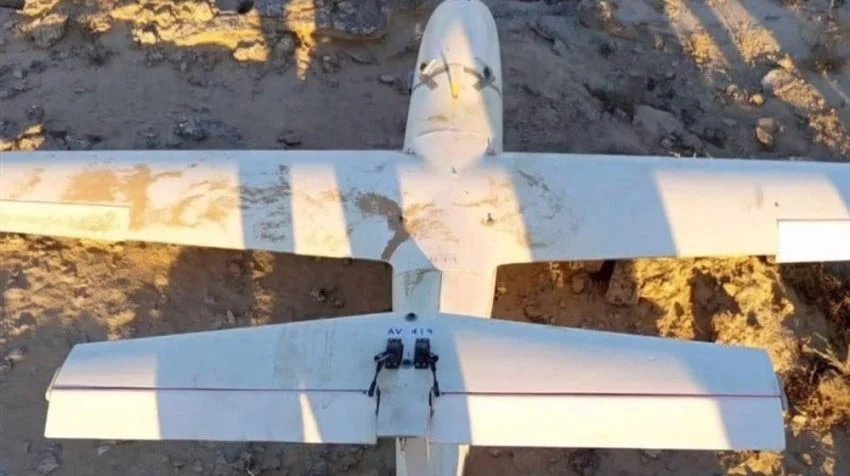
The escalating silent conflict of modern military technology reached a new milestone as the Islamic Revolutionary Guard Corps (IRGC) Navy successfully intercepted and captured an advanced United States MQM-170 drone without inflicting any physical damage. Conducted near the strategic waters south of Qeshm Island in the Persian Gulf, the operation highlights the rapid evolution and growing sophistication of Iran’s electronic warfare (EW) capabilities. Rather than relying on kinetic interceptors such as surface-to-air missiles or anti-aircraft artillery—methods that typically result in the total destruction of the target and the loss of recoverable intelligence—Iranian forces utilized advanced cyber-electronic countermeasures to breach the unmanned aerial vehicle’s guidance systems, seize complete remote control, and guide the aircraft down to a controlled, undamaged landing.
This high-stakes incident underscores a broader, global shift toward non-kinetic warfare, where electromagnetic spectrum dominance often dictates tactical superiority. The MQM-170, a sophisticated surveillance and target acquisition asset, was reportedly operating within the vicinity of sensitive Iranian coastal defenses to map radar frequencies, identify electronic signatures, and evaluate command-and-control vulnerabilities. Instead of successfully completing its reconnaissance mission, the aircraft became the latest high-value trophy in Tehran’s expanding collection of captured Western military hardware, offering military engineers and researchers an unprecedented opportunity to analyze classified avionics, cryptographic protocols, and sensor payloads.
Chronology of the Interception and Strategic Context
The operation unfolded during a routine patrol and intelligence-gathering mission by US military assets monitoring activity in the critical maritime choke points of the Middle East. According to official statements released by the IRGC Navy, the MQM-170 drone was detected as it approached Iranian territorial airspace south of Qeshm Island, a heavily fortified Iranian island situated at the entrance of the Strait of Hormuz.
Tasked with mapping air defense installations and assessing electronic warfare preparedness in the region, the drone entered a designated zone monitored by specialized IRGC cyber and electronic defense units. Recognizing the platform’s technological profile, Iranian operators deployed targeted electromagnetic interference and spoofing protocols. By mimicking legitimate satellite control signals and overriding the drone’s internal navigation algorithms, the IRGC severed the connection between the aircraft and its remote operators.
Once command of the vehicle was successfully established, IRGC specialists commanded the drone to alter its flight path and descend systematically. The aircraft touched down on terrain controlled by Iranian forces, remaining entirely intact. The absence of structural damage or ballistic impact marks verified the exclusive use of soft-kill electronic measures rather than hard-kill kinetic destruction. Following the recovery, security teams secured the perimeter, dismantled sensitive components for forensic analysis, and transferred the hardware to a secure research facility for reverse engineering.
Technical Profile of the MQM-170 and Electronic Warfare Evolution
The MQM-170 represents a class of high-performance aerial vehicles utilized extensively for intelligence, surveillance, reconnaissance (ISR), and electronic intelligence (ELINT) gathering. Equipped with advanced synthetic aperture radar, high-definition optical sensors, and sensitive signal interception suites, these drones are engineered to collect vital telemetry on enemy air defense networks. Their primary objective is to provoke electronic responses from radar installations, allowing remote analysts to map frequencies, identify blind spots, and formulate suppression plans for potential future operations.
However, the increasing reliance on digital command links, GPS navigation, and automated flight stabilization systems also exposes modern unmanned platforms to asymmetric vulnerabilities. Electronic warfare encompasses the manipulation of the electromagnetic spectrum to deny, degrade, disrupt, or usurp an adversary’s capabilities while protecting friendly forces. Over the past decade, nations subjected to strict international arms embargoes have heavily invested in asymmetric defense strategies, focusing disproportionate resources on cyber warfare, radar jamming, and GNSS (Global Navigation Satellite System) spoofing.
The incident near Qeshm Island is not an isolated event but rather part of a documented pattern of electronic warfare escalation in the Persian Gulf. Iran has previously demonstrated the capability to manipulate or capture high-profile US and allied unmanned systems. Most notably, in 2011, an RQ-170 Sentinel stealth drone was brought down in northeastern Iran through sophisticated GPS spoofing techniques. Subsequent incidents involving smaller surveillance drones and maritime surface vessels have repeatedly tested the boundaries of electromagnetic dominance in the region.

The success of the IRGC’s recent operation suggests that Iranian electronic warfare units have refined their methodologies, transitioning from rudimentary signal jamming to precise cyber-hijacking capable of neutralizing highly secure communication nodes. This capability complicates the operational calculus for foreign military planners who rely on unmanned assets to project power and gather intelligence without risking pilot lives.
Official Reactions and Regional Geopolitical Implications
As news of the capture circulated internationally, geopolitical stakeholders began assessing the ramifications of the event. Official representatives of the IRGC Navy framed the successful interception as a decisive testament to the self-reliance and technological prowess of Iran’s domestic defense sector. In statements broadcast through state media, military commanders emphasized that the Islamic Republic remains fully prepared to counter any incursion into its sovereign airspace or maritime boundaries, utilizing advanced technological countermeasures to neutralize foreign reconnaissance efforts.
Conversely, officials from the United States Department of Defense and allied commands have maintained a measured public posture, standard practice when dealing with sensitive intelligence losses or operational mishaps involving classified hardware. While independent verification of the exact telemetry and operational parameters surrounding the incident remains limited due to the classified nature of the assets involved, defense analysts in Washington and European capitals are closely evaluating the security implications.
The primary concern among Western military strategists is the potential compromise of sensitive technology. When an advanced military drone is captured intact, adversaries gain direct physical access to proprietary circuit boards, proprietary software code, encrypted communication algorithms, and specialized sensor components. This exposure allows engineers to develop counter-measures, patch systemic vulnerabilities, and share technical data with strategic partners such as Russia and China. Consequently, the loss of the MQM-170 extends far beyond a single tactical failure, carrying long-term strategic costs for the technological edge traditionally maintained by Western forces.
Furthermore, the incident highlights the volatile security environment of the Persian Gulf and the Strait of Hormuz, through which a significant portion of the world’s petroleum transit passes. With multiple regional and global powers operating in close proximity, the margin for error is razor-thin. Unintentional escalations, miscalculations, or aggressive technological chess matches in the electromagnetic spectrum can rapidly transform into kinetic confrontations, threatening global energy markets and maritime trade security.
Broader Impact and the Future of Unmanned Warfare
The successful electronic interception of the MQM-170 serves as a critical case study for military academies and defense technologists worldwide, signaling the definitive arrival of a new era in warfare. As militaries increasingly digitize their arsenals, the electromagnetic spectrum has evolved into a contested combat domain as vital as land, sea, air, and space.
Key takeaways from the incident include the urgent necessity to harden unmanned aerial systems against advanced spoofing and cyber-hijacking. Traditional encryption and frequency-hopping techniques, while effective against basic interference, are proving vulnerable to sophisticated, state-sponsored electronic warfare apparatuses capable of mimicking authentic control architectures. Future military drone development will likely prioritize autonomous resilience, requiring platforms to complete missions and return safely even when all external communication links are severed or compromised.
Additionally, the event underscores the growing parity in asymmetric warfare capabilities. Nations historically disadvantaged in traditional heavy military hardware—such as large naval fleets, strategic bomber wings, or fifth-generation fighter inventories—are successfully leveraging targeted investments in electronic warfare, cyber defense, and missile technology to create localized deterrence zones, often referred to by military strategists as Anti-Access/Area Denial (A2/AD) environments.
In conclusion, the capture of the US MQM-170 drone by the IRGC Navy near Qeshm Island is far more than a localized tactical skirmish; it is a clear indicator of the shifting dynamics of global military power. As electronic warfare continues to mature, the ability to control, manipulate, and neutralize an adversary’s digital nervous system will increasingly determine the outcome of geopolitical standoffs. For military planners across the globe, the incident serves as a stark reminder that in the twenty-first century, supremacy in the skies depends as much on invisible electromagnetic waves as it does on brute physical force.