
Finance Minister Purbaya Yudhi Sadewa has officially confirmed that the Indonesian government is maintaining intensive coordination with Bank Indonesia regarding the strategic relocation of the Excess Budget Balance, known locally as Saldo Anggaran Lebih (SAL), from the central bank to the Association of State-Owned Banks (Himbara). This clarification follows a series of inquiries from the House of Representatives (DPR RI), specifically Komisi XI, which oversees financial and banking affairs. The Minister emphasized that the decision to shift approximately Rp100 trillion in government funds is a calculated move designed to optimize national cash management and ensure the stability of the domestic financial system.
Speaking at the Presidential Palace Complex in Central Jakarta on Monday, July 20, Minister Purbaya addressed the concerns raised by lawmakers regarding the transparency and legality of the fund transfer. He reassured the public and the legislature that every step of the process has been conducted in close consultation with Bank Indonesia Governor Perry Warjiyo and his team. According to the Minister, the communication channels between the Ministry of Finance and the central bank remain seamless, ensuring that the volume and timing of the transfers do not disrupt monetary stability.
The discourse surrounding the SAL funds gained significant traction after a working meeting with Komisi XI, where several members of parliament questioned the underlying mechanism and the timing of the transfer. The Minister’s statement serves as a formal response to these legislative concerns, framing the policy as a necessary intervention to address liquidity imbalances within the Indonesian banking landscape.
Understanding the Excess Budget Balance (SAL) and the Transfer Mechanism
The Excess Budget Balance (SAL) represents the accumulated surplus from previous years’ budget executions, including unspent allocations and revenues that exceeded initial projections. Historically, these funds are parked at Bank Indonesia to serve as a fiscal buffer. However, the government’s recent decision to move a portion of these funds—specifically Rp100 trillion—into the commercial banking sector, specifically the Himbara group (which includes Bank Mandiri, BRI, BNI, and BTN), marks a significant shift in cash management strategy.
Minister Purbaya clarified that this massive transfer is not intended to finance direct government spending or new projects. Instead, it is a treasury management maneuver aimed at redistributing idle cash. By moving these funds into Himbara, the government intends to inject much-needed liquidity into the banking system, which can then be leveraged to support credit growth and stimulate economic activity. The Minister noted that at one point, government cash balances at Bank Indonesia approached the Rp600 trillion mark. Of this total, the government has moved approximately Rp400 trillion into the broader banking system through various placement schemes, with the SAL transfer being a primary component of this initiative.
Legislative Scrutiny and the Role of the 2026 State Budget Law
The policy faced immediate pushback from the Vice Chairman of Komisi XI DPR, Dolfie Othniel Frederic Palit. During the parliamentary sessions, Dolfie raised critical points regarding the legal framework of the 2026 fiscal year. He argued that any placement of SAL funds for the 2026 budget year must strictly adhere to the provisions set forth in the State Budget Law (UU APBN) of 2026. According to Dolfie, such a significant movement of state funds requires explicit parliamentary approval to ensure that it aligns with the national economic strategy and does not bypass the constitutional oversight of the DPR.
Dolfie’s critique centers on the principle of budgetary discipline. He suggested that if the government intends to use SAL funds as a tool for liquidity management, the mechanism must be transparently debated and codified within the annual budget law. In response to these criticisms, Minister Purbaya stated that the government would revisit and study the legal stipulations mentioned by the commission. He maintained, however, that the primary objective remained the preservation of financial system stability, a mandate that often requires agile fiscal and monetary coordination.
Economic Rationale: Liquidity Concerns and the M0 Indicator
One of the most technical aspects of Minister Purbaya’s defense involved a shift in how the government monitors financial health. He revealed that the government had identified discrepancies in the indicators traditionally used by the Financial System Stability Committee (KSSK) to assess banking liquidity. The Minister argued that the "base money" (M0) indicator—which includes currency in circulation and bank reserves held at the central bank—provides a more accurate reflection of the actual liquidity available in the economy.
The Minister’s analysis showed a worrying trend: from April to August 2025, the growth of the primary money supply (M0) was almost stagnant. In economic terms, a flat growth rate in M0 suggests that the circulation of money within the economy is slowing down, which can lead to a credit crunch and hampered GDP growth. By observing this stagnation, the Ministry of Finance concluded that the banking sector was facing a liquidity tightening, even if other broader indicators might have suggested otherwise.
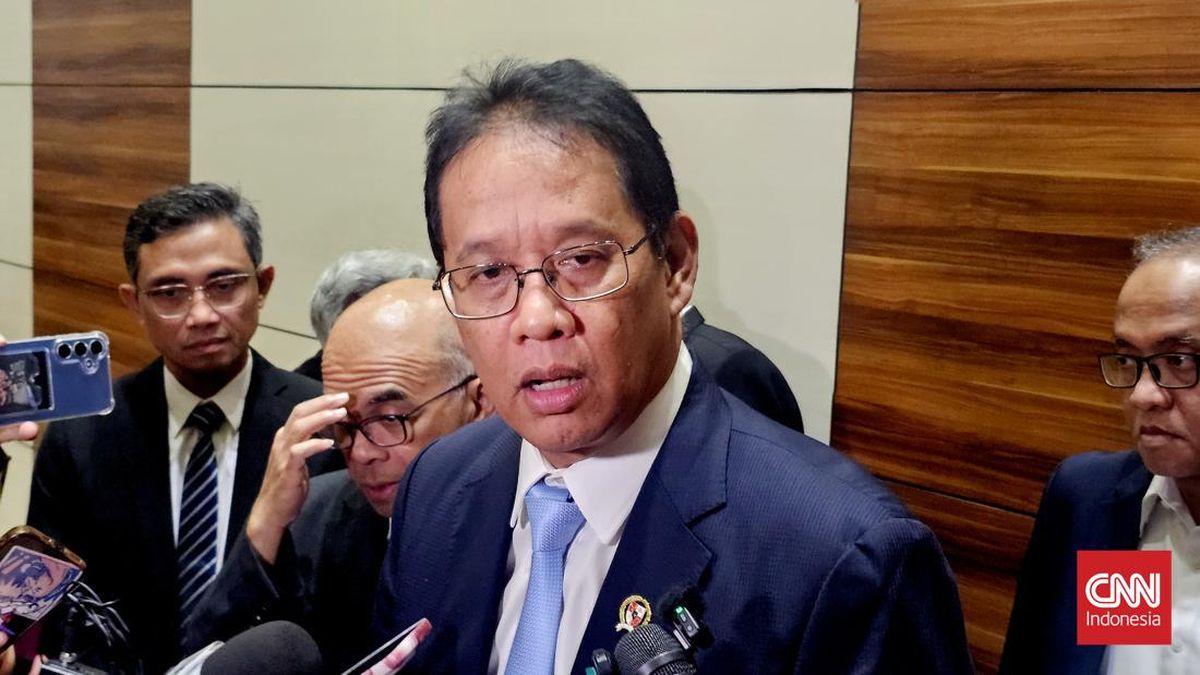
"When we saw that the money primer was not moving, it was a clear signal that the circulation of money in the economy was slowing down," Purbaya explained. This observation served as the catalyst for the decision to move the SAL funds. By shifting Rp100 trillion from the "vaults" of the central bank into state-owned commercial banks, the government is essentially forcing that liquidity back into the market, where it can be used for lending to businesses and consumers.
Chronology of the Policy Implementation
The timeline for this policy spans several key phases of the 2025-2026 fiscal cycle:
- Early 2025: The Ministry of Finance identifies a significant buildup of government cash at Bank Indonesia, peaking near Rp600 trillion.
- April – August 2025: Economic monitoring reveals a stagnation in the M0 (base money) growth, signaling potential liquidity issues in the private and public banking sectors.
- Late 2025: The government begins a phased approach to placing funds in the banking system, totaling approximately Rp400 trillion across various instruments.
- Early 2026: The specific plan to move Rp100 trillion of SAL funds to Himbara is finalized and begins implementation, drawing the attention of Komisi XI DPR.
- July 20, 2026: Minister Purbaya Yudhi Sadewa provides a formal explanation at the Presidential Palace, following a heated debate in the House of Representatives regarding the legality and necessity of the transfer.
Broader Implications for the Indonesian Economy
The decision to transfer such a massive amount of capital has wide-ranging implications for the Indonesian macroeconomic landscape. Analysts suggest that this move could have several outcomes:
1. Lowering Interbank Lending Rates: By increasing the liquidity of Himbara banks, the government may indirectly lower the cost of funds. When state banks are flush with cash, the competition for deposits decreases, which can lead to a reduction in interest rates for both interbank lending and consumer loans.
2. Boosting Credit Distribution: The Himbara banks are the primary engines for government-backed credit programs, such as the People’s Business Credit (KUR). With an additional Rp100 trillion in their coffers, these banks are better positioned to expand their lending portfolios, particularly to small and medium-sized enterprises (SMEs) that are vital for economic resilience.
3. Strengthening the Money Multiplier Effect: In monetary economics, the movement of funds from the central bank to commercial banks allows for the "money multiplier" effect to take place. Every rupiah deposited in a commercial bank can be lent out multiple times (within reserve requirement limits), significantly increasing the total money supply (M2) and stimulating economic growth.
4. Fiscal-Monetary Conflict Risks: While the Minister emphasizes coordination, some economists warn of potential friction. If the central bank is trying to tighten the money supply to combat inflation while the government is injecting liquidity to spur growth, these two policies could work at cross-purposes. However, Purbaya’s insistence on "close coordination" suggests that BI is in agreement with this liquidity injection as a counter-cyclical measure.
Conclusion and Future Outlook
Minister Purbaya Yudhi Sadewa’s clarification at the Presidential Palace underscores the complexities of managing a national economy in a post-pandemic recovery era. The transfer of Rp100 trillion from Bank Indonesia to Himbara is not merely a clerical shift of funds but a deliberate act of economic intervention. By prioritizing the M0 indicator and addressing the stagnation in money circulation, the government is taking a proactive stance against potential economic cooling.
As the government prepares to revisit the legal frameworks cited by the DPR, the focus remains on balancing legislative compliance with the need for rapid executive action in the face of shifting economic data. The success of this policy will ultimately be measured by whether this Rp100 trillion injection translates into tangible credit growth and a more vibrant domestic economy throughout the remainder of 2026. For now, the Ministry of Finance stands firm in its assessment that the current banking system requires this liquidity boost to maintain the momentum of national development.