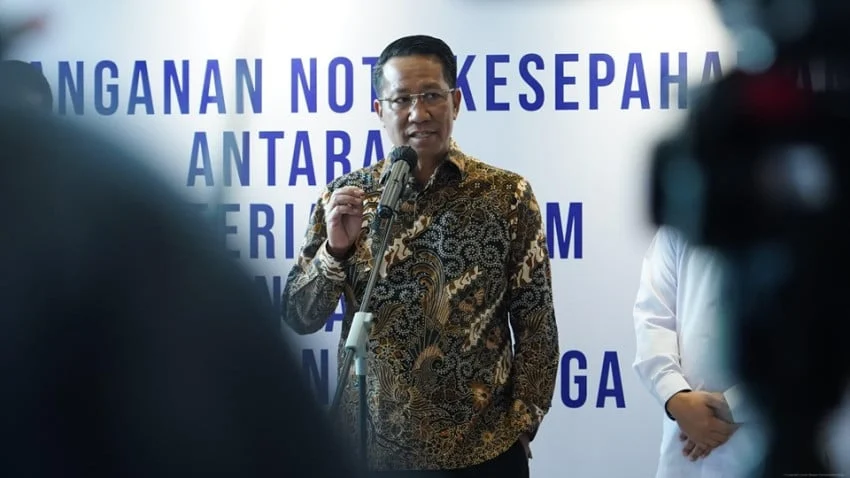
The Minister of Law, Supratman Andi Agtas, has formally addressed growing public concerns regarding the number of Indonesian citizens seeking to renounce their nationality, clarifying that there is no statistically significant upward trend in such applications. Speaking at the Graha Pengayoman building within the Ministry of Law complex on Friday, July 24, 2026, the Minister emphasized that recent reports citing approximately 300 applications for the relinquishment of citizenship were based on cumulative data spanning several years rather than a sudden spike in the current calendar year. This clarification aims to dispel rumors of a mass "brain drain" or a loss of national confidence, suggesting instead that the figures represent a standard administrative accumulation of processed and pending cases from previous periods.
According to Minister Supratman, the figure of 300 individuals mentioned in previous discussions includes applications submitted as far back as a year ago, alongside more recent filings. He reiterated that the ministry maintains a consistent and methodical approach to tracking these changes in status, and the data does not suggest an exodus of Indonesian nationals to foreign jurisdictions. The Minister’s statement serves as a vital correction to the narrative that has been circulating in various media circles, which hinted at a growing dissatisfaction among the populace leading to a surge in citizenship renunciation.
The Paradox of Naturalization: High Demand and Strict Selection
While the news of citizens renouncing their nationality often captures headlines, Minister Supratman pointed out a contrasting and perhaps more significant trend: the overwhelming number of foreign nationals seeking to become Indonesian citizens through the process of pure naturalization. The interest in obtaining Indonesian citizenship (WNI status) remains exceptionally high, reflecting the country’s growing economic influence and strategic importance on the global stage. However, the Minister revealed that the government has adopted an increasingly selective posture toward these applications.
In the year 2025, out of thousands of naturalization applications submitted to the Ministry of Law, only five individuals were granted Indonesian citizenship. This stark disparity between the number of applicants and the number of approvals highlights the government’s rigorous vetting process. Supratman explained that the state does not grant citizenship lightly; it is a privilege reserved for those who can demonstrate significant value to the nation, whether through economic investment, specialized expertise, or cultural contributions. The low approval rate is a deliberate policy intended to ensure that new citizens are fully committed to Indonesia’s national interests and legal framework.
Enhanced Verification and Legal Safeguards
A central theme of the Minister’s briefing was the implementation of much stricter verification protocols for both those seeking to enter the Indonesian fold and those seeking to leave it. The Ministry of Law has identified several historical instances where individuals utilized the renunciation of citizenship as a tactical maneuver to evade legal consequences or financial obligations within Indonesia.
"Why is it now much more difficult? Because we have had cases where individuals held passports and were later discovered to have ongoing legal issues in Indonesia," Supratman stated. The government is now particularly vigilant regarding individuals who might be attempting to flee the country to avoid prosecution or to bypass tax liabilities. This is especially relevant for applicants who are associated with major corporations or high-net-worth families.
The verification process now involves a multi-agency check. For instance, if a young adult—the child of a prominent business figure—applies to renounce their Indonesian citizenship, the Ministry of Law conducts an investigation into the parent’s business dealings. The goal is to ensure that the renunciation is not a move to shield assets or distance family members from impending tax audits or legal disputes. "If the child is applying, we must confirm whether they are involved in their parent’s company and if there are any outstanding tax issues. Everything must be confirmed," the Minister concluded.
Understanding the Legal Framework: Law No. 12 of 2006
To understand the context of these citizenship shifts, one must look at Law No. 12 of 2006 concerning Citizenship of the Republic of Indonesia. Indonesia strictly adheres to the principle of single citizenship for adults. While the law allows for limited dual citizenship for children born from mixed marriages (Indonesian and foreign parents), these individuals must choose one nationality upon reaching the age of 18 or, at the latest, by age 21.
A significant portion of the "renunciation" cases often cited in data pertains to these young adults who, having grown up in a globalized environment or having been educated abroad, choose the nationality of their foreign parent for professional or personal reasons. This demographic reality often inflates the perception of people "leaving" Indonesia, when in fact, it is often a legal requirement to settle a dual-status situation that was always intended to be temporary under Indonesian law.
Furthermore, the Minister touched upon the automatic loss of citizenship. Under the current legal framework, an Indonesian citizen automatically loses their nationality if they voluntarily join a foreign military or take an oath of allegiance to a foreign state. Reacquiring Indonesian citizenship after such an event is not a simple administrative task; it requires a comprehensive legal process, often involving presidential approval for naturalization, as the individual is then treated as a foreign national.
Socio-Economic Implications and the Global Talent War
The Minister’s remarks come at a time when Southeast Asian nations are increasingly competing for global talent. While Indonesia maintains a strict naturalization policy, the high volume of applicants suggests that the country remains an attractive destination for foreign professionals and investors. The government’s decision to limit approvals to only five individuals in 2025 indicates a shift toward "quality over quantity," prioritizing individuals who bring transformative potential to the Indonesian economy.
Conversely, the scrutiny applied to those renouncing citizenship reflects a broader regional trend of fiscal accountability. As Indonesia seeks to expand its tax base and improve its ease-of-doing-business rankings, preventing "citizenship shopping" for the purpose of tax evasion has become a priority for the Ministry of Finance and the Ministry of Law. By integrating tax records into the citizenship verification process, Indonesia is signaling to the international community that its nationality cannot be used as a shield against sovereign domestic obligations.
Chronology of the Citizenship Debate
The current discussion was sparked by a series of parliamentary inquiries and media reports earlier in the year, which suggested that an increasing number of high-skilled Indonesians were seeking foreign nationalities. This led to a public debate regarding the necessity of a "Dual Citizenship" policy, which some diaspora groups argue would allow Indonesia to retain its best talent while allowing them to work more easily abroad.
- Late 2024 – Early 2025: Diaspora organizations intensified lobbying for dual citizenship, citing the need for Indonesia to remain competitive in the global labor market.
- March 2025: Preliminary data from the Directorate General of General Legal Administration (AHU) was misinterpreted by some media outlets, suggesting a 300% spike in renunciation requests.
- June 2025: The Ministry of Law announced new, more stringent background check requirements for all citizenship-related applications, citing national security and fiscal integrity.
- July 24, 2026: Minister Supratman Andi Agtas held a press conference to provide the definitive context for the "300 applications" figure and to highlight the success of the new vetting procedures.
Reaction from Legal and Economic Experts
Legal analysts have generally praised the Ministry’s move toward transparency and stricter verification. "The integration of tax and legal background checks into the citizenship process is a necessary step for a maturing democracy," said a legal expert from the University of Indonesia. "It ensures that the bond of nationality is not treated as a mere convenience but as a serious legal commitment to the state."
Economists, however, have raised questions about the extremely low approval rate for naturalization. With only five approvals out of thousands, there is concern that Indonesia might be missing out on valuable human capital. While the Minister emphasized national interest, some suggest that a more streamlined pathway for "high-value" naturalization—similar to the "Golden Visa" programs seen in other countries—could benefit Indonesia’s technological and industrial sectors.
Conclusion: A Balanced Approach to Sovereignty
Minister Supratman Andi Agtas’s clarification serves as a reminder that citizenship is one of the most significant expressions of national sovereignty. By debunking the myth of a renunciation trend and highlighting the rigors of the naturalization process, the Ministry of Law is asserting control over the country’s demographic and legal boundaries.
As Indonesia continues to navigate its role as a regional leader, the management of its citizenship rolls will remain a delicate balancing act. The government must weigh the benefits of attracting global talent against the necessity of maintaining legal integrity and ensuring that its citizens, whether by birth or by choice, remain accountable to the laws of the land. For now, the message from the Ministry is clear: Indonesian citizenship is a highly sought-after status, and the gates to entering—or leaving—the national fold are more carefully guarded than ever before.