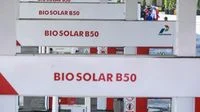
State-owned energy giant PT Pertamina (Persero), through its commercial retail subsidiary PT Pertamina Patra Niaga, has announced an ambitious target to achieve a complete and uniform nationwide distribution of B50 biodiesel across all public fuel filling stations (SPBU) by the end of September. This strategic milestone represents a significant leap forward in Indonesia’s ongoing commitment to enhancing national energy independence, reducing reliance on imported fossil fuels, and aggressively lowering carbon emissions through the increased utilization of palm oil-based renewable energy.
The nationwide transition underscores the government’s unwavering dedication to scaling up the bio-content in automotive diesel. B50 is an advanced blended fuel composed of 50 percent biodiesel—specifically Fatty Acid Methyl Ester (FAME) derived directly from processed crude palm oil (CPO)—and 50 percent fossil-derived diesel. This initiative supersedes previous blending mandates, such as B35 and B40, positioning Indonesia at the global forefront of mandatory large-scale biofuel implementation within the transportation and industrial sectors.
Current Distribution Progress and Regional Implementation Challenges
Providing a comprehensive update on the logistical rollout, PT Pertamina Patra Niaga Retail Marketing Director Eko Ricky Susanto revealed that the infrastructural readiness for B50 is already approaching completion. Speaking during the "Pertamax Journey" event held in Bantul Regency, Special Region of Yogyakarta, on Friday, September 11, Susanto confirmed that the vast majority of Pertamina’s fuel terminals have successfully integrated B50 into their storage systems.
Furthermore, the physical availability of B50 at the retail SPBU level has already reached an impressive 95 percent nationwide saturation rate. According to Susanto, the remaining 5 percent of stations yet to transition are primarily located in remote or eastern archipelagic regions, specifically within the provinces of Maluku and Papua. These regions are currently undergoing a mandatory operational transition phase, as logistics operators must first deplete existing high-volume inventories of the predecessor fuel, Biosolar B40, before introducing the new B50 formulation.
"It is our shared expectation that by the end of September, we will have fully transitioned to 100 percent B50 distribution across the entire network," stated Susanto during his address to industry stakeholders and media representatives.
The logistical feat of shifting millions of kiloliters of fuel across Indonesia’s thousands of islands requires meticulous coordination among supply chain managers, refinery operators, and independent station owners. Despite geographical complexities, Pertamina’s downstream distribution network has managed to maintain a steady supply chain, ensuring that commercial haulers, logistics fleets, and private diesel vehicle owners experience minimal disruption during the transitional period.
Chronology and Evolution of Indonesia’s Biodiesel Mandate
Indonesia’s journey toward higher biodiesel blending ratios has been systematic, carefully calibrated, and implemented over more than a decade. The nation first introduced mandatory blending in 2008 with a modest B2.5 mixture, which gradually scaled up to B10 by 2016 and B20 by 2018. The acceleration of the program gained significant momentum in the post-pandemic era as global crude oil price volatility threatened national trade balances and foreign exchange reserves.
In January 2023, Indonesia successfully implemented the B35 mandate, which elevated the FAME content to 35 percent. This policy successfully saved billions of dollars in foreign exchange previously allocated for crude oil imports while simultaneously absorbing millions of tons of domestic palm oil surpluses. Building upon the technical success and stable engine performance observed during the B35 and subsequent B40 trials, policymakers and technical researchers from the Ministry of Energy and Mineral Resources (ESDM), in collaboration with the Agency for the Assessment and Application of Technology (BPPT/BRIN) and automotive manufacturers, fast-tracked engine compatibility tests for the B50 formulation.
The rigorous testing protocols evaluated fuel stability, engine wear, injector cleanliness, and filter plugging tendencies across various heavy-duty commercial vehicles and passenger cars. The successful completion of these trials provided the technical green light for Pertamina to initiate terminal upgrades and infrastructure readiness checks throughout the first half of the year, culminating in the current nationwide rollout scheduled for completion in September.
Expanding Bioethanol Penetration in Gasoline Products
Beyond the heavy focus on diesel fuel enhancements, Pertamina is simultaneously aggressively expanding the penetration of bioethanol-blended gasoline (gasoline) products across major urban centers in the country. Over the past three years, the distribution footprint of Pertamax Green 95—a high-octane gasoline blended with bioethanol derived from sugarcane molasses or cassava—has experienced rapid geographic expansion, particularly across the densely populated island of Java.
The commercial availability of Pertamax Green 95 currently encompasses key economic hubs, including East Java, Central Java, the Special Region of Yogyakarta, West Java, and major metropolitan areas within the Special Capital Region of Jakarta. This strategic rollout aims to provide environmentally conscious consumers with a cleaner-burning alternative that significantly reduces carbon monoxide and hydrocarbon exhaust emissions compared to conventional non-blended gasoline.
Looking toward the medium-term horizon, Susanto disclosed that the Indonesian government is actively formulating and finalizing comprehensive regulatory frameworks designed to mandate bioethanol integration across all commercial gasoline grades. The overarching vision is to phase out unblended fossil gasoline entirely within the next one to two years, transitioning the national passenger vehicle fleet toward mandatory biofuel utilization.
"The government is currently drafting the foundational policies, and God willing, within the next one to two years, all gasoline products distributed in the domestic market will be bioethanol-based," Susanto elaborated.
Inter-Agency Collaboration and Fiscal Incentives for Ethanol
To ensure the smooth execution of this grand energy transition strategy, close synergy is required among multiple state institutions. Pertamina is actively collaborating with the Ministry of Energy and Mineral Resources (ESDM), the Ministry of Finance, the Ministry of Industry, and agricultural stakeholders to iron out infrastructural, supply chain, and fiscal bottlenecks.
A critical hurdle in accelerating the bioethanol roadmap is the current cost structure of fuel-grade ethanol compared to subsidized fossil fuels. To make bioethanol economically viable for both producers and consumers without imposing excessive financial burdens on retail pricing, Pertamina and the Ministry of ESDM are formally requesting targeted fiscal incentives from the government. Chief among these proposed measures is a complete exemption from excise duties (cukai) for fuel-grade ethanol utilized in national energy blending programs.
Industry analysts point out that eliminating excise taxes on fuel ethanol will level the economic playing field, encouraging domestic agro-industrial players to invest heavily in expanding bioethanol production capacities. Without such fiscal stimulus, high production costs could potentially inflate retail fuel prices, risking consumer resistance and slowing down the transition timeline.
Economic, Environmental, and Strategic Implications
The acceleration toward B50 biodiesel and expanded bioethanol mandates carries profound implications for Indonesia’s macroeconomic stability, environmental commitments, and geopolitical standing.
From an economic perspective, substituting 50 percent of diesel fuel imports with domestically produced palm oil-derived FAME drastically cushions the state budget against global crude oil price shocks. Furthermore, the mandatory biofuel policy serves as a powerful price stabilization mechanism for the domestic palm oil industry, ensuring consistent domestic demand that buffers Indonesian smallholders and plantation corporations against international trade protectionism and shifting export tariffs.
Environmentally, the widespread adoption of B50 and bioethanol-blended gasoline aligns directly with Indonesia’s Enhanced Nationally Determined Contribution (ENDC) targets under the Paris Agreement. By displacing millions of barrels of fossil fuels with renewable agricultural derivatives, Indonesia projects a substantial reduction in greenhouse gas emissions annually, directly mitigating urban air pollution in congested industrial and metropolitan centers.
However, international observers and environmental economists have noted that scaling up biofuel programs requires stringent sustainability oversight. Ensuring that the increased demand for palm oil and bioethanol feedstock does not inadvertently drive deforestation, land-use change, or social conflicts remains a paramount priority for regulatory bodies. The Roundtable on Sustainable Palm Oil (RSPO) and the Indonesian Sustainable Palm Oil (ISPO) certification frameworks will play an indispensable role in verifying that the FAME utilized in B50 originates from responsibly managed plantations.
As the late September deadline approaches, all eyes remain fixed on Pertamina’s operational execution in remote eastern territories and the legislative progress of the upcoming bioethanol regulations. If successfully executed, Indonesia’s bold leap into high-blend biofuels will serve as a transformative blueprint for emerging economies seeking to balance energy security, agricultural empowerment, and aggressive climate action.