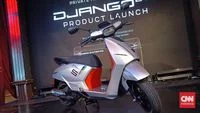
The Indonesian premium scooter landscape has witnessed another significant addition as Permata Otomotif Indonesia (POI), the authorized brand holder and distributor for Peugeot Motocycles in the country, officially introduced its latest two-wheeled offering, the Django Evo 125. Unveiled to the domestic market, the new model arrives with a clear mission to capture a distinct segment of urban riders who prioritize aesthetic individuality alongside daily commuting functionality. Positioned as a modern evolution within the iconic Django family, the vehicle combines classic European styling cues with contemporary engineering standards, aiming to carve out a unique space in a fiercely competitive market dominated by Japanese and emerging regional manufacturers.
Priced competitively within the premium lifestyle segment, the Django Evo 125 is offered in two variants, retailing at Rp71 million and Rp74 million on-the-road (OTR) in the DKI Jakarta region. This pricing strategy places the model firmly in the upper echelon of the 125cc displacement category, targeting affluent consumers, urban professionals, and design-conscious riders who view their motorcycles as extensions of their personal style. With this launch, POI intends to strengthen the brand’s footprint in Indonesia, building upon the established legacy of previous iterations while introducing substantial technological and mechanical upgrades.
The Arrival of Django Evo 125 and Its Place in the Lineage
The introduction of the Django Evo 125 serves as a comprehensive expansion of the existing Django family, which previously comprised the Django Classic, Django Sport, and Django Café Racer variants. While the older models lean heavily into retro-aesthetic nostalgia inspired by Peugeot’s rich automotive and motorcycle history from the mid-20th century, the Evo variant bridges the gap between classic design philosophy and modern rider expectations. The model retains the characteristic retro silhouette that has defined the Django nameplate globally, yet it incorporates sharper design definitions and updated technological integration to remain relevant in a rapidly evolving technological landscape.
Industry analysts note that the introduction of the Evo variant is timely, as consumer demand for differentiated premium commuter products continues to rise across major metropolitan areas in Indonesia. By expanding the portfolio, Permata Otomotif Indonesia provides prospective buyers with a more technologically advanced alternative to traditional retro scooters, catering to an audience that demands modern convenience features without sacrificing stylistic elegance.
Comprehensive Design and Ergonomic Architecture
From an exterior standpoint, the Peugeot Django Evo 125 exhibits a commanding yet refined presence on the road. The vehicle’s visual language is characterized by clean, sharp body lines that give it a more athletic posture compared to its precursors, while maintaining the signature rounded apron and side panels synonymous with the Django lineage. Illumination is entirely modernized through a full LED lighting system, enhancing both night-time visibility and the scooter’s contemporary aesthetic appeal.
Ergonomically, the scooter has been engineered to accommodate a wide variety of rider statures comfortably. The seat height is set at a manageable 780 mm, ensuring that riders of average height can plant their feet firmly on the ground during stop-and-go urban traffic conditions. The vehicle features a wheelbase of 1,369 mm, which contributes to straight-line stability while preserving low-speed maneuverability. In terms of physical dimensions, the Django Evo measures 1,932 mm in length, 753 mm in width, and 1,110 mm in height, maintaining a balanced footprint for tight city lanes. The dry weight is registered at 138 kg, providing a solid, planted feel on the asphalt without compromising agility.
Practicality and storage solutions have also received careful attention from Peugeot’s engineering team. The scooter features a completely flat floorboard, allowing riders to transport bulky items or groceries with ease. Under the seat, the cargo compartment is spacious enough to accommodate a helmet equipped with a visor, a notable convenience for daily commuters. Furthermore, the vehicle includes a convenient front storage compartment equipped with a built-in power socket for mobile device charging on the go. Passenger comfort is prioritized through the inclusion of push-mechanism folding footpegs, while safety is enhanced via standard hazard lighting and a functional side-stand safety cutoff switch.
Powertrain Performance and Mechanical Specifications
Beneath its stylish exterior, the Peugeot Django Evo 125 houses a thoroughly modern mechanical core. Propelling the scooter is a 125 cc, four-stroke, single-cylinder, four-valve engine equipped with liquid cooling and an advanced electronic fuel injection (EFI) system. This configuration ensures optimal thermal efficiency, smooth power delivery, and compliance with stringent modern emissions standards.
The powerplant generates a maximum output of 12.65 PS (equivalent to 9.3 kW) at 8,500 rpm. This performance profile is tailored for urban environments, delivering responsive acceleration from a standstill to easily navigate city intersections and arterial roads. The liquid-cooling system ensures that the engine maintains optimal operating temperatures even during prolonged stop-and-go gridlocks typical of Southeast Asian metropolitan areas.
The chassis and suspension setup are designed to absorb road imperfections while maintaining rider confidence. The scooter rides on 12-inch wheels wrapped in 110/70-12 tires at the front and 120/70-12 tires at the rear, providing a wide contact patch for enhanced traction. Braking duties are handled by a robust disc brake system, featuring a 200 mm rotor at the front and a 190 mm rotor at the rear, ensuring reliable stopping power. Suspension is managed by conventional telescopic forks at the front, complemented by a single rear shock absorber (monoshock) that balances ride comfort and cornering stability. Fuel capacity is rated at 7.9 liters, offering an adequate cruising range between refuelings for typical daily commutes.
Advanced Technology and Digital Integration
Reflecting the digital shift in modern personal mobility, the Django Evo 125 abandons traditional analog instrumentation in favor of a contemporary 5-inch full-color TFT display screen. This vibrant interface delivers comprehensive riding data to the operator, including speed, fuel level, engine temperature, trip meters, and maintenance indicators, all legible under varying lighting conditions.
In addition to the digital dashboard, the vehicle incorporates a keyless ignition system, allowing riders to start the engine and unlock compartments without physically inserting a traditional mechanical key. Peugeot has also integrated an electronic compartment release button located within easy reach of the rider, streamlining access to the front storage pocket and auxiliary charging port. These technological additions position the Django Evo as a forward-thinking machine that meets the connectivity and convenience demands of tech-savvy urban consumers.
Public Debut and Strategic Rollout Timeline
Permata Otomotif Indonesia has structured a deliberate rollout schedule for the model, directing its primary commercial push toward the upcoming automotive exhibition season. The public will get their first comprehensive look at the vehicle, alongside opportunities to place official orders, during the upcoming GJAW x IMOS (Gaido Jakarta Auto Week / Indonesia Motorcycle Show) exhibition. The event is scheduled to run from November 20 to November 29 at ICE BSD City, Tangerang.
Industry observers anticipate that the exhibition will serve as a crucial litmus test for the market reception of European-branded scooters in a landscape heavily saturated by Japanese marques. By leveraging a high-profile industry gathering, POI aims to generate significant consumer interest, facilitate test rides, and build initial order momentum just ahead of the year-end retail cycle.
Targeting New Consumer Segments Through Lifestyle Integration
In an overcrowded market where competitors frequently engage in direct feature-by-feature or price-by-price confrontations, Peugeot Motocycles has opted for a radically divergent marketing philosophy in Indonesia. PT Permata Otomotif Indonesia Director William Sinanta articulated the brand’s strategic vision during the vehicle’s introduction, emphasizing that the company aims to sidestep conventional market battles by appealing directly to distinct lifestyle vectors.
Instead of fighting for the same demographic pools targeted by mass-market Japanese manufacturers, Peugeot is positioning the Django Evo as a lifestyle accessory, forging connections within the spheres of fashion, contemporary art, and independent gallery spaces. According to company leadership, this unconventional outreach strategy is designed to engage consumer segments that have remained largely untouched by traditional automotive marketing campaigns.
"We are chasing their lifestyle needs. That is why we are approaching untraditional pools in the worlds of fashion, art, and galleries," William stated during the briefing. This experiential marketing approach seeks to align the Peugeot brand with aesthetic-driven communities, interior designers, creative professionals, and urban trendsetters who view personal transportation as an extension of their artistic identity.
Broader Market Implications and Future Outlook
The entry of the Peugeot Django Evo 125 into the Indonesian market carries several notable implications for the premium two-wheeler sector. Firstly, it underscores the viability of importing Completely Built-Up (CBU) units—in this case, sourced from manufacturing facilities in China—to meet niche domestic demands where production volume does not yet justify local assembly investments. While reliance on CBU imports exposes the pricing structure to currency fluctuations and import duties, it allows brands like Peugeot to introduce specialized global models rapidly.
Secondly, the strategy of blending French stylistic heritage with modern technological updates challenges incumbent brands to elevate the design sophistication of their own premium offerings. As urban consumers increasingly value individuality and status symbols over mere utility, lifestyle-oriented scooters are expected to capture a growing share of the urban mobility market.
Looking forward, Permata Otomotif Indonesia does not plan to rest on the launch of the Django Evo alone. Company representatives have hinted that additional models from the global Peugeot Motocycles portfolio are slated for introduction and preview during the GJAW x IMOS 2026 exhibition. As these plans unfold, the brand’s unorthodox lifestyle-marketing experiment will be closely watched by industry analysts to determine whether artistic and fashion-forward positioning can successfully carve out a sustainable, profitable niche in one of the world’s most dynamic motorcycle markets.