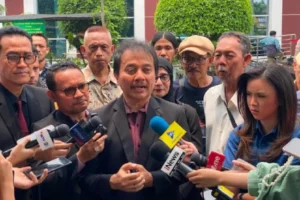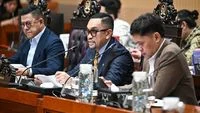
The discourse surrounding the academic credentials of Vice President Gibran Rakabuming Raka has resurfaced in the Indonesian political landscape, prompting varied reactions from major political parties. Ahmad Sahroni, the General Treasurer of the NasDem Party, recently addressed an invitation from the Prosperous Justice Party (PKS) to engage in formal discussions concerning the authenticity and validity of the Vice President’s high school-level diploma. Despite the growing interest from opposition and critical factions, Sahroni emphasized that the NasDem Party has received no formal mandate from its Chairman, Surya Paloh, to prioritize this investigation, instead choosing to focus on legislative priorities.
The Stance of the NasDem Party
Speaking at the Parliament Complex in Jakarta on Wednesday, October 28, Ahmad Sahroni clarified the position of the NasDem Party amidst the mounting pressure to scrutinize the Vice President’s credentials. Sahroni underscored that the party remains committed to its current mandate of supporting the government’s agenda, which includes a focus on pressing legislative matters.
"Coincidentally, for NasDem, the General Chairman has instructed us to continue working according to the applicable rules and to provide support to the government," Sahroni stated. "Regarding other matters, there has been no instruction whatsoever."
Sahroni further clarified that the party’s current legislative priority is the Asset Forfeiture Bill (RUU Perampasan Aset), which he described as an urgent piece of legislation necessary for the country’s legal and anti-corruption framework. By positioning the Asset Forfeiture Bill as the primary focus, NasDem effectively signals a desire to remain detached from the escalating political debate regarding the Vice President’s educational history.
The PKS Initiative and the Call for Accountability
The impetus for this discussion originated from the PKS leadership. Muhammad Kholid, the Secretary-General of PKS, announced that the party intends to initiate communication with other parliamentary factions to address the polemic surrounding Gibran Rakabuming Raka’s diploma. According to Kholid, this move is part of a broader directive from PKS President Al Muzammil Yusuf to ensure that the party serves as a bridge for public aspirations.
PKS maintains that the ongoing questions regarding the diploma—and the broader context of the constitutional court’s rulings—should serve as a catalyst for a comprehensive evaluation of the election management system in Indonesia. The party argues that transparency regarding the educational qualifications of high-ranking state officials is essential for maintaining public trust in the democratic process.
Historical Context and Legal Scrutiny
The controversy over the Vice President’s diploma is not an isolated incident but rather a continuation of debates that emerged during the 2024 Presidential Election cycle. Critics have questioned the documentation provided during the registration process, pointing to perceived inconsistencies in the academic records submitted to the General Elections Commission (KPU).
Parallel to this, the Indonesian Democratic Party of Struggle (PDIP), represented by Secretary-General Hasto Kristiyanto, has been vocal about the implications of these controversies. Hasto has linked the diploma issue to the broader debate surrounding Constitutional Court (MK) Ruling Number 90/PUU-XXI/2023, which allowed Gibran to run for office despite not meeting the previous minimum age requirements.
Hasto argued that the accumulation of these issues—the age requirement controversy and the diploma validity concerns—represents a breach of ethical standards. "When these two things have been violated, both from the aspect of age and the fulfillment of the minimum requirements for a diploma, this touches on the aspects of ethics, morality, and the exemplary nature of a state official in the public eye," Hasto remarked.
Timeline of the Diploma Controversy
To understand the current tension, it is necessary to examine the timeline of events that have led to this point:
- October 2023: The Constitutional Court issues Ruling 90, which provides an exception to the age requirements for presidential and vice-presidential candidates, allowing Gibran Rakabuming Raka to enter the race.
- November 2023: During the official registration period, public debate intensifies regarding the academic records of all candidates, with specific focus directed toward the Vice President-elect’s educational history.
- February 2024: The General Election takes place, resulting in the victory of the Prabowo Subianto-Gibran Rakabuming Raka ticket, despite lingering online discourse regarding academic qualifications.
- October 2024: Following the inauguration of the new administration, PKS and other political stakeholders seek to formalize the discussion on institutional accountability, focusing on the verification of educational requirements for top-tier officials.
Implications for Governance and Public Trust
The debate over the Vice President’s diploma represents a fundamental struggle over the standards of public office in Indonesia. At the core of the issue are two competing interests: the need for political stability and the demand for strict adherence to constitutional and ethical mandates.
From an institutional perspective, the KPU has maintained that all candidates, including the Vice President, underwent a thorough verification process during the registration phase. However, critics argue that the "verification" was merely administrative and failed to address substantive concerns regarding the authenticity of the documents.
The call for an evaluation of the "governance of the election system" by PKS suggests that the issue is not just about a single diploma, but about the integrity of the selection process itself. If the system is perceived to be flexible regarding constitutional requirements—such as age and education—it may lead to a long-term erosion of public confidence in the legitimacy of elected officials.
Political Fragmentation and the Future of the Coalition
The response from Ahmad Sahroni and the NasDem Party illustrates the current fragmentation within the Indonesian political spectrum. While PKS and parts of the opposition seek to use this issue as a means of exerting oversight, parties within the current government coalition are largely signaling a preference for stability and the continuation of the administration’s policy agenda.
For NasDem, the calculation is clear: the political cost of challenging the Vice President’s credentials outweighs the potential benefit. By focusing on the Asset Forfeiture Bill, the party is attempting to align itself with popular policy goals while avoiding a direct confrontation with the executive branch.
Conversely, for PKS and PDIP, maintaining the pressure serves as a long-term strategy to define the ethical boundaries of the current administration. As the legislative term progresses, the ability of these parties to translate these concerns into tangible policy or parliamentary inquiries will be a significant indicator of the strength of the opposition in the current political climate.
Conclusion
The debate surrounding Vice President Gibran Rakabuming Raka’s diploma is a multifaceted issue that touches upon legal, ethical, and political dimensions. While PKS seeks to foster a multi-party dialogue to address these concerns, the lack of consensus from influential parties like NasDem highlights the challenges of building a unified political front on this matter. As the administration moves forward, the pressure for transparency will likely persist, forcing a continuous tension between the executive government and those advocating for rigorous accountability in the Indonesian electoral process. The resolution of this debate, if any, will ultimately depend on whether legal institutions or political mechanisms can provide a definitive answer that satisfies both the letter and the spirit of the law.