The legal proceedings surrounding the authenticity of the academic credentials of Indonesia’s seventh president, Joko Widodo (Jokowi), reached a new point of contention on Wednesday, October 28, 2026, at the Jakarta Timur District Court. During the latest session, defendant Roy Suryo, a former Minister of Youth and Sports and a prominent public figure, voiced significant objections regarding the testimonies provided by two prosecution witnesses, Lechumanan and Maret Samuel Sueken. The trial, which centers on allegations of document forgery and public disinformation, has become a high-profile case that continues to polarize public opinion and draw intense scrutiny toward the judicial process.
The Dynamics of the Testimony
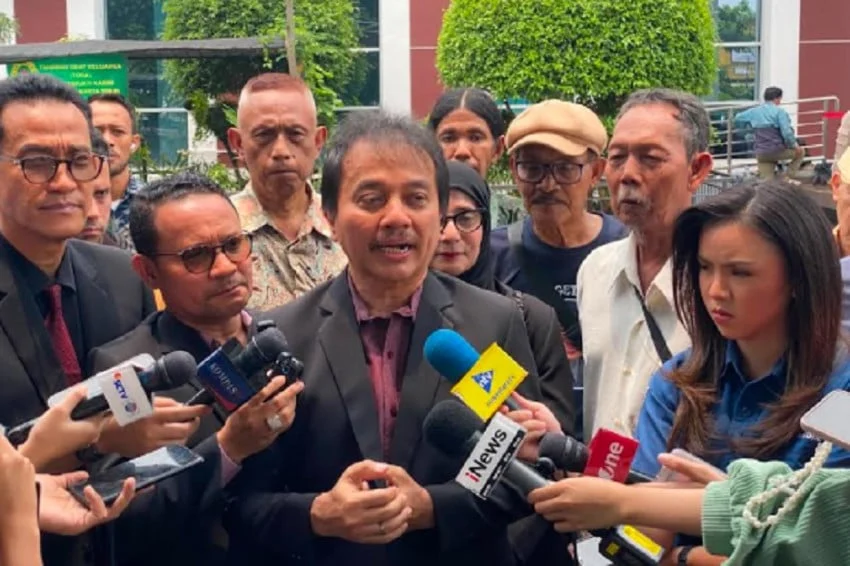
The session was primarily dedicated to the examination of two witnesses brought forth by the Public Prosecutor (JPU). As the legal proceedings unfolded, the demeanor of the witnesses became a focal point of the defendant’s critique. Roy Suryo, speaking to the press immediately following the adjournment of the hearing, drew a sharp distinction between the conduct of the two individuals on the stand.
"Lechumanan was far more polite, far more courteous, and appeared more forthright in his testimony," Roy Suryo stated. In contrast, he leveled criticism at Maret Samuel Sueken, suggesting that his conduct in the courtroom was confrontational. According to the defendant, Sueken’s behavior—which included aggressive gestures and pointing toward members of the public and the defense team—undermined the decorum of the judicial process and raised questions regarding the credibility of his testimony.
The defense argues that the nature of the witness’s delivery is not merely a matter of courtroom etiquette but a reflection of the consistency and reliability of the evidence being presented. By highlighting what he termed "irregularities" in Sueken’s testimony, Roy Suryo aims to cast doubt on the prosecution’s narrative regarding the alleged falsification of the presidential documents.
Historical Context and Legal Background
To understand the gravity of the current proceedings, it is essential to review the timeline of the "Jokowi Ijazah" (Jokowi’s diploma) controversy. The allegations first emerged several years ago, claiming that the diploma used by the President during his candidacy for the 2014 and 2019 presidential elections was fraudulent. These claims were repeatedly addressed by the President’s legal team and relevant academic institutions, all of which confirmed the legitimacy of the documents.
However, the issue persisted in the public sphere, fueled by social media discourse and various political actors. The case against Roy Suryo itself stems from his public commentary on these documents, which led to charges under Indonesia’s Electronic Information and Transactions (ITE) Law. The trial, therefore, serves as a dual forum: it is both a legal battle over the specific charges against the defendant and a proxy battle for the veracity of the original diploma claims.
The prosecution’s decision to call witnesses like Lechumanan and Sueken is a strategic attempt to finalize the evidentiary phase of the trial. The court’s role is to determine whether the defendant’s actions constituted a criminal act of spreading misinformation or if they fell under the umbrella of protected public discourse regarding a high-ranking official.
Analysis of the Courtroom Environment
The Jakarta Timur District Court has seen heightened security and significant media presence throughout this trial. The inclusion of testimony regarding the diploma’s authenticity is a critical component of the prosecution’s case, as they seek to prove that the claims made by the defendant were not only false but also had the potential to incite public unrest or undermine state institutions.

Legal analysts observing the case note that the "demeanor evidence"—or how a witness presents themselves—is often secondary to the substantive facts provided. However, in cases involving political figures and high-stakes public opinion, the performative aspect of a trial can heavily influence public perception. By publicly calling out the "irregularities" in Sueken’s testimony, Roy Suryo is effectively shaping the narrative for his supporters, framing the prosecution’s witnesses as biased or emotionally compromised.
The Role of the Public Prosecutor
The Public Prosecutor’s office maintains that the witnesses were chosen based on their direct knowledge of the facts surrounding the diploma issuance process. The office has reiterated its commitment to transparency, noting that the trial is being conducted in an open forum where all parties have the right to cross-examine.
Regarding the specific testimony of Maret Samuel Sueken, the prosecution has remained largely silent, preferring to let the court records and the judge’s eventual assessment speak for themselves. The JPU has also faced the challenge of managing a high-profile witness list, often balancing the need for relevant testimony with the volatile nature of the public’s interest in the case.
Future Developments: The President’s Potential Involvement
A significant development linked to this ongoing trial is the potential for President Jokowi himself to be called as a witness. Reports have circulated that the Public Prosecutor’s Office is considering a summons for the former president to clarify the status of his academic records once and for all.
Aides to the President have expressed a willingness to cooperate with the legal process, stating that if the court issues a formal summons, the President would, "InsyaAllah" (God willing), attend the hearing. This potential testimony represents a watershed moment for the trial. If the President were to take the stand, it would be a rare and historic occurrence, likely to draw unprecedented national attention and put the controversy surrounding his academic history to a definitive legal rest.
Broader Implications for Indonesian Democracy
The trial of Roy Suryo, and the accompanying focus on the validity of presidential documents, serves as a litmus test for the robustness of Indonesia’s judicial system. It raises several questions regarding the intersection of freedom of speech, political accountability, and the integrity of the judicial process.
- Freedom of Speech vs. Disinformation: The case highlights the ongoing tension between the right to criticize public officials and the legal limitations imposed by the ITE Law regarding the dissemination of information deemed "false" or "harmful."
- Institutional Trust: The persistence of these allegations, despite previous official confirmations, suggests a deep-seated skepticism among segments of the populace toward institutional narratives. The court’s verdict will be scrutinized not just for its legal merit, but for its role in potentially closing or further opening these social divides.
- The Judicial Process as a Political Stage: The courtroom has effectively become an arena for political contestation. The way witnesses are handled, the nature of the cross-examinations, and the public statements made by the defendant all contribute to the political temperature of the country.
Conclusion: The Road Ahead
As the trial progresses, the focus will likely shift from the behavior of the witnesses to the final submission of evidence and the subsequent closing arguments. The court is expected to deliberate on the weight of the testimony provided by witnesses such as Lechumanan and Sueken, alongside the documentary evidence presented by both the defense and the prosecution.
For Roy Suryo, the outcome of this trial carries significant personal and professional weight. For the broader public, the case remains a focal point for understanding how the Indonesian legal system handles challenges to the credibility of high-level state officials. As the court prepares for the next phase of the trial, all eyes will remain on the Jakarta Timur District Court, waiting to see if the legal system can provide the closure that the public and the parties involved so ardently seek.
With the possibility of the President being called to testify, the coming weeks promise to be some of the most critical in this protracted legal saga. Whether the trial will serve to validate the existing records or provide a platform for further inquiry remains to be seen, but the events of October 28 have undoubtedly added another layer of complexity to a case that continues to resonate throughout the halls of Indonesian justice.