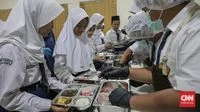
The National Nutrition Agency (BGN) has broken its silence regarding an incident involving dozens of middle school students in Dramaga, Bogor, West Java, who fell ill after consuming meals provided under the government’s flagship free nutritious meal program. According to preliminary investigative findings released by regulatory officials, the adverse health reactions observed among the students are provisionally linked to the peanut sauce served alongside a chicken satay menu.
The episode has ignited widespread public scrutiny, placing the logistics, quality control, and safety protocols of the national school feeding initiative under an intense microscope. As food safety inspectors race to complete comprehensive laboratory analyses of the preserved food samples, the agency has moved swiftly to suspend the operations of the specific kitchen unit responsible for preparing and distributing the contested meals.
Concurrently, local government authorities in Bogor have stepped in to coordinate medical interventions, reassure anxious parents, and absorb all associated healthcare expenditures for the affected youth. While initial media reports stoked panic by broadcasting figures running into the hundreds, official clarifications from both municipal leadership and national agency representatives have sought to present a calibrated, data-driven perspective on the true scope of the health emergency.
Preliminary Findings Point to Pre-Ground Peanut Sauce
Speaking on behalf of the regulatory body, BGN Spokesperson Tysa Novenny outlined the emerging narrative regarding the origin of the contamination during a media briefing. Investigators tracking the supply chain and food preparation methods at the local production unit—known formally as the Nutrition Service Fulfillment Unit (SPPG)—discovered critical deviations from strict food safety handling protocols.
The primary object of suspicion is the peanut condiment accompanying the satay dish. Investigators established that the kitchen facility did not produce the peanut paste from raw ingredients on-site. Instead, the unit procured pre-ground peanut ingredients from an external source, bypassing standard culinary processing stages that typically allow kitchen staff to monitor hygiene, freshness, and contamination risks from scratch.
"Based on the information we have gathered, the provisional suspicion is that the adverse health impact experienced by the students stems from the satay menu, specifically the peanut sauce," Tysa stated. She elaborated that while investigatory proceedings remain active and fluid, the use of pre-processed, pre-ground ingredients represents a vulnerability in the production chain.
In response to these findings, the National Nutrition Agency acted decisively by placing the implicated SPPG kitchen facility under formal administrative suspension. This temporary shutdown is designed to facilitate unhindered forensic inspections, environmental testing of cooking equipment, and interviews with kitchen personnel. Furthermore, food and water samples harvested from the batch have been dispatched to certified laboratories for rigorous microbiological evaluation to identify any specific pathogens, toxins, or chemical agents responsible for the gastrointestinal distress.
Deconstructing the Numbers: Clarifying the Casualty Count
A significant dimension of the developing situation involves a sharp discrepancy between initial media reports and verified medical data regarding the number of impacted children. Early news bulletins and unverified social media transmissions circulated claims that approximately 481 students had fallen victim to food poisoning following the consumption of the government-sponsored lunch program.
BGN has firmly rejected this figure, categorizing it as a massive overestimation fueled by mass anxiety, preventive precautionary measures, and psychosomatic responses within the school environment. According to official tallies compiled by field operatives, the KPPG, and medical response teams, the actual number of individuals requiring medical intervention and extended clinical observation is substantially lower.
"Regarding the incident affecting health standards in Bogor, we wish to clarify that the number of victims is not 400 people, as reported by several media outlets. The accurate figure, as of this afternoon, is that the total number of individuals impacted and remaining under observation is 13 people," Tysa explained.
The inflated figure of 400 allegedly originated from a Tuesday morning administrative exercise conducted by school faculty members. Eager to identify any potential risks, teachers gathered all students who had consumed the subsidized meal on Monday. They conducted a blanket survey asking whether any participants were experiencing abdominal discomfort or nausea.
In a classic demonstration of mass suggestion and psychosomatic feedback—where anxiety over a potential hazard triggers real physiological symptoms—roughly 400 students raised their hands or reported mild stomach pain. Out of an abundance of caution, school administrators and local authorities mobilized transport to escort all 400 students to nearby medical facilities for comprehensive evaluations.
As medical professionals systematically screened the cohort, the vast majority were found to be completely asymptomatic or experiencing minor, transient stress responses. By Tuesday afternoon, rigorous clinical observation filtered the numbers down to a confirmed group of 40 individuals requiring monitoring, which eventually shrank to 13 students still receiving medical attention or ongoing observation by late afternoon. This cohort must be viewed within the broader context of the operation: the two targeted schools in Dramaga accommodate more than 2,000 active beneficiaries of the national nutrition program.
Chronology of Events and Local Government Intervention
The timeline of the health scare indicates that the meals in question were distributed and consumed during the lunch hour on Monday, October 26. The initial wave of symptoms did not manifest immediately after consumption, which often characterizes rapid-onset chemical food poisoning. Instead, the first complaints emerged during the early hours of Tuesday, October 27, when a number of students began waking up with acute gastrointestinal symptoms, predominantly diarrhea and stomach cramps.
Upon receiving reports of widespread student illness, local health authorities and municipal leaders mobilized emergency protocols. Bogor Regent Rudy Susmanto provided reassuring updates regarding the condition of the young patients, noting that prompt medical intervention had successfully stabilized the situation.
"Alhamdulillah, the condition of the students is gradually improving and stabilizing, and they will soon be discharged," Regent Rudy stated, offering a sense of relief to the community.
The majority of the affected children received outpatient care and preliminary stabilization from the medical team at the Cangkurawok Community Health Center (Puskesmas). A select number of students requiring specialized hydration or closer monitoring were subsequently transferred to regional referral hospitals.
To alleviate financial stress on the families of the victims, the Bogor Regency Government issued an official guarantee covering all medical expenses incurred during the health crisis. Regent Rudy confirmed that the municipal administration will absorb 100 percent of the treatment costs, whether incurred at government-run public health centers, municipal hospitals, or private medical institutions designated as referral partners for the local health authority.
Broader Implications for the National Nutrition Program
The incident in Dramaga serves as a crucial stress test for the Free Nutritious Meal (MBG) program, a cornerstone social welfare initiative championed by the national government to enhance the health, cognitive development, and nutritional intake of Indonesian youth. While large-scale public feeding programs carry immense potential for societal upliftment, they simultaneously introduce profound logistical challenges in supply chain integrity, hygiene enforcement, and quality assurance.
The revelation that a processing shortcut—utilizing pre-ground peanut paste rather than freshly prepared ingredients—may have triggered a public health scare highlights systemic vulnerabilities in decentralized kitchen management. Nutrition policy analysts note that scaling up nutritional distribution to millions of school children daily requires infallible standard operating procedures (SOPs) across thousands of localized kitchens. Any deviation from hygiene standards, whether in ingredient sourcing, cold-chain maintenance, or cooking oversight, carries the risk of eroding public trust.
In the wake of the Bogor incident, the National Nutrition Agency faces mounting pressure to overhaul its regulatory oversight mechanisms. Experts suggest that mandatory traceability for all raw and semi-processed ingredients, enhanced sanitary training for kitchen operators, and real-time biometric reporting systems for adverse health events will be essential to preventing future occurrences.
Furthermore, the handling of public communications during crises will require delicate calibration. The stark contrast between initial panic-driven estimates of 400-plus poisonings and the verified clinical total of 13 under observation underscores the danger of unverified information spread during social sector emergencies. Going forward, transparent, rapid, and fact-based disclosures from regulatory bodies like BGN will be paramount in maintaining confidence among parents, educators, and the broader public as the national feeding initiative continues its ambitious rollout across the archipelago.