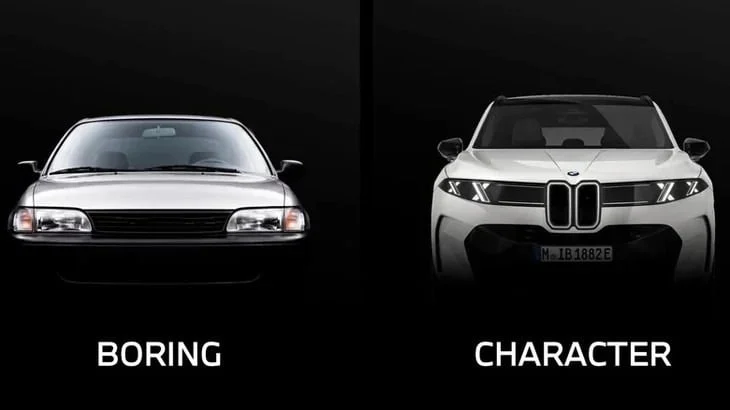
German luxury automotive manufacturer BMW has found itself at the center of a vibrant online debate following a controversial social media marketing campaign that juxtaposed its forthcoming design language with a classic Japanese family sedan. The campaign, which was deployed across official digital channels, utilized a digitally generated image of a 1990s Toyota Corolla to highlight the futuristic aesthetic of the upcoming BMW X5, categorizing the legacy vehicle under the banner of outdated and uninspired design. The maneuver, intended to showcase the revolutionary nature of BMW’s upcoming Neue Klasse platform, instead triggered an unexpected wave of nostalgia and defensive commentary from automotive enthusiasts worldwide, who quickly rallied to defend the enduring legacy of the Japanese mass-market classic.
The controversy underscores the delicate balance modern automotive brands must strike when utilizing comparative marketing in the digital age. While legacy automakers have long leveraged historical contrasts to emphasize technological and aesthetic leaps, the democratization of automotive discourse on social media platforms ensures that targeted brands and their loyal consumer bases can rapidly mobilize counter-narratives. In this instance, BMW’s attempt to project avant-garde sophistication inadvertently sparked a broader conversation about automotive heritage, the charm of analog engineering, and the shifting definitions of design relevance in an era dominated by polarizing modern grilles and screen-heavy interiors.
The Anatomy of a Digital Provocation
The incident unfolded when the official BMW Instagram account published a comparative visual asset designed to illustrate the generational evolution of automotive styling. The first slide in the carousel featured an artificial intelligence-generated depiction of a generic, unbadged sedan from the 1990s. Despite the digital recreation and the deliberate removal of corporate insignia, automotive purists and casual observers alike immediately identified the vehicle as a seventh-generation Toyota Corolla, internally designated as the E100, which was manufactured globally between 1991 and 1997.
Accompanying the vintage imagery was a provocative caption that explicitly labeled the design aesthetic as mundane and uninspired, setting a sharp contrast for the subsequent slide. The following image revealed the aggressive, forward-looking fascia of the upcoming 2027 BMW X5, specifically highlighting elements derived from the brand’s highly anticipated Neue Klasse architecture. According to automotive industry publication Carscoops, the utilization of AI-generated imagery rather than a direct archival photograph was a deliberate styling choice to maintain a clean, standardized visual metric, yet the specific design cues left no ambiguity regarding the vehicle’s provenance.
The AI-rendered Corolla retained several distinct identifiers of its era, including simplified halogen headlight housings, unpainted black plastic bumpers, minimalist grille geometry, and utilitarian side mirrors devoid of body-colored paint matching. Notably, while the Toyota emblem was digitally scrubbed, and the bumper-mounted turn signals were omitted, the iconic silhouette and proportions remained unmistakably tied to one of the best-selling automotive nameplates in human history. Conversely, the accompanying BMW X5 teaser showcased the robust contours of a G65-generation model equipped with an aggressive M Sport aerodynamics package, emphasizing prominent bumper air intakes and a reimagined kidney grille configuration that points toward the future of the Munich-based marque’s styling roadmap.
Chronology of the Social Media Backlash
The dissemination of the comparative post initiated a rapid cascade of reactions across the global automotive community, illustrating the velocity at which digital marketing campaigns can shift from calculated brand positioning to public relations friction.
Phase One: Initial Deployment and Recognition
Within hours of going live, the Instagram post attracted high volumes of engagement. Initially, the comment section reflected standard brand discourse, with enthusiasts debating the merits of modern versus classic styling. However, automotive sleuths quickly identified the unbadged AI rendering as a seventh-generation Toyota Corolla. Given that the E100 Corolla is widely recognized as an indestructible symbol of utilitarian mobility rather than a pinnacle of high design, the choice of target immediately signaled a tongue-in-cheek critique of conventional 1990s automotive packaging.
Phase Two: The Grassroots Defense of an Icon
As the identification of the vehicle spread across automotive forums, enthusiast platforms, and alternative social media channels, the tone of the discourse shifted dramatically. Rather than agreeing with BMW’s assessment of the Corolla as inherently "boring," thousands of users flooded the comment sections and external platforms to champion the Japanese sedan. Commentators highlighted the vehicle’s legendary reliability, mechanical simplicity, and low cost of ownership—attributes that stand in stark contrast to the complex electronics, high depreciation rates, and expensive maintenance associated with modern luxury vehicles.
Phase Three: Broader Industry and Media Pick-Up
By the second day, specialized automotive journalism outlets, including Carscoops and various international digital publications, began analyzing the campaign. The coverage focused not only on the cleverness or miscalculation of BMW’s social media team but also on the public’s emotional attachment to mundane legacy vehicles. The narrative transformed from a localized marketing misstep into a broader cultural discussion regarding the democratization of car design appreciation, where simplicity and mechanical honesty are increasingly valued over aggressive styling and digital clutter.
Comparative Analysis: Neue Klasse vs. Mass-Market Heritage
To fully understand the context of BMW’s marketing strategy, it is necessary to examine the two distinct automotive philosophies being compared. The confrontation pits the bleeding edge of premium European EV-era design against the zenith of 1990s Japanese mass-production practicality.
The BMW Neue Klasse Design Paradigm
The upcoming BMW X5, slated for a 2027 release under the G65 generation code, represents a pivotal moment in the brand’s history. Built upon or heavily influenced by the upcoming Neue Klasse architecture—BMW’s dedicated platform for next-generation electric and digitally integrated vehicles—the design language prioritizes clean surfaces, reduced lines, advanced lighting signatures, and seamless digital integration.
BMW’s leadership has repeatedly stated that Neue Klasse vehicles will redefine the visual identity of the brand, moving away from the complex, surface-heavy detailing of the late 2010s and early 2020s toward a more purist, minimalist approach reminiscent of the iconic 1960s Neue Klasse cars. By contrasting this forward-looking aesthetic with a 1990s econobox, the marketing team sought to visually articulate a quantum leap in automotive evolution. The inclusion of the M Sport package on the X5 further emphasized performance dynamism, asserting that utility vehicles can maintain an aggressive, athletic stance.
The Toyota Corolla E100 Legacy
Conversely, the seventh-generation Toyota Corolla (E100) was never engineered to win beauty pageants or dominate design awards. Introduced in the early 1990s during a period of intense global competition, the E100 was designed to maximize interior space, aerodynamic efficiency, structural safety, and, above all, manufacturing economy. It was a world car built in multiple countries, serving as dependable transportation for millions of families, taxi fleets, and commercial operators.
The reliance on unpainted black plastic bumpers and basic halogen units was not a failure of imagination, but a deliberate engineering choice aimed at reducing repair costs and ensuring long-term durability. The public defense of this vehicle on social media reflects a broader cultural fatigue with hyper-stylized, overly aggressive modern vehicle designs. For many consumers, the unpretentious honesty of a 1990s Corolla represents an era of motoring where cars were simpler, more serviceable, and less intrusive to daily life.
Broader Industry Implications and Marketing Takeaways
The friction generated by BMW’s social media campaign serves as a fascinating case study for contemporary automotive marketing departments navigating the digital landscape. Several key implications emerge from the incident:
- The Power of Nostalgia: Modern consumers possess a deep emotional connection to everyday classic cars. Vehicles that were once viewed as mundane are increasingly celebrated for their authenticity, making them risky targets for derogatory comparisons.
- The Risks of AI-Generated Assets: Utilizing artificial intelligence to recreate historical vehicles allows brands to bypass licensing and copyright hurdles, but it can also create an uncanny valley effect or invite hyper-scrutiny from enthusiasts who delight in identifying obscure design lineage.
- Shifting Consumer Values: As new vehicles become increasingly expensive, technologically complex, and visually polarizing, public sympathy often sides with simple, mechanically transparent legacy vehicles. Marketing campaigns that mock traditional utility may inadvertently trigger populist sentiment in favor of reliability over ostentation.
- The Fine Line of Edge: Comparative advertising must carefully calibrate its tone. While playful banter between luxury competitors is standard industry practice, targeting the universally beloved workhorses of mass-market manufacturers risks alienating a broader demographic of everyday motorists.
As BMW continues the rollout of its Neue Klasse architecture and prepares the market for the next-generation X5, the brand’s marketing teams will likely reflect on the unexpected resilience of automotive history. While the digital campaign achieved high visibility and sparked widespread conversation, it ultimately demonstrated that in the court of public opinion, even the most "boring" economy car can command fierce loyalty when pitted against the relentless march of modern automotive excess.