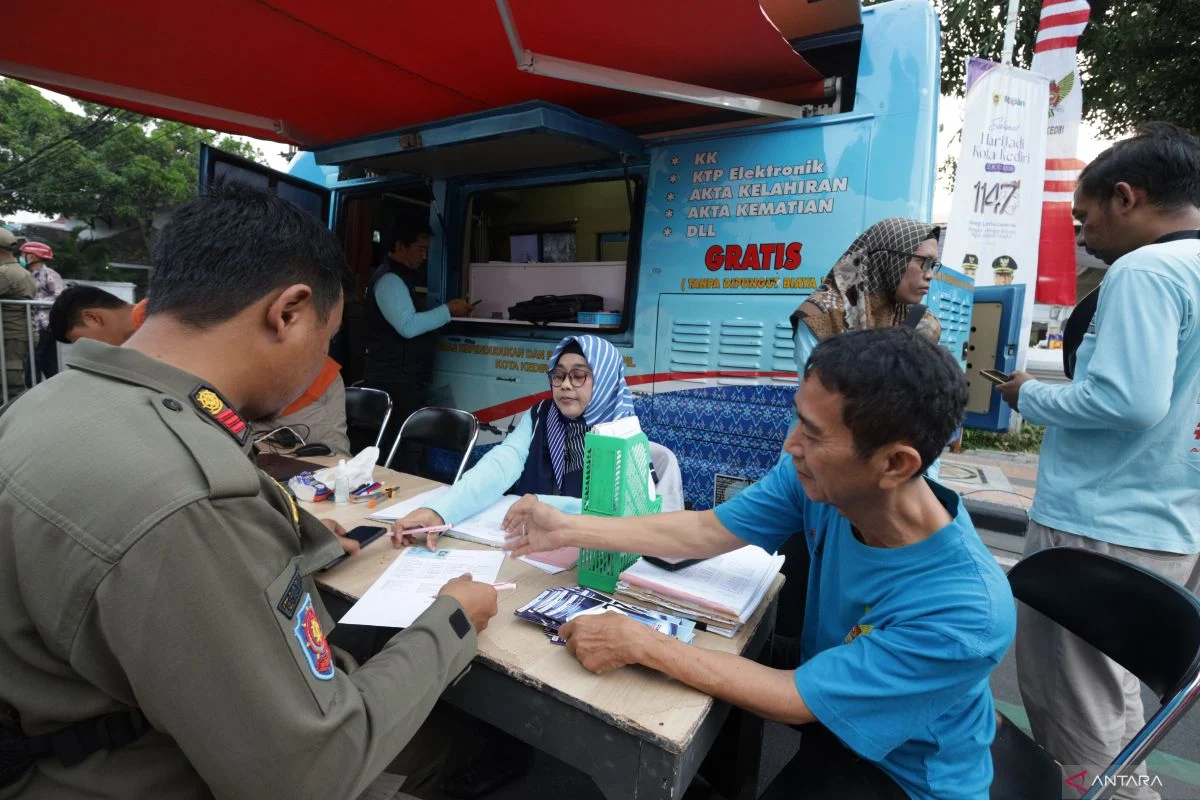
Jakarta, Indonesia – In a significant move to enhance public service delivery and reduce bureaucratic hurdles, the Indonesian government has implemented a policy enabling citizens to manage a wide array of population administration services without the previously mandatory introductory letters from local community units (RT/RW) or sub-districts (kelurahan). This sweeping reform, spearheaded by the Directorate General of Population and Civil Registration (Dukcapil) under the Ministry of Home Affairs (Kemendagri), aims to accelerate public services, simplify processes, and make access to essential demographic documents more equitable and efficient across the vast archipelago.
A New Era of Bureaucratic Efficiency
The policy represents a pivotal shift in Indonesia’s public administration landscape, moving away from a historically hierarchical system that often required multiple layers of approval and verification at the grassroots level. For decades, obtaining an introductory letter from the local RT (Rukun Tetangga, neighborhood unit) and RW (Rukun Warga, community unit) chairman, followed by a validation from the kelurahan (sub-district office), was a prerequisite for nearly all administrative processes, from obtaining identity cards to registering births or deaths. While intended to ensure local verification and community cohesion, this system frequently led to delays, increased costs (both formal and informal), and posed significant barriers, particularly for vulnerable populations, those with limited mobility, or residents in remote areas.
The elimination of these introductory letters for most services is a direct response to President Joko Widodo’s broader mandate for bureaucratic reform and digital transformation. The government’s vision is to create a more citizen-centric public service environment, where administrative processes are transparent, swift, and easily accessible. With a population exceeding 270 million people spread across thousands of islands, streamlining these fundamental services is crucial for national development and social inclusion. Annually, millions of Indonesians interact with Dukcapil services for various needs, making the impact of this reform profoundly widespread. Prior to this policy, citizens often reported spending days or even weeks navigating the various bureaucratic steps, leading to lost income, increased transportation costs, and general frustration.
Core Services Under the New Dispensation
Dukcapil has clarified that the majority of population administration document requests no longer require RT/RW letters. This includes several critical documents that form the bedrock of an individual’s legal identity and civil status. The move is largely facilitated by the increasing sophistication and integration of the national population database, which allows for direct verification of citizen data, negating the need for manual, paper-based introductions.
-
Electronic National Identity Card (KTP-el):
The KTP-el is the primary form of identification for Indonesian citizens aged 17 and above. Under the new policy, individuals seeking to record their data for the first time, apply for a new KTP-el, or request changes to existing data (such as address, marital status, or profession) can now proceed directly to the local Population and Civil Registration Office (Disdukcapil). They only need to present the necessary supporting documents relevant to their service request, such as a family card or marriage certificate, without the additional burden of an RT/RW letter. This drastically cuts down the initial steps, empowering citizens to take direct control of their identification processes. -
Family Card (Kartu Keluarga – KK):
The Family Card is a vital document listing all members of a household and their relationships. It is essential for accessing numerous public services, including healthcare, education, and social welfare programs. Citizens requiring amendments to their KK, such as adding new family members (e.g., newborns, adopted children), removing members (due to death or relocation), or updating specific data elements (e.g., educational qualifications, changes in occupation), can now process these changes directly through Disdukcapil. The previous requirement of local verification through RT/RW letters often complicated these updates, especially for families with dynamic compositions or those who had recently moved. -
Statement of Domicile Transfer (Surat Keterangan Pindah Domisili):
For citizens moving between administrative areas, the process of changing domicile has historically been one of the most cumbersome, often requiring a complex chain of approvals from both the origin and destination locations. The new policy simplifies this significantly. Individuals wishing to transfer their residency no longer need introductory letters from their former RT/RW or kelurahan. They can directly submit their application to Disdukcapil, providing essential documents like their existing Family Card and completing the required forms for population transfer. This particular reform aligns with Presidential Regulation No. 96 of 2018 concerning Population Administration Services and Minister of Home Affairs Regulation No. 108 of 2019 on Population Administration Guidelines, which have laid the groundwork for a more streamlined, inter-regional transfer process. This change is expected to facilitate internal migration, ease urbanisation pressures, and improve the accuracy of population distribution data. -
Birth Certificate (Akta Kelahiran):
The birth certificate is a fundamental document for establishing a child’s legal identity and nationality. Its timely issuance is crucial for accessing education, healthcare, and preventing statelessness. The creation of a birth certificate for a child or the registration of a birth can now be done directly through Dukcapil services. Required supporting documents typically include a birth statement from a healthcare facility, the Family Card, and parents’ identity documents. The RT/RW letter is no longer a primary requirement, especially for those whose data is already integrated into the national population administration system. This simplification is vital for ensuring universal birth registration, a key indicator of national development and child protection. -
Death Certificate (Akta Kematian):
Similarly, the registration of a death and the issuance of a death certificate are critical for legal purposes, such as inheritance, pension claims, and updating family records. This service can also be processed directly through Disdukcapil, with the submission of supporting documents as per existing regulations. The removal of the RT/RW letter requirement here streamlines a process that is often undertaken during a period of grief, reducing an additional bureaucratic burden on bereaved families. -
Child Identity Card (Kartu Identitas Anak – KIA):
The KIA is an identity card for children under 17 years old who are not yet eligible for a KTP-el. Its purpose is to provide legal identity for children and facilitate access to services. The application for a KIA can now be submitted directly to Disdukcapil, requiring family documents but no RT/RW introductory letter, provided the child’s data is already recorded in the population database. This measure promotes the recognition of children’s identities from an early age, contributing to their protection and welfare.
Legal Framework and Implementation
The Ministry of Home Affairs has consistently underscored that the simplification of these requirements is part of a broader national effort to elevate the quality of population administration services. The legal backing for these changes, as noted, comes from Presidential Regulation No. 96 of 2018 and Minister of Home Affairs Regulation No. 108 of 2019, which together form a comprehensive framework for modernising population administration. These regulations emphasise the shift towards a data-centric approach, where the national population database acts as the primary source of truth, reducing reliance on local, paper-based verification.
Director General of Dukcapil, Teguh Setyabudi (or an inferred official, as the original article doesn’t name one for this quote), stated, "Our goal is to ensure that every Indonesian citizen can access essential civil registration services swiftly, easily, and without unnecessary obstacles. The integration of our national database allows us to verify data directly, making the traditional RT/RW letters largely redundant for those already registered. This is a significant step towards a more efficient and accountable public administration."
The government encourages citizens to directly access Dukcapil services, either in person at local offices or through digital platforms provided by regional governments. This dual-channel approach acknowledges varying levels of digital literacy and access across the country, ensuring inclusivity.
Digital Transformation and Local Initiatives
Beyond the removal of physical letters, Indonesia’s commitment to digital transformation plays a crucial role in enhancing service delivery. Many regional governments have developed online platforms to expedite document processing. A prime example is the DKI Jakarta Provincial Government, which offers Dukcapil services not only through conventional service counters but also via the "Alpukat Betawi" application. This application allows residents to submit requests, track their applications, and receive notifications digitally, significantly cutting down on travel time and physical queuing. Similar digital initiatives are being rolled out or expanded in other provinces and cities, aiming to create a seamless, paperless experience for citizens. This digital leap is particularly beneficial in urban centers where population density and traffic can make in-person visits time-consuming.
Exceptions and Ongoing Verification
While the scope of simplification is extensive, Kemendagri has clarified that certain specific conditions may still necessitate an RT/RW introductory letter. These exceptions primarily apply to individuals who are new to the population database – for instance, those who have never been registered, require a new National Identity Number (NIK), or need to be recorded in a Family Card for the first time. In such cases, local verification remains crucial to establish initial identity and residency. Additionally, situations requiring special verification related to data accuracy or complex legal matters might still involve local community leaders. These exceptions are designed as safeguards to prevent fraud and ensure the integrity of the national population data.
Broader Implications and Anticipated Impact
The ramifications of this policy are far-reaching:
- For Citizens: The most immediate impact is increased convenience and reduced burden. Citizens save time, transportation costs, and are less susceptible to informal fees that sometimes plagued the old system. It promotes greater autonomy in managing personal documentation and fosters a sense of empowerment. The improved accessibility particularly benefits the elderly, persons with disabilities, and those in remote areas who previously faced significant logistical challenges.
- For Government Efficiency: The reform is expected to significantly reduce the administrative workload on RT/RW chairpersons and kelurahan officials, allowing them to focus on other community development and welfare programs. It also streamlines internal processes within Dukcapil, enabling faster processing times and better resource allocation. The move towards direct data input enhances the accuracy and timeliness of the national population database, which is vital for effective policy planning, resource distribution, and disaster management.
- Data Integrity and Security: By centralising data verification through the national database, the system aims to improve data integrity and reduce the potential for errors or fraudulent documentation that could arise from fragmented, paper-based processes. Robust digital security measures are paramount to protect this sensitive information.
- Social Inclusion: The simplified process helps to ensure that all citizens, regardless of their socio-economic status or geographical location, have equal access to fundamental identity documents. This is a critical step in reducing social disparities and ensuring that no one is left behind in accessing essential public services.
- Economic Impact: While indirect, the reduction in bureaucratic red tape can contribute to a more dynamic economy by freeing up citizens’ time and resources, which can then be channelled into productive activities. It also improves the ease of doing business by simplifying identity verification processes required for various economic transactions.
The implementation of this policy marks a significant stride in Indonesia’s ongoing journey towards modernising its public administration. It reflects a clear commitment from the Ministry of Home Affairs and Dukcapil to leverage technology and streamline procedures, ultimately aiming to deliver more responsive, transparent, and citizen-friendly services to the vast and diverse population of Indonesia. As the nation continues its digital transformation, such reforms are essential for building a more efficient and inclusive society.