The sophisticated web of international cybercrime has been further unraveled as Indonesian authorities confirm that the uniforms used by a transnational online scam syndicate operating in Manila, Philippines, were not cheap replicas, but authentic police gear sourced directly from vendors in South Jakarta. This revelation, disclosed by National Police Chief (Kapolri) General Suyudi Ario Seto, highlights a significant security vulnerability regarding the distribution and regulation of official state apparatus uniforms.
The Anatomy of the Deception
The syndicate, comprised primarily of Indonesian citizens, operated out of the Philippines, targeting victims through high-pressure tactics. By donning genuine Indonesian National Police (Polri) uniforms, the perpetrators successfully established a veneer of institutional legitimacy. This allowed them to manipulate victims into believing they were under investigation by Indonesian law enforcement.
The typical modus operandi involved aggressive video calls or telephonic communication, where the scammers, dressed in full regalia, would intimidate victims by alleging they were involved in transnational drug trafficking syndicates. This "fear-based" social engineering is a hallmark of modern cyber-fraud, designed to extract illicit payments under the guise of legal fees, settlements, or bribes to "clear" the victim’s name. The authenticity of the uniforms played a critical role in lowering the victims’ defenses, as the visual authority presented during video calls proved highly persuasive.
Chronology of the Investigation and Repatriation
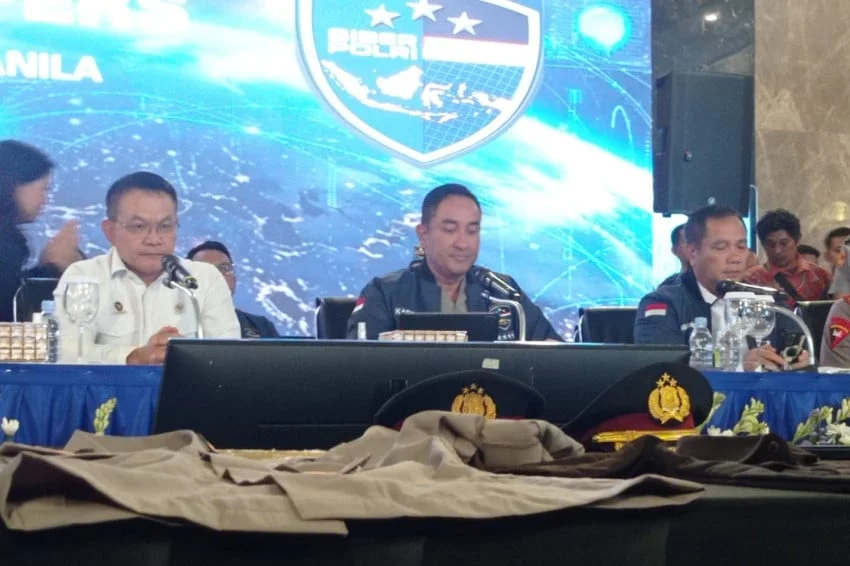
The investigation culminated on November 24, 2026, when General Suyudi Ario Seto held a press conference at the VIP Room of Terminal 3, Soekarno-Hatta International Airport, Tangerang. The event marked the repatriation of 139 Indonesian nationals who had been detained by Philippine authorities for their involvement in the elaborate scam network.
The breakdown of the operation, based on official reports, indicates the following timeline:
- Initial Discovery: International cooperation between Indonesian and Philippine law enforcement identified a surge in cyber-fraud originating from specific IP addresses in Manila, linked to a workforce of foreign nationals.
- The Raid: Philippine police, acting on intelligence provided by Interpol and the Indonesian National Police, executed a coordinated raid on the syndicate’s headquarters in Manila.
- Evidence Collection: During the sweep, authorities recovered high-tech communication equipment, scripts for the scams, and the incriminating police uniforms, which were initially suspected to be high-quality counterfeits.
- Verification: Upon investigation by the Indonesian delegation, it was confirmed that the uniforms, including the police service caps (pet), were genuine articles obtained through authorized retailers in South Jakarta.
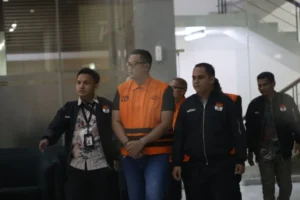
- Repatriation: On November 24, 2026, the 139 suspects were flown back to Indonesia to face legal proceedings for their roles in the syndicate, which is estimated to have caused a total financial loss of Rp46.7 billion (approximately $2.9 million USD) to victims.
The Vulnerability of Procurement
The revelation that genuine police uniforms are easily accessible to civilians poses a serious challenge to internal security. In many jurisdictions, the sale of police, military, or emergency service uniforms is strictly regulated to prevent identity theft and public confusion.
General Suyudi’s admission that the uniforms were purchased from legitimate stores in South Jakarta suggests a lack of stringent "end-user" verification at the point of sale. These retail establishments, which cater to police officers needing replacements or secondary sets of uniforms, have become an unintended supply chain for criminal elements.
While these vendors are technically legal businesses, the ease with which non-police personnel can acquire full kits—complete with insignia, rank badges, and headgear—indicates a gap in the oversight of police procurement and distribution. The National Police are now expected to conduct a comprehensive audit of these retailers to ensure that future sales are restricted to verifiable, active-duty personnel.

Broader Implications of Online Scamming in Southeast Asia
The case of the 139 repatriated Indonesians is symptomatic of a larger crisis in Southeast Asia. The region has become a global hub for "pig butchering" scams, human trafficking, and online fraud. Often, victims of human trafficking are forced to work as "scammers," creating a complex legal scenario where the repatriated individuals are both suspects and victims of coerced labor.
Data from the Indonesian Ministry of Foreign Affairs indicates that the number of Indonesians caught in online scam operations in countries like Cambodia, Myanmar, Laos, and the Philippines has been rising steadily since 2023. These syndicates often advertise high-paying jobs in customer service or data entry, only to trap applicants in compounds where their passports are confiscated and they are forced to participate in financial fraud.
The financial damage caused by these syndicates, specifically the Rp46.7 billion figure cited in this case, represents only the tip of the iceberg. The psychological trauma inflicted on victims who are misled into believing they are being pursued by the police adds a layer of societal harm that is difficult to quantify.
Official Response and Future Policy Adjustments
The National Police have vowed to take a firm stance on the matter. Following the press conference, General Suyudi emphasized that the use of official state equipment to perpetrate criminal activities is an aggravated offense. The legal team handling the case is currently exploring charges related to identity fraud, professional impersonation, and transnational organized crime.
In response to the scandal, the Indonesian National Police are reportedly drafting a new set of regulations concerning the distribution of official uniforms. These measures may include:
- Strict Inventory Tracking: Moving toward a digital, centralized system where every uniform issued is logged to a specific officer’s identification number.
- Vendor Licensing: Requiring all retailers of official state equipment to be licensed and mandated to verify the credentials of any purchaser against the police database.
- Stricter Penalties for Impersonation: Working with the legislative branch to increase the maximum sentencing for those caught impersonating law enforcement officers, particularly when such impersonation involves the use of authentic equipment.
Analysis of Public Trust
The use of authentic uniforms by criminals is not merely a logistical failure; it is a direct assault on the public trust. When citizens can no longer discern between a legitimate officer and a criminal posing as one, the effectiveness of the police force is compromised.
Experts in criminal justice note that this incident may lead to a permanent change in how citizens interact with the police, particularly in remote or digital settings. There is now an urgent need for the police to implement better digital verification tools, such as scannable IDs or verified video call protocols, that allow citizens to confirm the identity of an officer in real-time.
As the 139 suspects undergo interrogation in Indonesia, the focus will remain on tracing the leadership of the syndicate. Authorities believe these low-level operators are part of a wider, highly organized international network that utilizes the Philippines as a base due to its favorable internet infrastructure and relatively loose regulations on foreign digital labor.
The Indonesian National Police’s commitment to investigating the source of the uniforms serves as a warning to retail businesses in the capital: those who profit from the sale of sensitive government equipment without due diligence will face the full force of the law. As the investigation progresses, the case is likely to serve as a landmark study in how modern syndicates exploit the gaps in physical and digital security, prompting a re-evaluation of police procurement policies across the archipelago.