The landscape of suburban residential development in West Java has undergone a significant transformation since 2020, spearheaded by the rapid ascent of Kota Podomoro Tenjo. Developed by the Agung Podomoro Group, this massive satellite city has transitioned from a visionary master-planned community into one of the most resilient and high-growth property projects in the greater Bogor region. Recent developments, including the expansion of international capital inflows and the rollout of premium infrastructure, have solidified its position as a preferred destination for both domestic homeowners and global institutional investors.
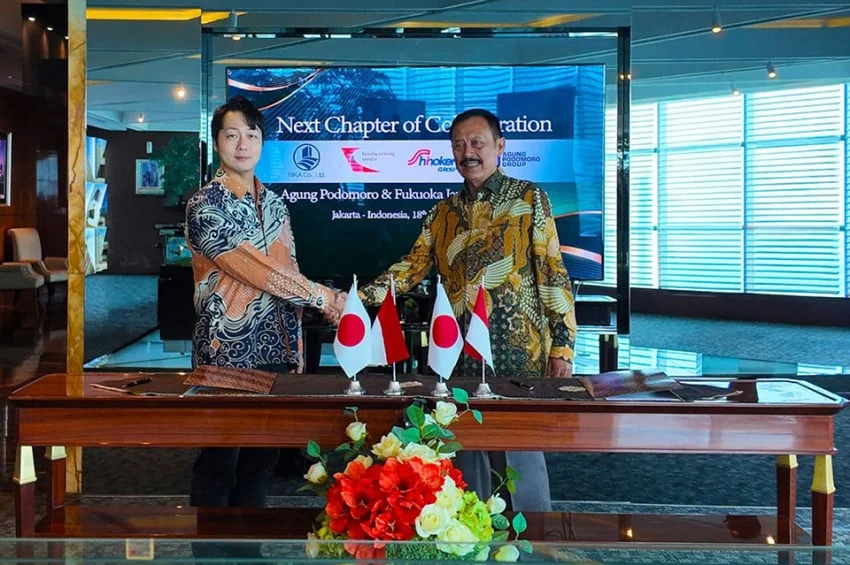
The most recent indicator of this market confidence is the decision by the Fukuoka Consortium—a prominent group of Japanese investors—to deepen their financial commitment to the township. Following a successful entry into the Indonesian market last year, the consortium has announced the development of a new residential cluster, Mahogany, marking a significant milestone in international-local business collaboration within the Indonesian real estate sector.
A Strategic Expansion of International Capital
The partnership between Agung Podomoro Group and the Fukuoka Consortium is not merely a transactional investment; it represents a strategic alignment of design philosophies and urban planning standards. The consortium’s initial foray into Kota Podomoro Tenjo began in September 2025 with the launch of the Edelweiss Cluster. Within a single year of operations, the cluster achieved a sales velocity of over 70%, a figure that significantly outperformed broader market trends in the post-pandemic property sector.
Yenti Lokat, Marketing Director of Reg 1 at Agung Podomoro, noted that the continued interest from Japanese stakeholders serves as a testament to the project’s underlying value proposition. "The Fukuoka Consortium’s decision to proceed with the Mahogany cluster is a clear signal that the infrastructure and living standards we have cultivated in Tenjo resonate with international investment standards," Lokat stated.
The Mahogany cluster is slated to introduce the "Midori" type residential unit, which integrates the Japandi architectural style—a synthesis of Japanese minimalism and Scandinavian functionality. This design choice is intended to cater to a demographic of modern professionals who prioritize aesthetic efficiency, natural light, and space optimization. By incorporating thematic Japanese gardens and sustainable landscaping, the project aims to elevate the lifestyle standards of the suburb, setting a new benchmark for residential aesthetics in the Bogor-Tangerang corridor.
Chronology of Growth: From Concept to Satellite City
The trajectory of Kota Podomoro Tenjo since its inception in 2020 has been defined by aggressive, yet calculated, development phases.
- 2020: The official launch of Kota Podomoro Tenjo. The project was conceived as a "City of the Future," designed to alleviate housing pressure in Jakarta while providing a self-sustaining ecosystem.
- 2021–2023: Early phases of infrastructure development, focusing on land clearing, primary road networks, and initial residential clusters. The focus during this period was to establish basic utility connectivity.
- 2024: The introduction of lifestyle and commercial amenities, including the ground-breaking of the Modern Market, designed to facilitate small and medium enterprises (UMKMs) and serve as the economic heart of the community.
- September 2025: The entry of the Fukuoka Consortium. The launch of the Edelweiss cluster signaled a shift toward international-grade construction standards.
- Late 2025–2026: The maturation of the Transit-Oriented Development (TOD) vision, with the nearing completion of the Grand TOD Station, which promises to link the township directly to the commuter rail network, significantly reducing travel time for daily workers.
Infrastructure as the Foundation for Valuation
The rapid growth in property value within Kota Podomoro Tenjo is not accidental; it is the result of a deliberate "infrastructure-first" strategy. In urban development, residential projects often struggle with the "chicken-and-egg" dilemma—whether to build housing first or the amenities that support them. Agung Podomoro Group opted for a concurrent approach.
The soon-to-be-inaugurated Grand TOD Station is perhaps the most critical component of this strategy. By integrating the township into the Greater Jakarta commuter line, the developer has successfully mitigated the "distance penalty" that often plagues suburban developments. This connectivity is the primary driver for the influx of millennial buyers and young families, who are increasingly moving away from the high-cost inner city in search of affordable, transit-accessible homes.
Furthermore, the addition of the Magnolia Premium Clubhouse and the Modern Market addresses the "soft" infrastructure requirements of the community. The Modern Market, in particular, acts as a vital economic engine, providing a regulated, hygienic, and organized space for local entrepreneurs to operate, which in turn increases the daily utility of the township for its residents.
Market Analysis: Why Investors Are Looking at Tenjo
The interest from the Fukuoka Consortium reflects a broader trend among foreign investors who are looking beyond the saturated luxury markets of Central Jakarta. Indonesia’s burgeoning middle class, coupled with the government’s push for transit-oriented development, has made satellite cities like Tenjo highly attractive.
Several macroeconomic factors support the viability of this project:
- Supply-Demand Gap: There remains a significant shortage of quality, affordable housing for the middle-income demographic in the Jakarta metropolitan area.
- Yield Stability: Unlike speculative urban real estate, suburban residential projects that offer genuine utility and connectivity tend to show higher rental yields and consistent capital appreciation over a 5-to-10-year horizon.
- Institutional Backing: The presence of a major developer like Agung Podomoro ensures that the project has the financial fortitude to complete large-scale infrastructure, minimizing the risk of "stalled" projects that often hinder smaller developers.
Socio-Economic Implications and Future Outlook
The expansion of Kota Podomoro Tenjo has profound implications for the local economy of the Bogor region. Beyond the creation of thousands of construction jobs, the township is becoming a hub for local commerce. The support for UMKMs through the Modern Market suggests a model of inclusive growth, where the residents of the township are not merely consumers but participants in a micro-economy.
As the Mahogany cluster begins development, the project is expected to set a precedent for future collaborations between Indonesian developers and international investment consortiums. If the Japanese-inspired design proves as popular as the Edelweiss cluster, it is likely that future phases of the township will continue to adopt global architectural standards, further increasing the prestige of the area.
For prospective buyers and investors, the key takeaway from the latest announcements is the consistency of the project’s delivery. In a volatile economic climate, the ability of a development to hit its milestones—ranging from residential handovers to the completion of transport infrastructure—is the most reliable indicator of long-term asset security.
Looking ahead, the focus for Kota Podomoro Tenjo will likely shift toward sustainable operations, such as the integration of smart-home technologies and energy-efficient water management systems. As thousands of residents have already moved into their homes, the project has successfully crossed the threshold from a "concept" to a "living, breathing community." This transition marks the end of the initial risk phase and the beginning of a period of sustained value creation for all stakeholders involved, from the residents and the local government to the international investors fueling the expansion.
In conclusion, the partnership between Agung Podomoro Group and the Fukuoka Consortium stands as a hallmark of modern property development in Indonesia. By combining local expertise with international design and rigorous standards, Kota Podomoro Tenjo is successfully redefining the satellite city model, providing a blueprint for how suburban growth can be both rapid and structurally sound. As the Mahogany cluster takes shape, it reinforces the narrative that Tenjo is not just a place to live, but a cornerstone of the future of residential development in West Java.