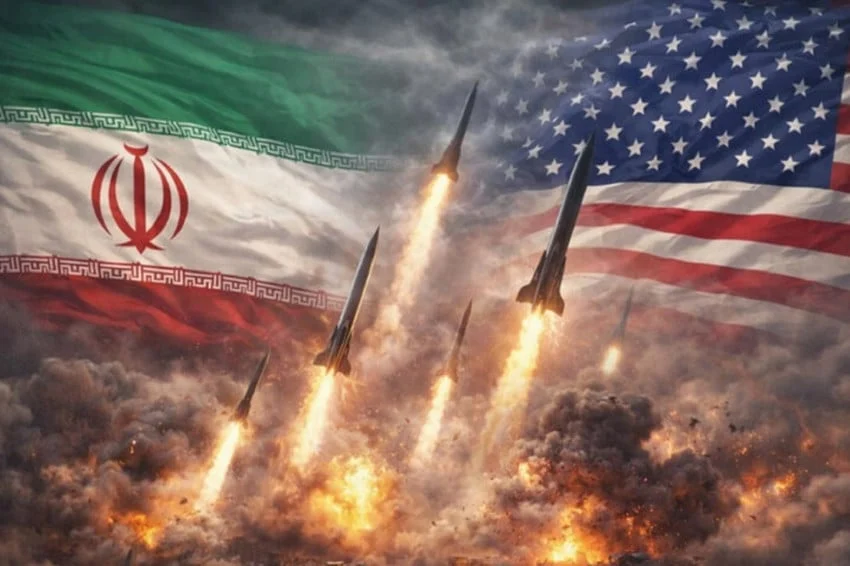
Tehran is currently engaged in a high-stakes internal debate regarding the potential reversal of its long-standing prohibition on the development of nuclear weapons, a policy shift that would represent a seismic change in Middle Eastern geopolitics. As hostilities between the Islamic Republic and the United States intensify, senior Iranian officials have acknowledged that the country is re-evaluating its strategic posture, specifically questioning whether the religious and political constraints against nuclear armament remain viable in the face of what it perceives as existential security threats.
The discourse, while not yet resulting in a formal change of policy, signals a departure from the rhetoric of previous years, where the Iranian leadership consistently maintained that its nuclear program was strictly for peaceful, civilian energy purposes. Mayor General Mohsen Rezaei, Secretary of the Supreme National Security Council and former commander of the Islamic Revolutionary Guard Corps (IRGC), articulated this shift in sentiment during a recent interview with state television. He noted that while no official decision has been reached to alter the nation’s nuclear doctrine, the internal conversation has moved toward asking whether, in the event of a full-scale war, the state is obligated to adhere to past defensive paradigms.
Historical Context of Iran’s Nuclear Stance
For decades, the foundation of Iran’s nuclear policy has been a fatwa issued by Supreme Leader Ayatollah Ali Khamenei, which formally prohibits the production, stockpiling, and use of nuclear weapons. This religious decree has served as the bedrock of Iran’s diplomatic arguments at international forums, including the United Nations and the International Atomic Energy Agency (IAEA).
However, the erosion of the 2015 Joint Comprehensive Plan of Action (JCPOA)—the nuclear deal that saw Iran limit its uranium enrichment in exchange for the lifting of economic sanctions—has fundamentally altered the strategic environment. Following the unilateral withdrawal of the United States from the agreement in 2018 under the Trump administration, Iran gradually scaled back its commitments, increasing its uranium enrichment levels far beyond the limits imposed by the treaty.
The current debate reflects a growing frustration among the Iranian political and military elite. Observers point to a perception in Tehran that compliance with international oversight has not yielded the promised economic stability or security guarantees. Instead, Iranian officials argue that the country has been subjected to persistent cyber-attacks, sabotage of its nuclear facilities, and the targeted assassinations of its prominent nuclear scientists, all of which they attribute to foreign intelligence services.
Chronology of Escalating Tensions
The trajectory of the current crisis can be traced through several critical milestones:
- 2015: Iran signs the JCPOA, agreeing to strict limitations on its nuclear program in return for sanctions relief.
- 2018: The United States withdraws from the JCPOA and reinstates a "maximum pressure" campaign of economic sanctions.
- 2020: The assassination of Mohsen Fakhrizadeh, a top Iranian nuclear scientist, significantly hardens the Iranian stance against Western diplomatic overtures.
- 2023-2024: Regional conflict in the Middle East expands, leading to direct and indirect military confrontations between Iran and its proxies, and Israel and the United States.
- 2026 (Current): Public and official discourse in Tehran begins to openly question the strategic wisdom of maintaining a non-nuclear doctrine while facilities face kinetic threats.
Public Sentiment and Internal Pressure
General Rezaei’s comments underscore a critical shift in how the Iranian government interprets the "will of the people." In his remarks, he highlighted that the Iranian public is increasingly skeptical of the current policy of transparency with the IAEA. The logic provided by the state is that if Iran opens its doors to international inspectors and provides full access to its facilities, yet those same facilities are subsequently targeted by external actors, then the policy of compliance is effectively failing to provide security.
This narrative is designed to consolidate domestic support for a more aggressive posture. By framing the potential acquisition of nuclear weapons as a response to external aggression rather than a proactive choice, the Iranian leadership aims to neutralize international criticism and align its domestic population behind a more militarized national security strategy.
International Reactions and Strategic Implications
The prospect of a nuclear-armed Iran has triggered significant alarm across the international community. The United States, Israel, and several European powers have long identified a nuclear-armed Iran as a "red line" that would fundamentally destabilize the global order.
Analysts suggest that if Iran were to move toward weaponization, the immediate consequences would be severe. Regional neighbors, particularly Saudi Arabia and other Gulf Cooperation Council states, have previously signaled that they would seek their own nuclear deterrents if Iran successfully crossed the nuclear threshold. This would trigger a regional arms race, potentially ending the era of non-proliferation in the Middle East and increasing the risk of nuclear accidents or unauthorized escalations.
From an economic perspective, any confirmed move toward nuclear weaponization would likely result in the reimposition of stringent international sanctions, potentially isolating Iran further from the global financial system. However, Tehran may calculate that its deepening military and economic ties with powers such as Russia and China could provide a sufficient buffer against further Western economic isolation.
Technical Capabilities and Safeguards
While the debate remains political, the technical reality is that Iran has significantly advanced its uranium enrichment capabilities. Current IAEA reports indicate that Iran possesses substantial stockpiles of uranium enriched to levels that, while not yet at "weapons-grade" (90%), are significantly higher than what is required for peaceful power generation.
The "breakout time"—the amount of time required to produce enough fissile material for a single nuclear device—has been reduced to a matter of weeks, according to various intelligence assessments. This technical advancement is what makes the current political discourse so volatile. Unlike a decade ago, where weaponization would have required years of development, the infrastructure now exists to rapidly pivot if the order is given.
Analysis of Future Scenarios
The uncertainty surrounding Iran’s intentions creates a precarious environment for regional diplomacy. There are three primary paths that the current debate could follow:
- The Deterrence Model: Iran may continue to threaten a policy shift to gain leverage in future negotiations, using the "nuclear option" as a bargaining chip to secure concessions from the West regarding sanctions and regional influence.
- The Ambiguous Stance: Iran may adopt a policy of "nuclear hedging," where it maintains the technical capability to build a weapon but stops short of actual assembly. This keeps the international community guessing while maintaining a psychological deterrent.
- The Shift to Weaponization: If the Iranian leadership concludes that the survival of the current regime is fundamentally at risk due to external kinetic threats, it may decide that the benefits of possessing a nuclear deterrent outweigh the risks of further international isolation.
As it stands, the international community remains in a state of heightened alertness. The IAEA continues to monitor Iranian facilities, but the political space for meaningful dialogue is shrinking. The remarks made by General Rezaei suggest that the "red line" of the fatwa is being viewed with greater flexibility by those in power in Tehran, reflecting a broader shift in the regional security calculus.
Ultimately, the decision to pursue a nuclear weapon would be the most significant foreign policy change in the history of the Islamic Republic. It would move the conflict from the shadows of proxy wars and cyber-sabotage into the realm of existential military rivalry, forcing the United States and its allies to consider whether their existing containment strategies are sufficient for a landscape where Iran is not merely a regional power, but a nuclear-threshold state. The coming months will likely see increased scrutiny of Iran’s nuclear activities as the world waits to see if the rhetoric of the Revolutionary Guard translates into a definitive change in national policy.