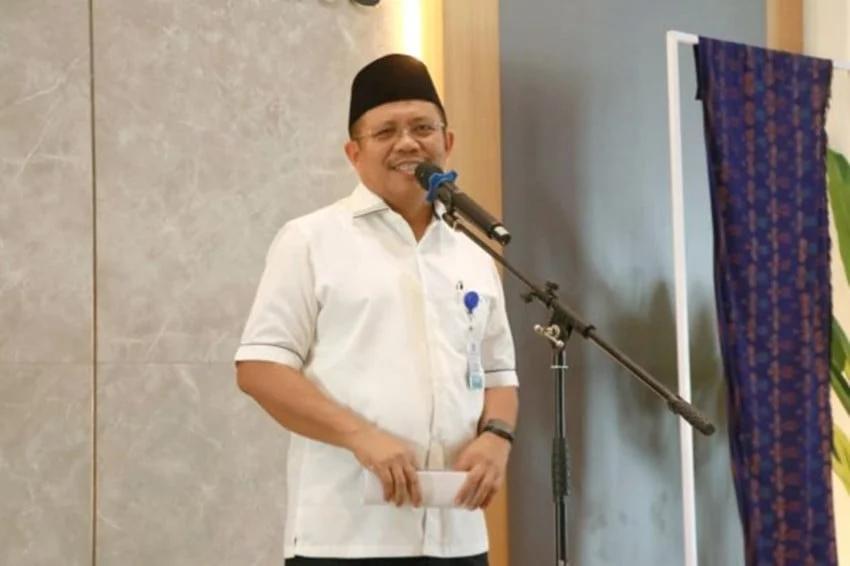
The Corruption Eradication Commission (KPK) officially confirmed the apprehension of West Lombok Regent Lalu Ahmad Zaini during a coordinated sting operation, known locally as Operasi Tangkap Tangan (OTT), conducted on Monday, July 20, 2026. The operation, which took place across multiple locations, resulted in the seizure of significant amounts of physical evidence, including stacks of Indonesian rupiah and various state documents believed to be central to a bribery scheme involving regional infrastructure projects. The arrest marks a significant escalation in the anti-graft agency’s efforts to purge corruption from regional administrations within the West Nusa Tenggara (NTB) province.
KPK Spokesperson Budi Prasetyo, speaking from the KPK’s Red and White Building in South Jakarta, provided preliminary details regarding the evidence secured during the silent operation. While the exact figure is still being meticulously counted by investigators, Budi confirmed that the nominal value of the seized cash reaches into the hundreds of millions of rupiah. These funds are suspected to be illicit "commitment fees" or kickbacks related to the procurement of goods and services or the approval of specific infrastructure tenders within the West Lombok Regency.
Details of the Evidence Seizure and Initial Findings
The evidence seized during the Monday raids is currently being processed by the KPK’s enforcement division. According to Budi Prasetyo, the cash was found in several denominations and was allegedly being prepared for transfer or had recently been received by intermediaries acting on behalf of the Regent. In addition to the physical currency, investigators confiscated a cache of documents. These documents are reported to include project tender files, budget allocation records for the 2025-2026 fiscal year, and electronic evidence from mobile devices that may contain communication logs regarding the illicit transactions.
The KPK’s forensic accounting team is working to trace the origin of the funds to determine if they originated from private contractors seeking to secure lucrative government projects. Early indications suggest that the case is linked to ongoing development initiatives in West Lombok, a region that has seen a surge in infrastructure spending aimed at boosting its tourism sector and improving local connectivity. The involvement of a high-ranking regional official like Lalu Ahmad Zaini suggests a systemic failure in the oversight of the regional budget (APBD).
Chronology of the Sting Operation
The operation that led to the arrest of Lalu Ahmad Zaini was not an overnight endeavor. It was the culmination of several months of intensive surveillance and intelligence gathering by the KPK. Based on reports from the public and whistleblowers within the regional administration, the KPK’s investigation department began monitoring suspicious financial movements and meetings involving several West Lombok officials and private sector representatives.
On the morning of July 20, 2026, a team of KPK investigators was deployed to West Lombok and parts of the provincial capital, Mataram. The "silent operation" was executed with precision to prevent the destruction of evidence. At approximately mid-day, the team intercepted a transaction involving an intermediary, which led them directly to the Regent’s residence and official offices. Lalu Ahmad Zaini was taken into custody without resistance and was immediately transported to Jakarta for further interrogation.
Simultaneously, other teams conducted searches at the offices of the West Lombok Public Works and Spatial Planning (PUPR) Department. These searches were aimed at securing the paper trail for the projects currently under investigation. By Monday evening, the Regent and several other individuals, including high-ranking civil servants and representatives from the private sector, were brought to the KPK headquarters for a 24-hour intensive examination period.
Profile of West Lombok Regency and the Projects Under Scrutiny
West Lombok is a strategic regency in the West Nusa Tenggara province, home to the famous Senggigi beach area and serving as a vital gateway for tourism and logistics. Under the leadership of Lalu Ahmad Zaini, the administration had been vocal about accelerating infrastructure development to recover from the economic impacts of previous years. However, this push for rapid development appears to have created opportunities for rent-seeking behavior.
The projects currently under the KPK’s microscope are believed to involve road construction, bridge rehabilitation, and the development of public facilities funded by the 2026 regional budget. In many cases of regional corruption in Indonesia, contractors are often required to pay a "fee" ranging from 5% to 15% of the total project value to secure a win in the bidding process. The KPK is investigating whether such a scheme was standardized within the West Lombok administration.
Legal Framework and Potential Charges
Under Indonesian law, specifically Law No. 31 of 1999 as amended by Law No. 20 of 2001 on the Eradication of Corruption Crimes, the actions alleged against Lalu Ahmad Zaini carry severe penalties. If the evidence confirms that the Regent accepted bribes or gratifications in exchange for policy favors, he could face charges under Article 12 letters a or b, or Article 11 of the Anti-Corruption Law.
These articles carry a maximum penalty of life imprisonment or a fixed term of up to 20 years, along with substantial fines. Furthermore, the KPK may explore charges related to the Law on the Prevention and Eradication of Money Laundering (TPPU) if it is discovered that the illicit funds were funneled into assets or hidden through third-party accounts to disguise their origin.
The KPK has 24 hours from the time of the arrest to determine the legal status of the individuals detained. It is widely expected that by Tuesday, the agency will hold a press conference to officially name the suspects and outline the specific construction of the case.
Reactions from Local Government and Political Stakeholders
The arrest of Lalu Ahmad Zaini has sent shockwaves through the West Nusa Tenggara political landscape. The West Lombok Regency Government (Pemkab) has expressed its shock, with the Regional Secretary (Sekda) issuing a brief statement emphasizing that the administration would remain functional despite the absence of the Regent. "We respect the ongoing legal process at the KPK. Our priority is to ensure that public services in West Lombok continue to operate without disruption," the statement read.
At the provincial level, the Acting Governor of West Nusa Tenggara is expected to coordinate with the Ministry of Home Affairs to appoint an Acting Regent to oversee the daily operations of the West Lombok administration. This move is necessary to ensure that the 2026 budget execution and administrative duties are not paralyzed by the legal proceedings.
Political analysts suggest that this arrest will have significant implications for the local political climate, especially with regional elections on the horizon. Corruption cases involving incumbents often lead to a shift in public trust and can reshape the alliances of local political parties. Civil society organizations, including Indonesia Corruption Watch (ICW), have lauded the KPK for its continued vigilance in the regions, noting that regional autonomy has often shifted the locus of corruption from the center to the provinces and regencies.
The Broader Context of Regional Corruption in Indonesia
The case of Lalu Ahmad Zaini is not an isolated incident but rather part of a broader, more troubling trend of regional heads being ensnared in corruption scandals. Since the implementation of regional autonomy in the early 2000s, hundreds of regents, mayors, and governors have been investigated or convicted by the KPK.
The primary driver of this phenomenon is often cited as the "high cost of politics" in Indonesia. To win a regional election, candidates frequently require immense capital for campaigning, logistics, and political "dowries" to supporting parties. Once in office, there is often a perceived pressure to recoup these costs through the manipulation of government procurement and the sale of positions within the bureaucracy.
The KPK’s use of the OTT mechanism remains its most potent tool in catching officials "red-handed." While some critics argue that the agency should focus more on systemic prevention, the KPK maintains that the deterrent effect of high-profile arrests is essential for maintaining public integrity.
Implications for Regional Development and Investor Confidence
The arrest of a regional leader for corruption can have detrimental effects on the local economy. For West Lombok, a regency heavily dependent on tourism and external investment, news of a bribery scandal involving infrastructure projects may deter potential investors. Uncertainty regarding the validity of contracts signed under the previous administration can lead to delays in project timelines and increased costs for the state.
Furthermore, corruption in infrastructure often leads to sub-standard construction quality. When "commitment fees" are taken from project budgets, contractors frequently cut corners on materials and labor to maintain their profit margins. This results in roads and bridges that deteriorate long before their intended lifespan, ultimately burdening the taxpayers who must pay for repairs.
The KPK’s intervention, therefore, is seen not only as a legal necessity but also as an economic safeguard. By weeding out corrupt practices in procurement, the agency helps ensure that public funds are used efficiently and that the infrastructure built is of the quality promised to the citizens of West Lombok.
Conclusion and Next Steps in the Investigation
As the investigation into Lalu Ahmad Zaini and his associates continues, the KPK is expected to broaden its search. More witnesses, including heads of regional departments (OPD) and private sector contractors, will likely be summoned for questioning in the coming weeks. The "hundreds of millions" seized on Monday may only be the tip of the iceberg, representing a single installment in a much larger series of transactions.
The public in West Lombok and across Indonesia remains watchful. The outcome of this case will serve as a barometer for the KPK’s effectiveness in 2026 and its commitment to holding regional leaders accountable. For the people of West Lombok, the hope is that this legal process will lead to a more transparent and accountable government, where the region’s vast potential is not hampered by the personal greed of its elected officials.
The KPK has urged anyone with further information regarding corruption in the West Lombok administration to come forward, promising anonymity and protection under the witness protection program. In the meantime, the Red and White Building remains the center of gravity for a case that has once again highlighted the fragile state of integrity in Indonesia’s regional governance.