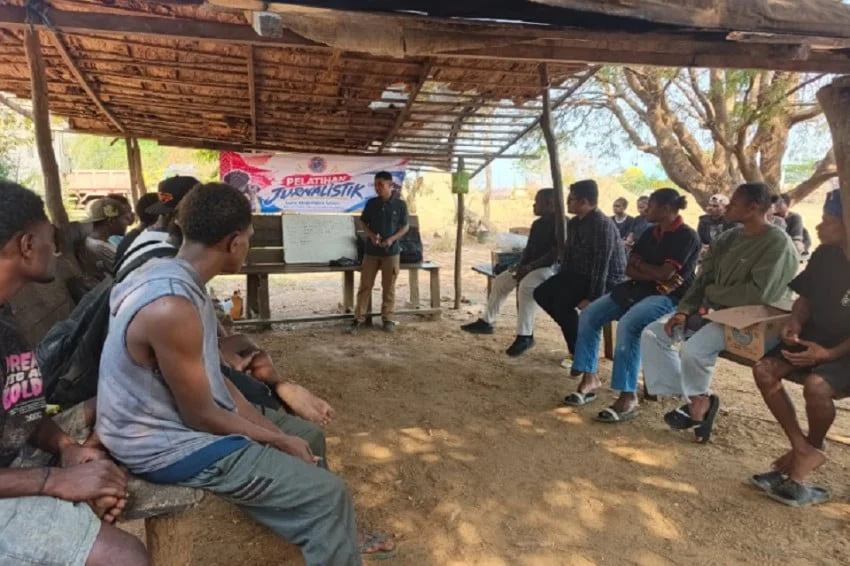
MERAUKE, South Papua — In an era where digital connectivity increasingly dictates socio-economic development and cultural preservation, indigenous youth in remote regions of Indonesia are taking narrative control into their own hands. Recognizing a critical need to articulate local realities, the Kalai Anim youth community in Merauke Regency, South Papua, recently convened for an intensive journalism training program. Held on Sunday, November 1, 2026, at the historic Honai Patung Hati Kudus Yesus in Merauke, the initiative was designed to equip the younger generation with foundational reporting, writing, and digital communication skills.
The collaborative program, organized jointly by the Ikatan Mahasiswa dan Pelajar Kalai Anim (IMPKA)—the Kalai Anim Student and Youth Association—and Merah Pusaka Stratejik Indonesia (MPSI), addresses a persistent systemic challenge: the marginalization of indigenous voices in mainstream media landscapes. By mastering the tenets of journalism, these young participants are expected to become frontline chroniclers of their communities, ensuring that local aspirations, grievances, and cultural wealth are communicated accurately, ethically, and directly from the source.
The Imperative of Local Storytelling and Accurate Information
The core objective of the training is twofold: to enhance the accuracy of information circulating from remote villages and to dismantle the barriers that often lead to misunderstandings between indigenous populations and external institutions. Historically, stories concerning remote Papuan communities have been filtered through external lenses, frequently resulting in misrepresentations or the total omission of grassroots perspectives.
During the workshop, facilitators emphasized that empowering indigenous youth with journalistic competence creates a reliable channel for communities to voice their immediate needs, infrastructural demands, and socio-cultural interests to the broader public and policymakers alike. When local youth understand the principles of verification, interviewing, and objective reporting, the risk of misinformation diminishes. Furthermore, it opens a vital conduit for participatory development, where community members are no longer passive subjects of news reports, but active authors of their own civic narrative.
Chronology and Setting the Stage
The initiative began taking shape months prior, driven by local observations regarding the difficulties indigenous student organizations faced in gaining visibility in the digital media ecosystem. On November 1, 2026, the venue—the Honai Patung Hati Kudus Yesus—transformed into a dynamic classroom. The choice of venue held symbolic significance, blending traditional Papuan communal space (the honai) with a setting dedicated to reflection and community upliftment.
The event commenced in the morning with introductory remarks from student leaders, followed by technical workshops led by researchers and media practitioners. Participants engaged in interactive sessions covering basic news writing structures, the ethics of interviewing, and the strategic use of digital media platforms. The chronology of the day was meticulously structured to transition participants from theoretical concepts—such as the 5W1H (Who, What, Where, When, Why, How) framework—to practical exercises in drafting press releases and documenting local cultural practices.
Leadership Perspectives and Organizational Vision
Opening the training session, IMPKA Chairman Emanuel Talpia Yolmen delivered a compelling address highlighting the strategic importance of media literacy for the organization’s members. He stressed that access to information and the ability to articulate thoughts in writing are no longer optional skills, but fundamental tools for organizational survival and cultural preservation.
"I hope that the materials delivered during this training will serve as a foundational guide, a practical handbook, and a valuable experiential milestone for all my friends participating here," Emanuel stated during his opening address. He elaborated on the vision that these newly acquired competencies must be practically applied within daily community life. Specifically, Emanuel challenged the participants to leverage modern media tools and written documentation to safeguard and promote the unique cultural heritage of the Kalai Anim people, ensuring it withstands the pressures of rapid modernization.
Beyond technical writing, Emanuel used the platform to reinforce core values of fraternity, solidarity, and collaborative governance among the youth. He argued that a strong internal organizational network relies heavily on transparent communication, which effective journalism naturally fosters. By strengthening their internal communication channels, IMPKA aims to build a more resilient front in advocating for student welfare and regional development.
Bridging the Digital Divide: Insights from MPSI
Adding an analytical dimension to the workshop, Fathan Putra Mardela, a researcher from Merah Pusaka Stratejik Indonesia (MPSI), presented sobering insights regarding the structural hurdles faced by regional student and indigenous organizations in accessing online media platforms.
Mardela pointed out that despite the proliferation of digital news outlets across Indonesia, grassroots organizations in regions like South Papua frequently encounter technological, infrastructural, and knowledge-based barriers that hinder their ability to publish their activities and concerns. Many community initiatives go unnoticed simply because organizers lack the technical know-how to package their activities into formats that digital newsrooms require.
"The persistence of organizations struggling to access online media demonstrates an urgent need for targeted capacity building in journalism," Mardela explained. He emphasized that without these foundational skills, local community activities and pressing social issues remain confined to limited local circles, denying them the broader attention necessary to mobilize resources or prompt governmental intervention. By demystifying the publishing process and training youth to construct professional journalistic pieces, MPSI aims to bridge this digital divide and integrate marginalized voices into the national discourse.
Broader Implications for South Papua’s Information Ecosystem
The journalistic training initiative in Merauke carries significant long-term implications for the regional media ecosystem of South Papua. As one of Indonesia’s newer provinces, South Papua is undergoing rapid administrative, infrastructural, and social transformations. These developments often bring complex land-use discussions, economic shifts, and cultural negotiations to the forefront.
In such a dynamic environment, the presence of trained, local journalists and civic reporters acts as a stabilizing force. When indigenous youth are equipped to report on their own communities, several positive outcomes emerge:
- Enhanced Democratic Participation: Local communities gain the agency to articulate their developmental priorities, transforming top-down policy implementation into a more responsive, consultative dialogue between citizens and regional government bodies.
- Cultural Preservation against Homogenization: Through deliberate documentation—ranging from traditional agricultural practices to indigenous language preservation—young writers create a digital archive of Kalai Anim heritage, protecting it against erosion in the digital age.
- Reduction of Information Asymmetry: Accurate reporting from the ground level reduces the likelihood of localized conflicts sparked by rumors or unverified information, fostering greater social cohesion across diverse ethnic groups residing in Merauke Regency.
- Media Pluralism: Training indigenous youth diversifies the voices present in the Indonesian media landscape, introducing authentic perspectives that enrich national journalism with nuanced, localized insights.
National Context: Protecting and Valuing Journalistic Integrity
The initiative in Merauke also resonates with broader national conversations concerning the value and protection of journalistic work. Across Indonesia, media stakeholders, legal experts, and government officials have increasingly focused on safeguarding the integrity of journalistic output, particularly in an era dominated by algorithmic feeds and unverified digital content.
While high-level forums—such as recent discussions involving the Ministry of Law and ASEAN journalistic bodies—frequently address the protection of professional journalistic works against technological disruption and artificial intelligence, grassroots training programs like the one in Merauke address the supply side of quality information. By instilling journalistic ethics and rigorous verification standards in young citizen reporters at the village and student levels, the initiative reinforces the foundational value of truth and accuracy from the ground up.
Conclusion and Future Outlook
The collaborative effort between IMPKA and MPSI in Merauke marks a promising step toward empowering indigenous youth through education and media literacy. By transforming passive observers into active chroniclers, the program lays the groundwork for a more transparent, inclusive, and culturally confident society in South Papua.
As the newly trained youth return to their respective campuses and villages, the true measure of the workshop’s success will be observed in the coming months through the stories they tell, the cultural practices they document, and the advocacy channels they establish. In a rapidly changing world, the ability to write one’s own story remains one of the most powerful tools for self-determination and community resilience.