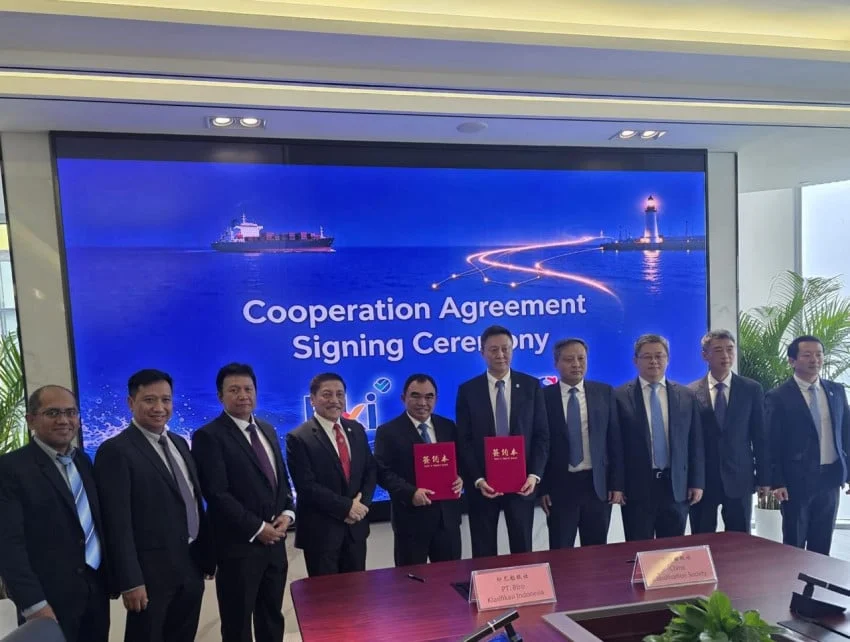
PT Biro Klasifikasi Indonesia (Persero), operating as BKI, has formally sealed a strategic partnership with the China Classification Society (CCS) during a high-level diplomatic and corporate meeting held in Shanghai, China. This landmark agreement represents a pivotal step forward in bilateral maritime relations, focusing intensely on advancing technical standards, elevating navigational safety, and accelerating green maritime transformations. The Memorandum of Understanding (MoU) establishes a comprehensive framework for cooperation encompassing rigorous vessel inspection protocols, advanced certification procedures, and sophisticated technical risk management across the global shipping sector. By pooling their extensive institutional expertise, BKI and CCS aim to address the complex challenges posed by modern maritime logistics, stricter international environmental regulations, and the surging trade volume between Indonesia and the People’s Republic of China.
The formalization of this alliance takes place against the backdrop of a rapidly evolving global shipping industry that faces unprecedented regulatory and operational pressures. As international maritime bodies, most notably the International Maritime Organization (IMO), enforce increasingly stringent greenhouse gas emission reduction targets, classification societies have assumed an instrumental role in guiding shipowners through the energy transition. The collaboration between BKI and CCS is strategically designed to tackle these modern imperatives by integrating cutting-edge technological solutions with robust safety frameworks.
Background Context of the Partnership and Bilateral Trade
The burgeoning partnership between BKI and CCS is deeply rooted in the broader economic and diplomatic relationship binding Indonesia and China. Over the past decade, bilateral trade between the two nations has expanded exponentially, fueled by infrastructure investments, critical mineral exchanges, and expansive maritime trade routes under the framework of the global supply chain network. As maritime connectivity intensifies, the volume of cargo vessels, bulk carriers, and container ships traversing regional waters has escalated dramatically, placing a premium on standardized safety measures and reliable technical oversight.
Classification societies serve as the technical backbone of the commercial shipping industry. They establish and maintain technical standards for the design, construction, and survey of marine structures, including ships and offshore platforms. For BKI, as Indonesia’s sole national classification society, aligning with globally recognized institutions such as CCS provides a strategic conduit for capacity building, technological transfer, and international recognition. CCS, on the other hand, brings decades of massive operational experience managing one of the world’s largest commercial fleets, making it an invaluable partner for BKI as it seeks to modernize its inspection methodologies and expand its global footprint.
Chronology and Key Events Leading to the Shanghai Agreement
The genesis of the newly signed MoU can be traced back through a series of bilateral engagements and technical exchanges aimed at harmonizing classification standards between Southeast Asia and East Asia. In recent years, delegations from both BKI and CCS have convened at various international maritime forums to discuss emerging technical hurdles, cyber-security in shipping, and alternative marine fuels.
The roadmap toward the Shanghai agreement accelerated in the months preceding the signing ceremony, as technical committees from both societies drafted frameworks for mutual recognition and joint research initiatives. The process culminated in Shanghai, where executive leadership from both entities gathered to sign the definitive text of the MoU. This event follows closely on the heels of other critical technical interventions by BKI domestically, such as comprehensive technical audits and re-evaluations of vessel safety records following high-profile maritime incidents in Indonesian waters, underscoring the organization’s unwavering commitment to maritime safety and structural integrity.
Leadership Perspectives and Strategic Objectives
Addressing the media following the signing ceremony in Shanghai, the President Director of PT Biro Klasifikasi Indonesia (Persero), R. Benny Susanto, emphasized the transformative potential of the partnership. He articulated the core vision driving the state-owned enterprise toward deeper international cooperation.
"Through this cooperation, we hope to strengthen our technical capabilities, expand knowledge exchange, and drive innovation in the maritime field," stated R. Benny Susanto in an official corporate statement. He further stressed that these coordinated efforts are fundamentally indispensable for safeguarding navigational safety, protecting the marine environment, and fostering the adoption of sustainable technologies within the shipping ecosystem.
From the perspective of China Classification Society, the alliance represents an opportunity to share best practices in digital shipping, autonomous vessel development, and smart survey techniques. By bridging the operational methodologies of both societies, the partnership aims to create a seamless regulatory environment for shipowners operating across Indonesian and Chinese waters, thereby minimizing administrative friction and enhancing operational efficiency.
Core Pillars of the BKI-CCS Memorandum of Understanding
The newly minted agreement is built upon several foundational pillars designed to address both contemporary operational demands and long-term strategic goals:
-
Advanced Vessel Inspection and Certification: The agreement establishes protocols for joint surveys, standardization of inspection criteria, and mutual assistance in certifying vessels that trade between Indonesian ports and Chinese maritime hubs. This harmonization ensures that ships meet the highest international safety conventions, including SOLAS (Safety of Life at Sea) and MARPOL (International Convention for the Prevention of Pollution from Ships).

-
Technical Risk Management and Data Sharing: Modern vessels are increasingly complex, incorporating digital navigation systems, automated engine rooms, and alternative propulsion technologies. BKI and CCS will establish secure channels for sharing technical data, casualty analysis, and risk assessment methodologies to preemptively identify structural vulnerabilities and machinery failures.
-
Environmental Sustainability and Decarbonization: A primary driver of the MoU is the shared commitment to environmental protection. Both institutions will collaborate on research and development initiatives targeting energy efficiency technologies, carbon capture and storage (CCS) readiness for vessels, and the adoption of zero-carbon marine fuels such as green ammonia, hydrogen, and sustainable methanol.
-
Human Capital Development and Knowledge Exchange: Recognizing that technological advancement relies heavily on skilled personnel, the partnership outlines comprehensive training programs, expert exchanges, and joint seminars for marine surveyors, naval architects, and maritime engineers from both organizations.
Implications for the Indonesian Maritime Sector and Global Trade
The strategic alliance between BKI and CCS carries profound implications for the domestic maritime landscape of Indonesia and its position within the broader Indo-Pacific trade network. As an archipelago nation heavily reliant on domestic sea-lanes and international shipping lanes for economic sustenance, Indonesia’s national interest is intrinsically tied to maritime safety and environmental compliance.
By integrating advanced technological insights from CCS, BKI significantly enhances its institutional capacity to regulate Indonesia’s expanding domestic fleet. This upgrade in technical competence is expected to reduce maritime accidents, lower insurance risk premiums for Indonesian-flagged vessels, and elevate the reputation of national maritime services on the global stage. Furthermore, as global charterers increasingly demand stringent environmental credentials—such as the Carbon Intensity Indicator (CII) and Energy Efficiency Existing Ship Index (EEXI) compliance—Indonesian shipowners partnered with BKI will be better equipped to meet international standards without facing punitive operational restrictions in foreign ports.
Fact-Based Analysis of Decarbonization Pathways in Shipping
The maritime transport sector is responsible for roughly three percent of global greenhouse gas emissions. Without aggressive intervention, emissions are projected to rise significantly due to growing global trade demands. The inclusion of decarbonization as a core tenet of the BKI-CCS agreement aligns perfectly with the revised IMO greenhouse gas reduction strategy, which mandates net-zero greenhouse gas emissions from international shipping by or around 2050, alongside interim checkpoints for 2030 and 2040.
Achieving these ambitious targets requires a multi-pronged approach involving hull optimization, slow steaming, digital route planning, and, most crucially, the adoption of zero-emission marine fuels. Classification societies like BKI and CCS play a gatekeeper role in this transition. They must independently evaluate the safety, stability, and structural compatibility of alternative fuel systems—such as cryogenic storage tanks for liquefied natural gas (LNG) and ammonia—before issuing class approval.
Through their combined research infrastructure, BKI and CCS can accelerate the development of class rules for alternative fuels, providing shipyards and shipowners with the regulatory certainty needed to invest in green fleet renewals. This cooperative framework minimizes redundant research and development costs, allowing both classification societies to deliver faster, more reliable guidance to the maritime industry.
Broader Economic and Geopolitical Ramifications
Beyond technical standardization, the strengthened relationship between BKI and CCS reflects the deepening economic interdependence between Indonesia and China within the framework of multilateral South-South cooperation. As maritime infrastructure projects, port expansions, and coastal economic zones continue to develop across the Indonesian archipelago, the demand for high-tier classification and certification services will surge.
By forging strong institutional ties with a major global classification society like CCS, BKI positions itself not merely as a domestic regulator, but as a competitive regional player capable of providing world-class maritime services. This dynamic encourages a balanced exchange of technical expertise, ensuring that developing maritime nations retain agency and technical proficiency in the face of rapid industrial transformation.
Conclusion and Future Outlook
The signing of the Memorandum of Understanding between PT Biro Klasifikasi Indonesia (Persero) and the China Classification Society in Shanghai marks a definitive milestone in international maritime cooperation. By formally committing to enhanced joint inspections, rigorous technical risk management, and aggressive decarbonization pathways, both institutions have demonstrated proactive leadership in addressing the existential challenges facing modern shipping.
As the implementation phase of the MoU begins, stakeholders across the global maritime community will be closely watching how this partnership translates into tangible operational efficiencies, improved safety records, and accelerated green technology adoption. For BKI, this strategic alignment cements its trajectory toward international excellence, ensuring that Indonesia’s national classification society remains at the absolute forefront of maritime safety, environmental stewardship, and technological innovation for decades to come.