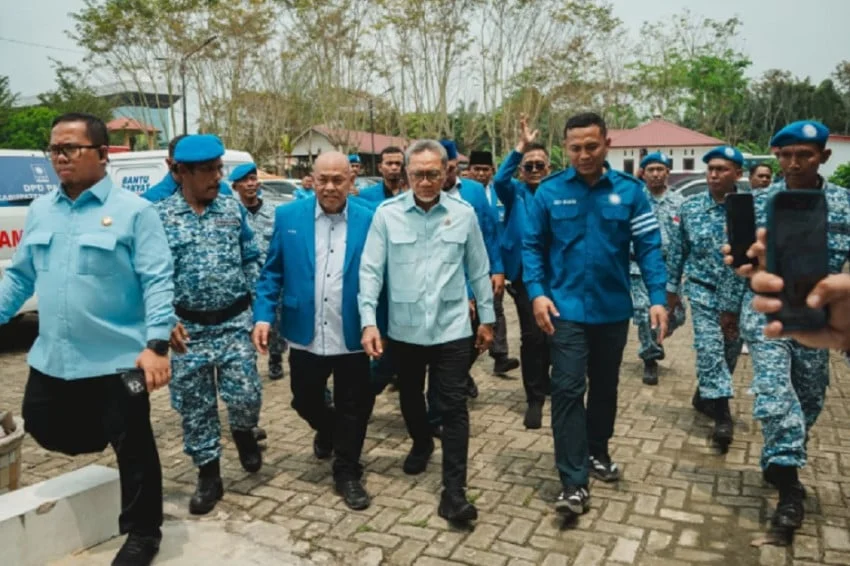
The Regional Leadership Council of the National Mandate Party for North Sumatra (DPW PAN Sumut) has officially and unequivocally reaffirmed its unwavering support for the central leadership of the party under the stewardship of Chairman Zulkifli Hasan, commonly known as Zulhas. This definitive stance comes in direct response to swirling rumors, unverified media reports, and behind-the-scenes political murmurs regarding an alleged push for a leadership transition at the highest echelon of the party. As political maneuvers intensify across Jakarta and various regional branches, the North Sumatra chapter has stepped forward to project a unified front, emphasizing absolute loyalty, structural cohesion, and a shared commitment to the broader national agenda led by the current administration.
The declaration of support was formally articulated by the Secretary of PAN North Sumatra, Dedy Irawan, during a strategic party briefing on Thursday, November 12, 2026. Addressing party cadres, local media, and political observers, Irawan made it abundantly clear that the entirety of the North Sumatra regional machinery operates under a strict single-command structure. According to Irawan, the leadership and members across all municipal and regency levels within the province remain fully aligned with Zulkifli Hasan’s vision, rejecting any narrative that suggests internal division or dissatisfaction with his tenure.
Background Context: The Anatomy of Intra-Party Dynamics and National Alignment
To understand the weight of the statement issued by DPW PAN Sumut, it is essential to examine the broader political landscape in which the National Mandate Party operates. PAN has historically positioned itself as a pragmatic and influential political force within Indonesia’s democratic landscape. Since joining the governing coalition and actively supporting President Prabowo Subianto’s administration, the party has sought to balance its internal consolidation with active participation in national policymaking and public service delivery.
Zulkifli Hasan, who currently holds a prominent strategic position within the national cabinet alongside his role as party chairman, has been instrumental in steering PAN toward a cooperative yet assertive stance within the ruling coalition. However, maintaining unity within a large, diverse political party is rarely without friction. Rumors concerning potential leadership reviews or succession talks frequently emerge during periods of heightened legislative activity or when individual party members diverge from official party lines on controversial national issues.
In recent weeks, the political atmosphere in Jakarta has been charged with various debates concerning legislative initiatives, parliamentary oversight, and coalition dynamics. Speculation regarding leadership shifts often surfaces when external political actors attempt to test the resilience of coalition parties or exploit minor legislative disagreements to project an image of internal instability. The prompt and decisive reaction by DPW PAN Sumut is widely viewed by political analysts as a preemptive strike against destabilizing narratives designed to create rifts between regional branches and the central executive board.
The Core Message: One Command and Grassroots Focus
During his address, Dedy Irawan elaborated on the current strategic priorities of the North Sumatra branch, emphasizing that organizational energy is being channeled toward constructive endeavors rather than entertaining speculative political gossip.
"DPW PAN Sumut is under one command, loyal to Zulkifli Hasan. Right now, our primary focus is centered on organizational consolidation, the structural strengthening of our party apparatus at the grassroots level, and active engagement in programs designed to assist the general public," Irawan stated.
This emphasis on structural consolidation is a standard yet vital procedure for political parties aiming to prepare for upcoming electoral cycles, policy implementations, and regional developments. By directing attention away from speculative leadership contests and toward community-level service, the North Sumatra leadership aims to reassure both internal members and external stakeholders of its stability and operational readiness.
External Pressures and Speculation Surrounding Coalition Relations
Irawan did not shy away from addressing the origins of the rumors regarding the alleged leadership challenge. He explicitly pointed out that the whisper campaign and attempts to manufacture a crisis within the party are being orchestrated by external entities who harbor reservations or outright opposition to the close and cooperative relationship between PAN and President Prabowo Subianto.
Since the formation of the current administration, PAN has been a steadfast partner to President Prabowo, aligning its legislative and political weight behind the government’s flagship programs. This strong alliance has occasionally made the party a target for political rivals or factions seeking to fracture the coalition from within. By driving wedges between the party leadership and its grassroots supporters, external critics hope to weaken the collective bargaining power and stability of the pro-government bloc.
Irawan’s remarks highlight a keen awareness of these external pressures among regional leaders. By publicly exposing the alleged motives behind the rumors, the North Sumatra chapter has sought to neutralize the psychological impact of the gossip, rallying its members around the shared goal of supporting both the party chairman and the national administration.
Recent Legislative Controversies and Party Cohesion
The reaffirmation of loyalty also arrives against the backdrop of intricate parliamentary dynamics
. Observers of Indonesian politics note that managing a large political faction within the House of Representatives (DPR RI) requires constant communication and discipline, particularly when individual lawmakers take positions that attract significant media scrutiny.
For instance, recent discussions surrounding parliamentary oversight instruments, such as the use of the House’s right of inquiry (Hak Menyatakan Pendapat or HMP) regarding specific executive decisions, have occasionally tested party discipline across various factions. When individual members chart independent courses on high-profile national debates, speculative commentators often extrapolate these isolated instances into signs of widespread internal rebellion or a weakening of the party chairman’s authority.
However, senior party figures maintain that a healthy degree of legislative debate does not equate to structural disloyalty. The decisive response from major regional entities like DPW PAN Sumut serves to draw a clear line between individual legislative expressions and the collective institutional stance of the party, reinforcing that the overarching leadership remains secure and undisputed.
Implications and Future Outlook for PAN
The swift consolidation of support led by North Sumatra carries several important implications for the National Mandate Party moving forward:
-
Deterrence Against Further Speculation: By establishing a unified and vocal defense of Zulkifli Hasan’s leadership, regional chapters have signaled that attempts to manufacture leadership crises through media leaks or anonymous political rumors will face immediate pushback from the grassroots and regional leadership.
-
Reassurance of Coalition Partners: For President Prabowo Subianto and other coalition members, the clear demonstration of internal stability within PAN provides a reassuring signal of reliability. A united PAN ensures consistent legislative support for executive policies and national development programs.
-
Prioritization of Grassroots Mobilization: By refocusing the narrative on structural strengthening and public service, DPW PAN Sumut aims to maintain its electoral appeal and community trust. Political parties that successfully deflect internal distractions and pivot toward constituent needs are generally better positioned for future electoral contests.
Conclusion
The proactive stance taken by DPW PAN Sumut underscores the complexities of contemporary Indonesian party politics, where regional branches play a pivotal role in validating or challenging central authority. By swiftly dismantling the narrative of an impending leadership change and exposing the alleged political motivations behind the rumors, the North Sumatra chapter has reinforced the internal stability of the National Mandate Party. As Zulkifli Hasan continues to navigate both his party responsibilities and national governmental duties, the solid backing of key regional strongholds ensures a fortified leadership position capable of weathering external political turbulence and maintaining its strategic partnership with the national administration.