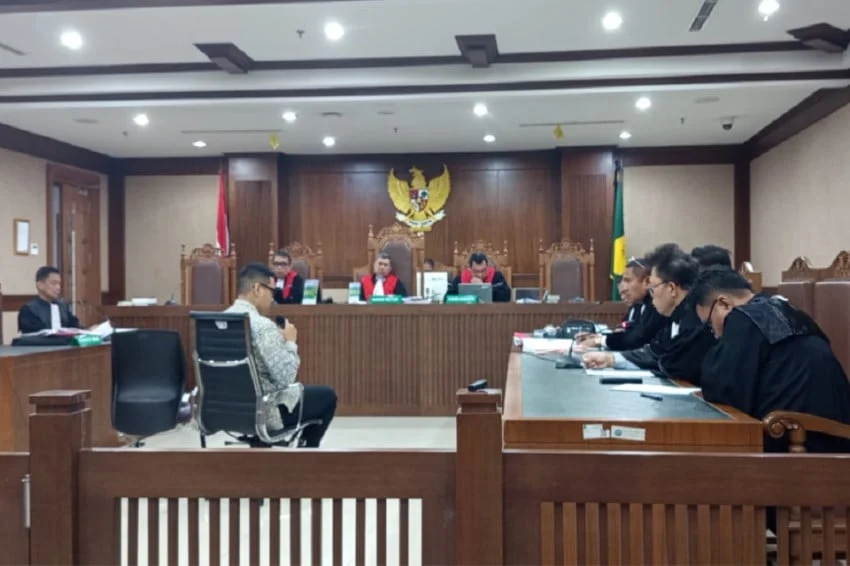
The legal proceedings surrounding high-profile extortion and intimidation cases in Indonesia often hinge on the microscopic examination of testimonies presented before the bench. At the Central Jakarta District Court, the prosecution team handling the case against defendant Bangun Paulus Tudungta has formally raised serious concerns regarding the consistency of the defense. Following a pivotal court session dedicated to the examination of the defendant, prosecutors underscored a glaring disparity between the narrative provided by Tudungta and the corroborative accounts delivered by previously heard witnesses, including acquaintances of the accused and the primary victims.
This development marks a critical juncture in a trial that has captured public attention due to its complex web of allegations involving coercion, psychological trauma, and threats of legal entanglement. As the judicial process marches toward its concluding phases, the divergence between the defense’s version of events and the prosecution’s compilation of evidence sets the stage for a rigorous closing argument and a definitive judgment by the presiding panel of judges.
Main Facts of the Ongoing Trial
The core of the legal action centers on accusations of extortion and criminal intimidation leveled against Bangun Paulus Tudungta. During the court session held on Wednesday, November 4, 2026, the evidentiary phase transitioned into the examination of the defendant. This stage allows the accused to present their defense directly to the judges, respond to inquiries from the prosecution, and address the body of evidence accumulated during the investigation and prior court hearings.
Immediately following the adjournment of the session, Jaksa (Prosecutor) Andri Saputra addressed the media regarding the state’s perspective on the defendant’s testimony. Saputra explicitly stated that several key points delivered by Tudungta stood in stark opposition to the testimonies given by witnesses during earlier sessions. The discrepancies are not merely peripheral details; they strike at the heart of the alleged criminal acts, specifically concerning the presence of physical and psychological coercion.
According to the prosecution, the victim’s narrative consistently detailed explicit acts of violence, sustained psychological trauma, and a persistent state of fear resulting from the actions of the accused. Conversely, Tudungta’s testimony flatly denied the utilization of any form of violence or physical force during the commission of the alleged offenses. This fundamental contradiction forms the cornerstone of the prosecution’s argument that the defendant’s statements lack credibility when measured against the broader factual matrix established in the courtroom.
Chronology of the Legal Proceedings
To understand the gravity of the recent developments in the Central Jakarta District Court, it is essential to examine the chronological progression of the case. Extortion and intimidation trials typically follow a stringent procedural timeline mandated by the Indonesian Criminal Procedure Code (KUHAP), moving from initial police reports to formal indictments, evidentiary hearings, witness testimonies, defendant examinations, and ultimately, sentencing.
The initial phase of the legal process began with formal complaints lodged by the victims, who reported being subjected to severe pressure, demands for assets or monetary compensation, and explicit threats of ruinous consequences should they fail to comply. Law enforcement agencies, specifically the Jakarta Metropolitan Police or specialized investigative directorates, initiated a formal inquiry, gathering preliminary evidence, communication logs, and financial records to substantiate the claims.
Following the completion of the police investigation and the transfer of the dossier to the Attorney General’s Office, the indictment was finalized, and the case was officially transferred to the Central Jakarta District Court. The trial commenced with the reading of the indictment by the Public Prosecutor, outlining the specific statutory violations allegedly committed by Bangun Paulus Tudungta, which typically fall under Articles 368 and/or 335 of the Indonesian Criminal Code (KUHP) concerning extortion, blackmail, and unpleasant acts.
Over the subsequent weeks, the court conducted multiple evidentiary hearings. During this phase, the prosecution presented a series of witnesses, including the direct victims, corroborating associates, and expert witnesses in digital forensics or psychological trauma. These testimonies established a detailed narrative of the alleged coercive environment. The turning point occurred on Wednesday, November 4, 2026, when the court convened specifically for the examination of the defendant. It was during and immediately after this session that Prosecutor Andri Saputra highlighted the irreconcilable differences between Tudungta’s defense statements and the established witness accounts.
Contextual Background and Related Legal Precedents
The case against Bangun Paulus Tudungta unfolds within a broader legal and socio-political landscape in Indonesia, where law enforcement and judicial authorities have placed heightened emphasis on prosecuting white-collar crimes, corruption, and systemic extortion. In recent years, public scrutiny over financial crimes and predatory legal practices—where individuals exploit regulatory vulnerabilities or fabricate legal threats to extract capital—has intensified significantly.
While each criminal case possesses unique factual parameters, the mechanics of extortion often rely heavily on the psychological subjugation of the victim. Perpetrators frequently leverage real or perceived influence over institutional processes, regulatory bodies, or law enforcement agencies to instill a debilitating fear of prosecution or financial ruin. In many analogous high-profile matters prosecuted in Indonesian courts, defendants attempt to reframe coercive demands as legitimate business negotiations, debt collections, or amicable agreements.
The strategy of presenting a sanitized version of events during defendant examinations is a common defense tactic designed to mitigate potential statutory penalties. However, when a defendant’s testimony directly contradicts multiple independent witnesses—particularly those who were present during the commission of the alleged acts or who observed the immediate psychological aftermath—the prosecution gains a distinct advantage in establishing mens rea (criminal intent) and the objective elements of the crime.
Analysis of Witness Testimony Versus Defendant Statements
The crux of the current evidentiary dispute rests on the legal weight attributed to witness testimonies versus the unsworn or self-serving statements of the defendant. Under the Indonesian legal framework, judges evaluate evidence based on the conviction of the judge (conviction intime) supported by at least two pieces of legal evidence as stipulated in Article 183 of the KUHAP. Legal evidence includes witness testimonies, expert opinions, letters, documents, and the defendant’s own statements.
When a defendant offers a narrative that diverges sharply from corroborated witness accounts, the judicial panel scrutinizes the internal consistency, plausibility, and corroboration of both versions. In this case, the prosecution has emphasized that Tudungta’s denial of violence directly conflicts with the clinical and experiential evidence of trauma presented by the victims.
Trauma experts and psychological witnesses often testify in extortion trials to validate the victim’s subjective experience of fear and coercion. If the victim exhibits documented signs of severe psychological distress, anxiety, or behavioral changes consistent with intimidation, the defense’s assertion that no hostile pressure was applied loses structural integrity. The prosecution’s observation that Tudungta’s testimony is "contradictory" serves as an early indicator of how the state will dismantle the defense strategy during the summation phase.
Legal Implications and the Path to Sentencing
As the trial moves past the defendant examination phase, the legal machinery shifts toward the drafting and submission of the formal prosecution demands, known locally as Surat Tuntutan. Prosecutor Andri Saputra explicitly noted that the totality of the contradictions observed during the hearing will be synthesized and integrated into the final prosecution brief.
The implications of these evidentiary contradictions for the defendant are substantial. In Indonesian jurisprudence, a lack of candor or the presentation of demonstrably false statements during a defendant examination can be viewed unfavorably by the presiding judges when determining culpability and sentencing severity. While a defendant has the legal right to deny charges or construct a defense, persistently contradicting established facts without corroborating evidence can diminish the court’s perception of remorse or rehabilitation.
Should the panel of judges find the prosecution’s arguments persuasive and conclude that the defendant engaged in systematic extortion and intimidation backed by credible threats and psychological pressure, Tudungta faces the prospect of significant custodial sentences. Articles governing extortion under the Indonesian Criminal Code carry maximum prison terms that reflect the severity of the coercion and the financial or psychological damage inflicted upon the victims.
Broader Impact on Public Trust and Judicial Integrity
The meticulous public and media tracking of cases involving extortion, such as the proceedings against Bangun Paulus Tudungta, underscores the broader societal demand for transparency and accountability within the justice system. Financial crimes and predatory coercion not only devastate individual victims but also distort economic fairness and undermine public confidence in the rule of law.
Trials conducted with procedural rigor—where every contradiction in testimony is rigorously analyzed by prosecutors and weighed carefully by independent judges—reinforce the integrity of the judicial institution. By publicly addressing the discrepancies in the defendant’s narrative, the prosecution signals to the legal community and the citizenry that courtroom testimonies are subjected to strict factual verification.
As the Central Jakarta District Court prepares for the subsequent stages of the trial, including the reading of the formal sentencing demands by the Public Prosecutor, the defense’s closing arguments, and the eventual verdict, all eyes remain fixed on how the judiciary will interpret the clash of narratives. The ultimate judgment will serve not only as a resolution to this specific criminal dispute but also as a judicial reaffirmation of the standards required when evaluating truth and accountability in Indonesian courts of law.