The political landscape in Indonesia has entered a period of heightened sensitivity following allegations of unauthorized surveillance targeting the nation’s highest office. The reports, which suggest that President Prabowo Subianto may have been the subject of clandestine wiretapping within the secure confines of the National Police Headquarters (Mabes Polri), have triggered widespread concern regarding national security, institutional integrity, and the stability of the state. In response to these developments, Syahganda Nainggolan, Head of the Government Communication Agency (Bakom) of the Republic of Indonesia, issued a formal appeal on Thursday, November 5, 2026, urging citizens to prioritize national unity and maintain social order amidst the unfolding crisis.
The Scope of the Allegations
The allegations of electronic eavesdropping against President Prabowo Subianto represent a significant breach of protocol and a potential threat to national sovereignty. While details remain fluid, reports indicate that the surveillance activities were allegedly conducted within the perimeter of the National Police headquarters, a facility that is theoretically under the highest tier of security and internal oversight.
The gravity of such an accusation cannot be overstated. In any sovereign nation, the security of the Head of State is the bedrock of institutional stability. The suggestion that intelligence-gathering apparatuses could be repurposed or compromised to monitor the President’s communications raises critical questions about internal vetting processes, the autonomy of law enforcement agencies, and the potential infiltration of foreign or rogue domestic actors within the national security architecture.
Call for National Solidarity
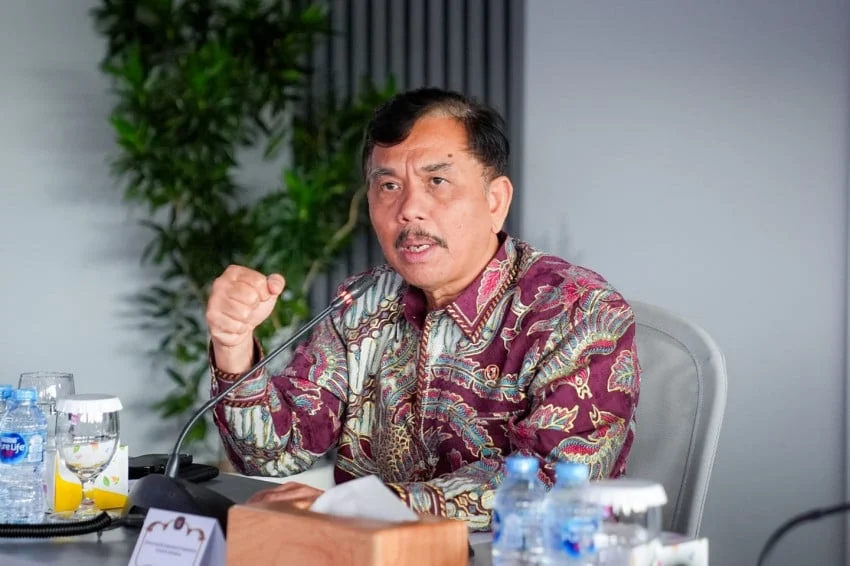
During his address on November 5, Syahganda Nainggolan emphasized the necessity of civic maturity during this volatile period. He warned against the influence of opportunistic actors who might seek to leverage the security lapse to foment instability.
"I call upon all elements of the nation and the Indonesian people to stand together in preserving security, public order, and the integrity of the nation," Nainggolan stated. His remarks serve as a strategic buffer against potential disinformation campaigns that often accompany high-level political scandals. By framing the issue as one of national unity rather than partisan politics, the government aims to prevent the fragmentation of public discourse.
Nainggolan further articulated a firm stance against the erosion of political ethics. He cautioned that political ambition should not become a catalyst for moral decay, noting that the tolerance of "corrupt and immoral politics" poses a direct threat to the nation’s democratic cohesion. He urged all sectors of society to provide unwavering support to the President and the National Police as they navigate the investigation and work to restore public confidence in state institutions.
Contextualizing National Security Threats
To understand the magnitude of this event, it is necessary to examine the evolution of digital surveillance threats in the Southeast Asian region. Over the past decade, Indonesia has faced increasing challenges regarding cybersecurity. The proliferation of sophisticated spyware and the vulnerability of government communication networks have been persistent concerns for the Ministry of Communication and Digital affairs.
Historically, the protection of high-level government officials involves a multi-layered defense strategy, including physical surveillance, encrypted communication channels, and counter-intelligence operations. The allegation that a breach occurred within the Mabes Polri complex—an area that should be among the most secure locations in the country—suggests a failure in either technical defense or human intelligence security.
Experts in regional security note that cyber-espionage is often used as a tool for geopolitical maneuvering. If the allegations are proven to be accurate, the investigation will likely focus on whether the breach originated from domestic sabotage, a rogue internal faction, or external state-sponsored actors seeking to influence Indonesia’s domestic policy and international alignment.
Timeline of Recent Developments
The investigation into the alleged wiretapping is currently in its nascent stages. While the full timeline of the breach remains subject to classified findings, the following sequence highlights the current developments:
- Initial Discovery: Intelligence reports suggested irregular signals detected near the presidential security perimeter during meetings held at the National Police headquarters.
- Internal Audit: Following the detection, internal security teams initiated a sweep of the facility to identify unauthorized devices.
- Public Disclosure: Media outlets began reporting on the breach, linking the surveillance specifically to the Mabes Polri environment, prompting the involvement of national security agencies.
- Government Response: On November 5, 2026, the Government Communication Agency (Bakom) issued a formal request for public restraint and support for the ongoing investigation.
- Ongoing Investigation: The National Police, likely in coordination with the State Intelligence Agency (BIN) and the Presidential Security Force (Paspampres), are currently conducting a forensic audit of the communication infrastructure used by the President during his visits to the site.
Institutional Implications and Police Reform
The involvement of the National Police headquarters in this controversy presents a unique challenge for the force. The Indonesian National Police (Polri) has been undergoing a period of reform aimed at increasing transparency and accountability. An accusation of this nature threatens to undermine years of progress in public relations and institutional trust.
If the breach is determined to have been facilitated by insiders, the subsequent purge and restructuring of internal security units will be substantial. Law enforcement officials have indicated that they are cooperating fully with the investigation. The pressure on the Police Chief to provide a transparent account of the incident is mounting, as any perceived lack of clarity could lead to further political instability.
Economic and Diplomatic Consequences
Beyond domestic security, the incident carries significant weight for Indonesia’s international reputation. Foreign investors and diplomatic partners closely monitor the stability of the political environment in Jakarta. A leader who is perceived to be vulnerable to surveillance is often viewed as a leader who lacks full control over the state apparatus.
Furthermore, the integrity of communication between the President and his cabinet is essential for the effective management of the economy. If the perception persists that sensitive government data is at risk of exposure, the government’s ability to conduct confidential policy negotiations—both domestically and internationally—will be severely hampered.
The economic implications are clear: market confidence thrives on stability. Should the investigation lead to a prolonged period of internal conflict within the security forces, the Indonesian Rupiah and the domestic stock market could face downward pressure. Consequently, the government’s efforts to maintain public calm are as much an economic necessity as they are a security mandate.
Analyzing the Future of Digital Governance
The current situation highlights the urgent need for a comprehensive overhaul of national cybersecurity protocols. The government must accelerate the implementation of quantum-resistant encryption and stricter access controls for all state-level communications.
Furthermore, the incident underscores the need for a "whole-of-society" approach to security. As Syahganda Nainggolan noted, the responsibility for maintaining national integrity rests not only with the state but also with the public. By fostering a climate of vigilance and resisting the temptation to amplify divisive rhetoric, the citizenry plays a role in neutralizing the aims of those who wish to destabilize the nation through digital warfare.
Conclusion
The allegations of wiretapping against President Prabowo Subianto are a watershed moment for the administration. The response from the Bakom, as voiced by Syahganda Nainggolan, reflects a clear priority: the preservation of the state above all else. As the investigation progresses, the government faces the arduous task of balancing the need for transparency with the requirements of national security.
The coming weeks will be critical. The Indonesian public will be watching closely to see how the authorities handle the investigation and whether they can successfully identify the culprits behind this breach. Ultimately, the stability of the Indonesian government will depend on its ability to demonstrate that its institutions remain robust, resilient, and capable of protecting the nation’s leadership from both internal and external threats. For now, the call remains one of unity, calling upon all elements of society to ensure that the pursuit of power does not dismantle the very foundations of the state.