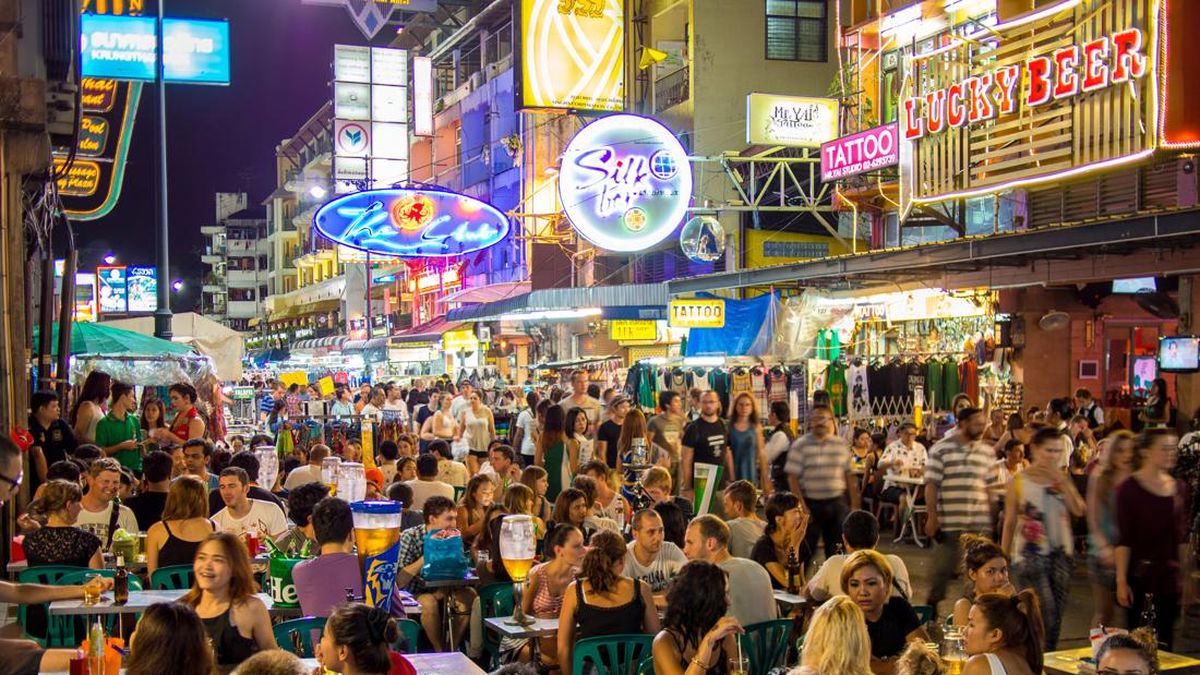
The Royal Thai Government is actively considering a sweeping regulatory overhaul that could see nightlife venues along Bangkok’s globally renowned Khao San Road permitted to operate legally well past midnight. This policy shift, structured as a comprehensive pilot project, aims not only to revitalize the vibrant tourism economy of the district but also to systematically address long-standing allegations of systemic corruption, bribery, and regulatory loopholes that have plagued the local hospitality industry for years.
The initiative marks a significant turning point for one of Southeast Asia’s most famous backpacker hubs. For decades, Khao San Road and its immediate surrounding alleyways, including the parallel Rambuttri Road, have operated in a bureaucratic grey area. While drawing millions of international tourists annually, the area has never officially been designated as a legal entertainment zone under Bangkok’s stringent zoning laws. Consequently, businesses have had to navigate complex, often outdated licensing frameworks—frequently registering as standard restaurants rather than entertainment venues—to stay afloat.
This structural mismatch between official zoning designations and the reality of commercial operations has historically created fertile ground for illicit activities, including extortion and bribery. By bringing transparency to the licensing process, streamlining operational frameworks, and updating outdated national legislation, the Thai government hopes to establish a sustainable model that balances economic vitality with public safety and legal compliance.
High-Level Government Intervention and Inter-Agency Collaboration
The momentum behind this potential policy shift crystallized during a high-stakes coordination meeting held on Friday, October 30. The session was spearheaded by Paradorn Prissananantakul, a minister attached to the Prime Minister’s Office, underscoring the federal government’s direct interest in resolving the issues facing the capital’s tourism sector.
The meeting convened a broad coalition of stakeholders, bringing together senior officials from the Bangkok Metropolitan Administration (BMA), the Royal Thai Police, the Ministry of Interior, and various regulatory oversight bodies. The inclusion of multiple agencies reflects the complex jurisdictional challenges that have historically hampered effective enforcement and oversight in the district.
According to briefing details released following the summit, the discussions centered on a multi-faceted approach to restructuring Khao San Road’s nightlife ecosystem. Key areas under review include the comprehensive overhaul of licensing requirements, the formal extension of operational hours, the redrawing of zoning maps to legally accommodate entertainment venues, and the implementation of robust supervisory mechanisms to ensure community standards are maintained.
The Catalyst: Corruption Investigations and Enforcement Inspections
The urgency driving this regulatory reform was significantly amplified by recent enforcement actions conducted by the Ministry of Interior. Routine and targeted inspections of various commercial establishments along Khao San Road uncovered troubling evidence of systemic legal violations and illicit financial practices.
During these inspections, ministry officials identified clear indications of widespread bribery. Investigators uncovered patterns wherein venue operators allegedly made regular, clandestine payments to various rogue officials across multiple municipal and law enforcement agencies. These illicit disbursements were reportedly made to secure protection from legal repercussions, allowing venues to bypass noise ordinances, fire safety protocols, and operating hour restrictions with impunity.
The unearthing of these corrupt networks prompted immediate high-level concern, illustrating that minor infractions, if left unaddressed through proper legal channels, invariably foster an environment of institutional graft. Rather than merely penalizing individual business owners, the government recognized that the root cause lay within the rigid and outdated regulatory framework itself, which effectively criminalized standard nightlife operations and forced businesses into informal, vulnerable arrangements.
Addressing the Zoning Paradox: From Backpacker Haven to Regulated Hub
To understand the profound significance of the proposed pilot project, one must examine the historical regulatory status of Khao San Road. Despite evolving over the past four decades from a quiet rice-trading market into the epicenter of global backpacking culture and a major contributor to Thailand’s tourism GDP, the district has persistently lacked formal recognition as a designated entertainment zone.
Under current municipal planning regulations, Bangkok’s official nightlife zones are strictly demarcated, leaving areas like Khao San Road outside the legal perimeter. As a result, venues operating in the district have been legally classified as ordinary eating establishments. This classification imposes strict closing times—historically mandated at midnight or earlier—and prohibits activities typically associated with vibrant nightlife districts, such as live band performances, dancing spaces, and extended bar service.
This regulatory rigidity has created a persistent tension between commercial reality and legal enforcement. While tourists flock to the strip for its energetic nocturnal atmosphere, business owners operate under constant legal precarity. Minister Paradorn emphasized that this mismatch not only generates opportunities for extortion and corruption but also inflicts tangible economic harm on the local workforce. Bartenders, servers, kitchen staff, live musicians, and independent vendors have all suffered suppressed earning potentials due to artificial caps on operating hours and stifled business growth.
Comprehensive Reform Strategy and Action Plan
To rectify these systemic issues, the Thai government has outlined a meticulous, phased implementation strategy for the Khao San Road pilot project. The reform package encompasses legislative amendments, administrative restructuring, technological enhancements, and direct community engagement.
First, the government is initiating a comprehensive baseline data collection campaign. Authorities will thoroughly audit and catalog every entertainment venue, restaurant, and commercial enterprise operating within the Khao San and Rambuttri corridors. This census aims to standardize data across all oversight agencies, ensuring that the BMA, police, and tax authorities operate from a single, unified information database.
Second, the administration is preparing substantial legislative updates. Discussions are underway to revise the national Entertainment Places Act, a foundational statute that defines the legal parameters, licensing criteria, and operational scopes for nightlife businesses across Thailand. Alongside this legislative update, the government plans to issue royal decrees establishing precise geographic boundaries and clarifying areas where entertainment venues are strictly prohibited versus zones where they may operate under flexible frameworks.
Third, regulatory enforcement will be modernized through the introduction of a risk-based business classification system utilizing a color-coded framework. This system will categorize venues based on their adherence to safety standards, size, noise emission levels, and operational history, allowing for targeted oversight rather than blanket restrictions.
Furthermore, the government is overhauling public grievance mechanisms, particularly concerning noise pollution and public nuisance complaints. A streamlined, digitized complaint channel will be established, ensuring that reports submitted by local residents are immediately routed to the appropriate enforcement agency for rapid, transparent follow-up.
Balancing Economic Vitality with Community Welfare
A cornerstone of the proposed policy is the insistence on stringent compliance prior to the granting of extended operational hours. The government has made it clear that while venues will be given the opportunity to operate past midnight, this privilege will be strictly contingent upon meeting rigorous safety, zoning, and operational standards.
Before any permanent zoning changes or extended hours are authorized, comprehensive safety audits will be conducted across all participating venues. These inspections will rigorously evaluate structural integrity, fire evacuation routes, crowd management protocols, and sanitary conditions.
Crucially, the policy formulation process is designed to be inclusive. The government has committed to engaging in continuous consultations with business operators, local entrepreneurs, and resident communities. This stakeholder dialogue is intended to balance the economic imperatives of a thriving tourism destination with the quality-of-life concerns of local residents who live adjacent to the bustling commercial strip.
Broader Economic and Institutional Implications
The implications of the Khao San Road pilot project extend far beyond a single street in Bangkok. If successful, the initiative could serve as a national template for nightlife and tourism governance across Thailand, a country heavily reliant on the visitor economy for national employment and GDP growth.
Economically, legalizing extended operating hours is projected to significantly boost nocturnal spending, driving higher revenues for local supply chains, hospitality workers, and small-to-medium enterprises. By removing the threat of arbitrary penalties and closing the avenues exploited by corrupt networks, the policy promises to foster a more predictable, attractive investment climate for legitimate business operators.
Institutionally, the reform represents a critical test of the government’s broader anti-corruption agenda. By modernizing archaic laws that inevitably push businesses into the informal economy, the state demonstrates a pragmatic approach to governance—one that recognizes that effective regulation must adapt to economic reality rather than imposing unworkable restrictions that invite non-compliance and graft.
As the pilot project moves from the planning table to practical implementation, domestic and international observers will closely monitor its outcomes. For Bangkok, successfully transforming Khao San Road from an unregulated, legally precarious hotspot into a modernized, transparent, and vibrant entertainment district could redefine the future of urban tourism management in Southeast Asia.