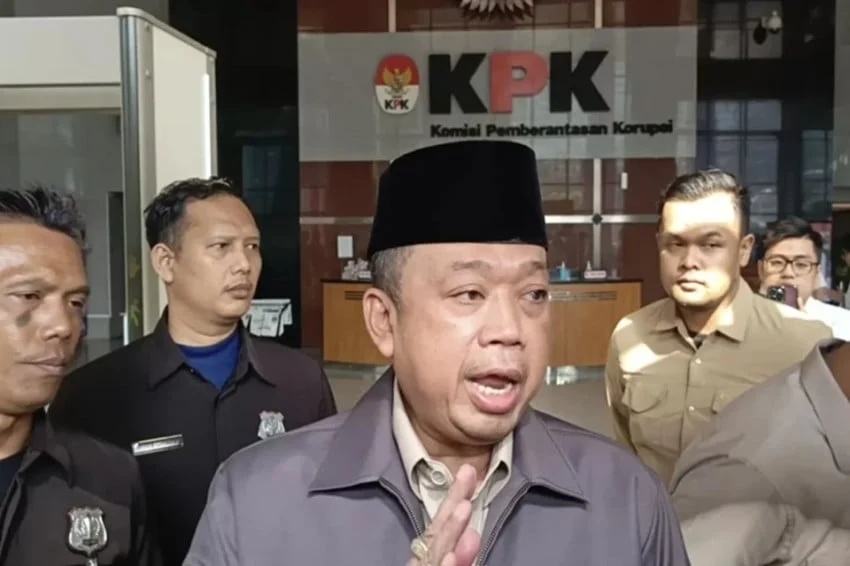
The integrity of Indonesia’s anti-corruption architecture has faced renewed scrutiny following explosive allegations from the Indonesian Anti-Corruption Society (MAKI). Coordinator Boyamin Saiman has publicly identified specific personnel within the Corruption Eradication Commission (KPK) suspected of compromising classified investigations linked to the Ministry of Agrarian Affairs and Spatial Planning/National Land Agency (ATR/BPN). The allegations center on the unauthorized disclosure of sensitive documents and illicit communication with Arif Sugianto, a figure previously apprehended by the KPK in an operation targeting corruption within the land sector.
This development arrives at a critical juncture for the Ministry of ATR/BPN, currently led by Minister Nusron Wahid, who has recently been summoned by the KPK to provide testimony regarding financial discrepancies involving his associates. The intersection of internal leaks and high-level ministerial investigations has created a climate of institutional fragility, prompting calls for immediate reform and accountability within the nation’s primary graft-busting agency.
The Allegations: Unmasking the Internal Breach
Speaking from Tajikistan, Boyamin Saiman disclosed the identities of the accused parties, citing specific initials to categorize the alleged breaches. According to MAKI, two individuals—identified by the initials TS and MS—are at the heart of the scandal.
"From Tajikistan, where the air remains somewhat warm, I am disclosing the initials of the KPK employees suspected of leaking documents and maintaining unauthorized communication with Arif Sugianto, a suspect in a KPK sting operation related to the ATR/BPN," Saiman stated.
The professional backgrounds of the accused underscore the gravity of the breach. According to Saiman’s dossier, the first suspect, TS, is a high-ranking official within the KPK’s Directorate of Investigation, noted for being a lateral hire from another agency. The second suspect, MS, is a member of the KPK’s Directorate of Coordination and Supervision (Korsup), who similarly joined the commission from an external law enforcement entity. These roles are pivotal to the KPK’s operational success, as they oversee the mapping of corruption networks and the enforcement of statutory land regulations.
Chronology of the Investigative Escalation
The current crisis is not an isolated incident but rather the culmination of months of friction between the KPK’s internal operations and the external scrutiny of watchdog organizations.
- October 2026: Initial reports surface regarding irregularities within the ATR/BPN licensing processes, triggering an internal KPK investigation.
- Early November 2026: Arif Sugianto is apprehended in a sting operation (OTT) conducted by the KPK, revealing a nexus between private land developers and ministry officials.
- November 6, 2026: MAKI officially formally lodges a complaint with the KPK’s Supervisory Board (Dewas), providing evidence of communication logs and leaked documents linking the two KPK officials to the suspect.
- November 7, 2026: Minister of ATR/BPN Nusron Wahid is summoned by investigators to clarify his knowledge regarding funds received by his subordinates, further intensifying the pressure on the ministry to demonstrate transparency.
The Role of the Supervisory Board (Dewas)
The Supervisory Board of the KPK now faces the most significant challenge to its credibility since its inception. Boyamin Saiman has explicitly demanded a "zero tolerance" policy, urging the board to expedite its inquiry into the allegations. Under the current legal framework, the Dewas is responsible for maintaining the ethical standards of KPK employees.
Legal experts suggest that the breach, if proven, constitutes a severe violation of the KPK’s code of ethics, specifically regarding the confidentiality of information and the prohibition of contact with parties under investigation. The failure to secure classified documents not only jeopardizes the specific case against Arif Sugianto but threatens the evidentiary integrity of future prosecutions. By leaking intelligence, these officials have effectively alerted other potential suspects, providing them with the opportunity to destroy evidence or abscond from justice.
Contextualizing ATR/BPN Vulnerabilities
The Ministry of ATR/BPN has long been identified by Transparency International and the Indonesian Ombudsman as a "high-risk" sector for corruption. Land disputes, the digitalization of land certificates, and the allocation of agrarian spatial planning permits are areas where administrative power is frequently commodified.
The investigation into Arif Sugianto is emblematic of a broader effort by the current administration to purge systemic corruption within the land sector. Minister Nusron Wahid, upon taking office, pledged to overhaul the ministry’s bureaucratic layers. However, the revelation that KPK officials—tasked with investigating this very ministry—might be compromised suggests that the corruption network is more deeply entrenched than previously estimated.
Institutional Implications and Political Impact
The allegations present a dual-pronged crisis for the KPK. First, there is the immediate risk to the current prosecution. If the suspects in the ATR/BPN case can prove that the evidence against them was gathered or handled through compromised channels, the entire legal case could be invalidated in court.
Second, the scandal damages the public trust in the KPK, which has historically been the most trusted institution in Indonesia. A series of ethical controversies over the past few years, ranging from the revision of the KPK Law to the conduct of its leadership, has left the institution vulnerable to accusations of political capture. The involvement of personnel from external agencies in these leaks also raises questions regarding the vetting processes for staff seconded to the commission.
Expert Analysis: The Cost of Compromise
Dr. Aris Permana, a researcher in governance and institutional integrity, notes that the current situation highlights the fragility of internal security protocols within the KPK. "When investigators become the bridge between the accused and the prosecution, the concept of the ‘rule of law’ is inverted. The damage here is not just to one case, but to the operational DNA of the KPK. If the watchdog itself has been corrupted, the entire mechanism of justice requires a comprehensive audit," Permana commented.
The implications for the Indonesian bureaucracy are significant. If officials in the ATR/BPN can influence investigators to leak information, it suggests a "capture" of regulatory oversight. The ongoing investigation into Minister Nusron Wahid is therefore not just a probe into the ministry’s finances, but a litmus test for the KPK’s ability to remain independent in the face of internal subversion.
Moving Forward: The Path to Resolution
As the Dewas prepares to commence hearings, several key questions remain unanswered:
- The Extent of the Breach: How many documents were leaked, and for how long had the communication between the officials and the suspects been ongoing?
- Financial Motives: Was there a financial transaction involved, or was the leak the result of political pressure?
- Systemic Weakness: Were these individuals acting alone, or were they part of a larger, organized network within the KPK?
The Supervisory Board is expected to issue a preliminary report by the end of November. Should the findings confirm the allegations, the individuals involved face not only termination but potential criminal charges under the Law on the Eradication of Corruption, which carries severe penalties for the obstruction of justice.
For the KPK, the days ahead will define its relevance for the remainder of the decade. The institution must demonstrate that it is capable of investigating its own ranks with the same vigor it applies to external targets. The "zero tolerance" demand from civil society is not merely a request for justice—it is a condition for the continued legitimacy of the commission.
As the investigation unfolds, the public remains expectant, waiting to see if the KPK can sanitize its internal environment. The case of the ATR/BPN, and the alleged involvement of TS and MS, serves as a stark reminder that even the most formidable anti-corruption agencies are susceptible to the very forces they are sworn to dismantle. The outcome of this probe will serve as a definitive marker of whether the KPK remains a bastion of integrity or an institution in decline.