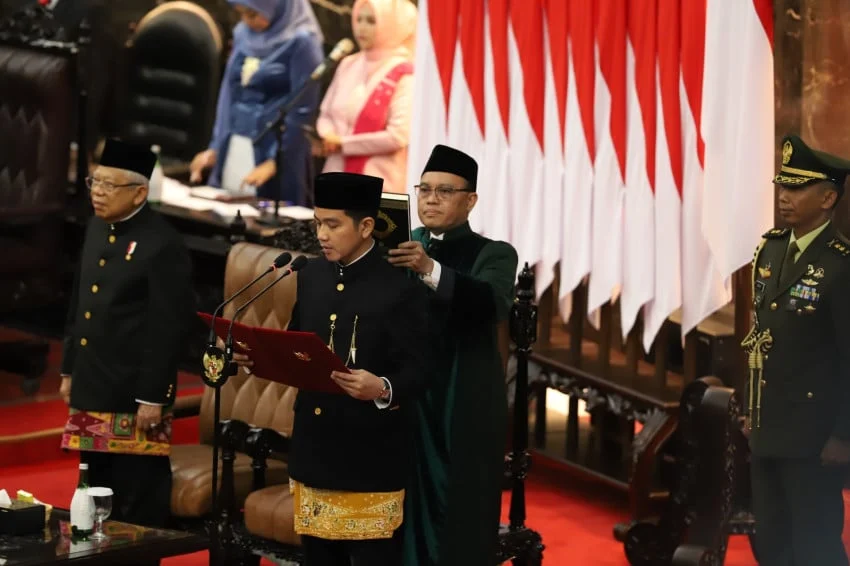
The Office of the Vice President of the Republic of Indonesia holds a uniquely significant yet frequently evolving position within the nation’s executive branch. Established at the dawn of independence in 1945, the role has traversed through periods of parliamentary democracy, guided democracy, the authoritarian New Order, and deep into the contemporary era of reformasi. Today, the office is once again under intense national scrutiny. Against the backdrop of emerging political discourse and legislative pressures regarding the tenure of current Vice President Gibran Rakabuming Raka, an examination of the historical lineage of Indonesia’s second-highest office provides crucial context to the current constitutional landscape. Since the proclamation of independence, a total of 13 distinguished individuals have occupied the office of the Vice President. These figures have mirrored the shifting socio-political tides of the archipelago, emerging from diverse professional backgrounds that include military generals, career politicians, seasoned technocrats, prominent businessmen, religious scholars, and regional heads.
The current political climate surrounding Vice President Gibran Rakabuming Raka has injected a sense of urgency into discussions regarding executive accountability and constitutional procedures. Public debates and calls from various political analysts and legal figures have thrust the office back into the spotlight. Critics and proponents alike frequently look to history to understand the constitutional mechanisms governing the executive branch, including the provisions for succession, resignation, and impeachment under the Indonesian Constitution of 1945. While political tensions circulate within the legislative halls of Jakarta, the broader historical framework demonstrates that the office of the vice presidency has continually adapted to institutional changes, crises, and shifts in national leadership.
Chronological Evolution and Historical Background of the Vice Presidency
The genesis of the Indonesian vice presidency is inextricably linked to the struggle for national liberation. In August 1945, amidst the waning days of the Second World War and the vacuum left by the Japanese surrender, the Preparatory Committee for Independence (PPKI) elected Mohammad Hatta as the nation’s first Vice President, serving alongside President Sukarno. Hatta, an intellectual, economist, and founding father, established a high benchmark for the office, emphasizing administrative rigor, economic self-reliance, and moral authority. His tenure, lasting from 1945 until his resignation in 1956 due to policy disagreements with President Sukarno, set an early precedent for the dynamic between the nation’s top two executives.
Following Hatta’s departure, the office experienced a prolonged vacancy spanning nearly two decades. During the tumultuous parliamentary democracy era and the subsequent centralization of power under the Guided Democracy framework, Sukarno operated largely without a vice president. It was not until the transition to the New Order under President Suharto that the office was formally re-engaged. In March 1973, Sri Sultan Hamengku Buwono IX—the revered Sultan of Yogyakarta and a steadfast supporter of the republic’s independence—assumed the role of Vice President. His appointment brought immense moral legitimacy and administrative stability to the early years of the New Order government. However, reflecting the controlled political environment of the era, Hamengku Buwono IX stepped down in 1978 ahead of the end of his term, citing personal reasons and changing political dynamics.
He was succeeded by Adam Malik, a veteran diplomat, journalist, and founding member of the Murba Party, who served from 1978 to 1983. Malik brought substantial international prestige to the office, having previously served as the President of the United Nations General Assembly and as Indonesia’s Minister of Foreign Affairs. The lineage continued through a succession of military and civilian leaders throughout the remainder of the Suharto regime, including Umar Wirahadikusumah, Sudharmono, Try Sutrisno, and B.J. Habibie. Each of these figures navigated the rigid hierarchical structures of the New Order, with Habibie ultimately ascending to the presidency following the historic fall of Suharto in May 1998—a watershed moment that permanently altered the trajectory of Indonesian governance and constitutional law.
Comprehensive List of Indonesian Vice Presidents Across Eras
To fully understand the institutional weight of the vice presidency, it is essential to examine the complete roster of leaders who have held the office from 1945 to the present day. This institutional memory highlights the diverse professional trajectories that have shaped executive governance in Indonesia:
-
Mohammad Hatta (1945–1956)
Born in Bukittinggi, West Sumatra, on August 12, 1902, Hatta was an economist and anti-colonial activist who helped architect the nation’s independence. He passed away on March 14, 1980. -
Sri Sultan Hamengku Buwono IX (1973–1978)
Born in Yogyakarta on April 12, 1912, he was a pivotal monarch, statesman, and nationalist leader who integrated the Yogyakarta Sultanate into the nascent Indonesian republic. He passed away on October 2, 1988. -
Adam Malik (1978–1983)
Born in Pematangsiantar, North Sumatra, on July 22, 1917, Malik was a prominent journalist, diplomat, and politician who shaped Indonesia’s foreign policy during the Cold War. He passed away on September 5, 1984. -
Umar Wirahadikusumah (1983–1988)
Born in Sumedang, West Java, on October 10, 1924, he was a career military officer who served as Chief of Staff of the Indonesian Army before assuming the vice presidency. He passed away on July 10, 2003. -
Sudharmono (1988–1993)
Born in Gresik, East Java, on March 12, 1927, Sudharmono was a military general, jurist, and key administrator who played a dominant role in the Golkar party machinery. He passed away on January 25, 2006. -
Try Sutrisno (1993–1998)
Born in Surabaya, East Java, on November 15, 1935, he served as Commander of the Indonesian National Armed Forces (ABRI) prior to his election as Vice President during the twilight of the New Order. -
B.J. Habibie (1998)
Born in Parepare, South Sulawesi, on June 25, 1936, Habibie was a world-renowned aeronautical engineer and technocrat who served briefly as Vice President before ascending to the presidency amid the 1998 political crisis. He passed away on August 2, 2019. -
Megawati Soekarnoputri (1999–2001)
Born in Yogyakarta on January 23, 1947, the daughter of Indonesia’s first president served as Vice President under Abdurrahman Wahid before assuming the presidency following constitutional impeachment proceedings in 2001. -
Hamzah Haz (2001–2004)
Born in Ketapang, West Kalimantan, on February 15, 1940, Haz was a veteran Islamic politician and leader of the United Development Party (PPP) who served under President Megawati. He passed away on July 24, 2024. -
Jusuf Kalla (2004–2009, 2014–2019)
Born in Watampone, South Sulawesi, on May 15, 1942, Kalla is a prominent businessman and politician who holds the distinction of serving two non-consecutive terms under two different presidents, Susilo Bambang Yudhoyono and Joko Widodo. -
Boediono (2009–2014)
Born in Blitar, East Java, on February 25, 1943, Boediono was a respected academic and economist who brought deep technocratic expertise to the administration of President Susilo Bambang Yudhoyono. -
Ma’ruf Amin (2019–2024)
Born in Tangerang, Banten, on March 11, 1943, Ma’ruf Amin is a prominent Islamic cleric and former leader of the Indonesian Ulema Council (MUI) who served alongside President Joko Widodo. -
Gibran Rakabuming Raka (2024–Present)
Born in Surakarta, Central Java, on October 1, 1987, Gibran is an entrepreneur and former mayor of Solo who assumed office as the youngest Vice President in modern Indonesian history following the 2024 general election.
Contemporary Political Dynamics and Institutional Implications
The inclusion of contemporary figures like Gibran Rakabuming Raka in this historical continuum underscores the rapid generational shift taking place within Indonesian politics. As the youngest individual to ever hold the office, Gibran’s ascension has sparked intense national debates regarding youth representation, political dynasties, and the constitutional pathways governing executive power. In recent months, public discourse has intensified following statements and initiatives from various legal and political figures, including prominent constitutional law experts like Jimly Asshiddiqie, who have publicly addressed the legal mechanisms surrounding executive accountability, legislative oversight, and potential parliamentary petitions.
From a structural perspective, the Indonesian Constitution of 1945—subsequently amended four times between 1999 and 2002—outlines explicit, rigorous thresholds for the removal or impeachment of a sitting president or vice president. Article 7A and Article 7B stipulate that removal must be initiated by the House of Representatives (DPR), reviewed by the Constitutional Court, and ultimately decided upon by the People’s Consultative Assembly (MPR) under specific legal violations such as treason, corruption, bribery, other severe criminal offenses, or moral turpitude. Consequently, any political posturing or parliamentary maneuvering regarding the vice presidency must operate within these stringent legal boundaries, distinguishing formal constitutional procedures from transient political rhetoric.
The broader implications of these ongoing debates extend far beyond the immediate tenure of any single official. They touch upon the core resilience of Indonesia’s democratic institutions, the system of checks and balances between the executive and legislative branches, and public trust in constitutional governance. As political parties navigate shifting alliances and prepare for future electoral cycles, the historical precedent set by past vice presidents serves as a reminder of the office’s enduring institutional weight. Whether navigating economic crises, diplomatic challenges, or internal political friction, the occupant of the vice presidency remains a vital pillar in maintaining the stability, unity, and constitutional integrity of the Republic of Indonesia.