The ongoing national discourse surrounding the educational background of Indonesian Vice President Gibran Rakabuming Raka has taken a new turn following an intensive administrative and legal investigation. Speaking publicly on a prominent television current affairs program, researcher Bonatua Silalahi presented findings suggesting that the foreign educational documents associated with the Vice President do not constitute a formal degree or diploma, but rather a certificate of attendance. The disclosure has intensified an already complex debate involving administrative law, higher education equivalency regulations, and ongoing legal challenges in state administrative courts.
The controversy centers on the verification of foreign academic credentials acquired prior to Gibran’s tenure in public office. While critics and independent researchers scrutinize the precise legal categorization of these documents, government defenders and legal representatives maintain that all educational milestones—ranging from elementary school through higher education—have been thoroughly documented and validated according to prevailing state statutes. This investigative report outlines the chronology of the dispute, the regulatory frameworks governing foreign credential equivalency in Indonesia, the official responses from legal counsels, and the broader implications of the controversy for public transparency and administrative governance.
Background Context and Regulatory Framework
The debate over academic credentials is not entirely unprecedented in modern Indonesian politics, where public figures frequently face intense scrutiny regarding their educational histories, professional backgrounds, and formal qualifications. In the case of Vice President Gibran Rakabuming Raka, attention has focused specifically on the foreign institutions he attended during his youth and undergraduate-equivalent years.
According to administrative regulations enforced by the Ministry of Education, Culture, Research, and Technology, citizens who complete educational programs outside the Indonesian school system must undergo a formal credential equivalency process (penyetaraan ijazah). This procedure is designed to ensure that foreign curricula align with national standards, credit requirements, and competency frameworks.
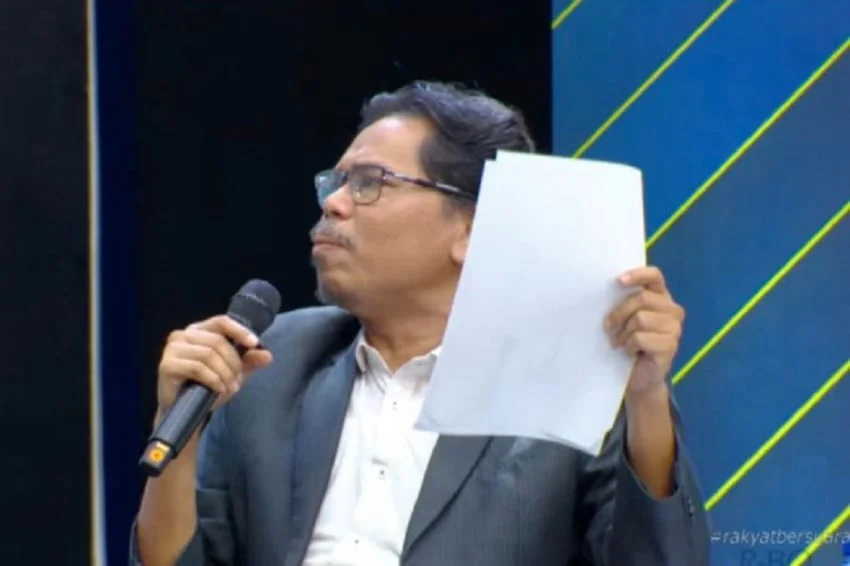
During his appearance on the iNews program Rakyat Bersuara, titled "Ada Pasal Selundupan di Kasus Ijazah?" on Tuesday, October 27, 2026, Bonatua Silalahi detailed the methodology behind his independent investigation. Silalahi stated that he had spent approximately two semesters examining administrative laws, regulatory decrees, and legal statutes pertinent to the case, including testimony presented during proceedings at the Constitutional Court (Mahkamah Konstitusi).
Drawing specific attention to regulatory standards, Silalahi referenced the Regulation of the Director-General of Primary and Secondary Education Number 33 of 2018. He argued that under strict administrative guidelines, the legalization or equivalency of foreign certificates requires adherence to established global curricula and specific credit accumulation criteria. Based on his legal analysis, Silalahi asserted that the documents presented do not meet the legal threshold of a graduation diploma or academic degree, describing them instead as administrative proofs of attendance or participation.
Chronology of the Legal Dispute
The controversy regarding the Vice President’s educational credentials has evolved through a structured sequence of administrative inquiries, public debates, and formal legal proceedings across multiple judicial bodies.
The initial public questions regarding the authenticity and classification of the credentials emerged during the national electoral cycles, when candidates’ backgrounds underwent rigorous public examination by civil society organizations, political opponents, and independent researchers. As public interest persisted following the inauguration of the presidential and vice-presidential ticket, the discourse shifted from political platforms to formal administrative and legal arenas.
By October 2025, independent researchers and legal observers began compiling comprehensive dossiers examining the administrative handling of foreign school certificates. Over the subsequent twelve months, these investigations expanded to include formal reviews of regulatory compliance.

Entering the final quarter of 2026, the dispute transitioned into the judiciary, specifically involving the Constitutional Court (MK) and preparations for hearings at the State Administrative Court (PTUN). Researchers such as Bonatua Silalahi utilized these judicial avenues to present comparative analyses of educational regulations, arguing that discrepancies existed between standard domestic graduation requirements and the foreign documents submitted for administrative clearance.
Official Responses and Legal Defense
In stark contrast to the claims made by independent researchers, the legal defense team representing the administration has consistently maintained the absolute legitimacy and completeness of Vice President Gibran Rakabuming Raka’s educational history.
Rullyandi, a prominent legal counsel representing the defense in the unfolding legal challenges, has firmly rejected allegations of document irregularities. Speaking ahead of scheduled evidentiary hearings at the State Administrative Court (PTUN), Rullyandi announced that the complete educational portfolio of the Vice President would be formally submitted and displayed to the court.
According to the legal team, the dossier encompasses every tier of the national and international education system completed by Gibran. "The documentation is complete, starting from elementary school (SD), intermediate education, up to the tertiary level (perguruan tinggi)," Rullyandi stated. The defense contends that all administrative prerequisites, including official verifications, translation protocols, and institutional clearances required by the Ministry of Education, have been fully satisfied in accordance with Indonesian law.
Legal representatives emphasize that attempts to reclassify the documents as mere attendance certificates stem from a fundamental misinterpretation or selective reading of administrative decrees. They argue that foreign educational institutions often utilize distinct nomenclature for foundational completion certificates and integrated academic programs, which nevertheless fulfill the substantive academic requirements recognized by Indonesian authorities at the time of issuance.
Broader Implications and Governance Analysis
The ongoing dispute over educational credentials carries several notable implications for Indonesian public administration, political transparency, and the judicial system.
First, the case highlights the growing intersection between digital-era investigative journalism, independent civil society research, and formal administrative law. As citizens and independent analysts utilize freedom of information channels and regulatory archives to scrutinize public officials, state institutions face heightened pressure to ensure transparency and clarity in credential verification processes.
Second, the involvement of key judicial bodies—such as the Constitutional Court and the State Administrative Court—underscores the institutional mechanisms available for resolving disputes regarding public office eligibility and administrative governance. While political debates often rely on rhetoric, the formal adjudication process forces both sides to present verifiable documents, statutory interpretations, and regulatory precedents.
Finally, the controversy emphasizes the necessity for standardized, transparent, and easily accessible guidelines regarding foreign credential equivalency. As more Indonesian students and public figures pursue education abroad, the clarity of Ministry of Education regulations concerning the distinction between diplomas, degrees, and certificates remains a vital component of public trust.
As the legal proceedings at the State Administrative Court progress, the formal presentation of physical evidence by the defense is expected to provide definitive clarity. Whether the judiciary will accept the administrative classification of the documents as valid degrees or mandate further regulatory review remains a central question for legal scholars, political analysts, and the Indonesian public.