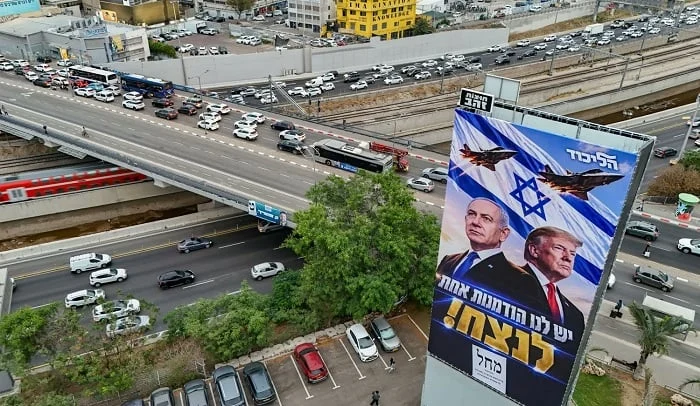
The political landscape of Israel is once again facing a familiar yet increasingly complex paralysis following another fiercely contested general election. With neither the incumbent right-wing coalition led by Prime Minister Benjamin Netanyahu nor the fragmented Zionist-led opposition bloc managing to secure the magical threshold of 61 seats required to form a governing majority in the 120-member Knesset, the nation is plunged into profound political uncertainty. As election officials process the remaining ballots following a historic voter turnout of 77.7 percent—the highest recorded since 1999—attention has inevitably turned to an unprecedented and historically taboo political question: could Zionist parties finally break longstanding ideological barriers to form a governing partnership with Arab-majority political factions?
This core dilemma encapsulates the deep structural fractures within Israeli democracy. For decades, mainstream Zionist parties across the political spectrum—ranging from the center-left to the hardline right—have treated Arab political parties as perpetual outsiders, deemed by many Jewish-Israeli politicians as incompatible with the Zionist vision of the state. However, the relentless cycle of deadlocked elections, combined with shifting demographic realities and pragmatic political calculations, has gradually eroded these once-rigid boundaries. As the dust settles on the latest vote count, political analysts are intensely debating whether necessity will ultimately override ideological purity, forcing a historic paradigm shift in Israeli governance.
Current Electoral Arithmetic and the Path to Deadlock
The electoral data emerging from Tuesday’s vote illustrates a deeply divided electorate. With nearly 80 percent of the ballots tallied by Wednesday afternoon, Prime Minister Benjamin Netanyahu’s incumbent coalition, anchored by his dominant Likud party, has secured 54 seats. While formidable, this total leaves the bloc seven seats short of the 61-seat majority needed to govern effectively. Netanyahu, Israel’s longest-serving prime minister, has built his political career on avoiding compromises with Arab factions, frequently leveraging anti-Arab rhetoric to mobilize his nationalist and religious base.
On the other side of the political aisle, the disparate Zionist opposition bloc—spearheaded by former military chief of staff Gadi Eisenkot and encompassing a broad ideological spectrum from Yair Golan’s relatively left-wing Democrats to Avigdor Lieberman’s ultranationalist Yisrael Beiteinu—has captured 49 seats. This coalition represents an eclectic mix of political actors united primarily by their opposition to Netanyahu rather than a cohesive governing platform. Like their rivals, their seat count falls significantly short of a parliamentary majority, rendering them equally incapable of forming a stable government on their own terms.
Crucially, the ultimate balance of power currently rests in the hands of the Arab-majority political factions. The Islamist Ra’am party, led by Mansour Abbas, and the secular-nationalist alliance known as the Joint List together command 17 seats. This block of seats is more than sufficient to bridge the mathematical deficit for either major political camp. Theoretically, their support could provide either Netanyahu’s bloc or the opposition alliance with the decisive numbers needed to elect a friendly speaker of the Knesset, pass vital legislation, and establish a working government.
Yet, translating this mathematical reality into a functioning political alliance remains an extraordinary challenge. While Mansour Abbas demonstrated a willingness to engage in pragmatic coalition politics during the short-lived government led by Naftali Bennett and Yair Lapid in 2021—when Ra’am made history by becoming the first independent Arab party to join an Israeli governing coalition—the broader Zionist political establishment remains deeply divided over repeating or expanding such an arrangement. Hardline factions within both the right-wing and opposition camps view cooperation with Arab parties as an existential compromise, while many within the Arab electorate remain skeptical of partnering with Zionist parties that continue to pursue policies detrimental to Palestinian national aspirations and the civil rights of Palestinian citizens of Israel.
Voter Turnout and Demographic Dynamics
The high stakes of the election were reflected at the ballot box, with overall voter participation surging to 77.7 percent. Political scientists attribute this high engagement to voter fatigue from repeated electoral cycles, intense polarization over judicial reforms, regional security concerns, and socioeconomic pressures.
Significantly, preliminary estimates indicate that voter turnout among Palestinian citizens of Israel—who comprise approximately 20 percent of the country’s total population—reached an impressive 80 percent. This high level of political mobilization among Arab citizens shatters persistent tropes of political apathy and underscores a determined collective desire to utilize the ballot box to influence state policy, combat systemic discrimination, and address soaring rates of violent crime within Arab communities. The robust participation of Arab voters directly amplified the legislative weight of parties representing them, ensuring they cannot be sidelined as mere spectators in the national political drama.
The Chronology of Government Formation
As the electoral process moves toward its formal conclusion, the timeline for resolving the political crisis is tightly regulated by Israeli constitutional procedures. Following the completion of the vote count, local election officials are scheduled to finalize the tally, with the official, certified results set to be formally presented to the Israeli presidency on November 4.
Once the official results are delivered, President Isaac Herzog will initiate formal consultations with the leaders of all parties represented in the newly elected Knesset. During these consultations, party leaders will advise the president on which candidate they support for the premiership. Based on these recommendations, President Herzog will task the politician who commands the most viable path to forming a coalition—typically, though not strictly, the leader of the largest single party—with the responsibility of establishing a government.
The designated candidate is granted a strict window of 28 days to negotiate coalition agreements, distribute ministerial portfolios, and present a cohesive government platform to the Knesset for a vote of confidence. If the designated leader fails to secure a majority within this initial timeframe, they may request a 14-day extension from the president. Should that extended deadline also pass without a successful coalition, the mandate can be reassigned to another member of parliament. If all attempts at government formation fail, the Knesset is automatically dissolved, triggering yet another costly and exhausting national election while the outgoing caretaker cabinet remains in temporary control of state affairs.
Historical Precedents and the Breaking of Taboos
The prospect of Zionist parties cooperating with Arab factions is not entirely without precedent, though it remains a sensitive and contested strategy. For decades, Israeli politics operated under an unwritten rule that Arab parties were illegitimate coalition partners, a convention rooted in the founding Zionist ethos of the state and compounded by the ongoing Israeli-Palestinian conflict. Mainstream Zionist parties routinely formed "blocking majorities" or minority governments with the tacit, outside support of Arab lawmakers, but formal integration into executive power was strictly avoided.
This dynamic experienced a tectonic shift in 2021 when Mansour Abbas and Ra’am broke the ultimate political taboo by joining the "change coalition" led by Naftali Bennett and Yair Lapid. Abbas justified the historic move through a pragmatic philosophy of "civic integration," arguing that Palestinian citizens of Israel care more about tangible issues—such as housing, infrastructure funding, and tackling organized crime—than getting bogged down in the broader, deadlocked geopolitics of the Israeli-Palestinian conflict.
However, that coalition proved fragile and eventually collapsed under ideological pressures from right-wing defectors within its own ranks. Netanyahu’s return to power in subsequent elections relied once again on traditional, homogenous right-wing and ultra-Orthodox alliances. The current electoral deadlock forces Israeli political architects to revisit the Ra’am precedent. For the Zionist opposition, which desperately seeks a path to unseat Netanyahu, courting Arab parties is a mathematical necessity, even if it risks alienating nationalist-leaning voters within their own loose coalition. Conversely, segments of the Israeli right have occasionally flirted with tactical accommodations with Arab lawmakers when survival demanded it, proving that political expediency can frequently override ideological purity.
Implications for Domestic Policy and Regional Stability
The resolution of this political impasse carries profound implications for both domestic governance and regional diplomacy. Domestically, the integration—or continued exclusion—of Arab parties will shape how the Israeli state approaches civil rights, resource allocation, and internal security for one-fifth of its population. A political system that permanently disenfranchises or marginalizes the representatives of its largest minority risks deepening societal polarization and eroding the foundational legitimacy of its democratic institutions.
Furthermore, the composition of the incoming government will directly influence Israel’s foreign policy trajectory. A government heavily influenced by hardline Zionist factions is likely to maintain aggressive regional postures, expand settlement activities in the occupied West Bank, and resist international pressure regarding the Palestinian issue. Conversely, a more moderate coalition reliant on or influenced by Arab parties could theoretically temper its domestic and regional policies, though systemic constraints within the Zionist political consensus historically limit drastic departures from traditional security doctrines.
As President Herzog prepares to receive the final election results and begin the delicate task of navigating coalition negotiations, Israeli political leaders stand at a critical crossroads. Whether they choose to maintain entrenched taboos and risk yet another paralysis-induced election, or summon the political courage to forge unprecedented partnerships across historic divides, will define the trajectory of Israeli democracy for years to come.