A peaceful evening in central Jakarta descended into chaos on Tuesday night, November 3, 2026, as a demonstration aimed at forcibly shutting down a concert by renowned Italian tenor Andrea Bocelli erupted into a violent physical confrontation with law enforcement officers at the Jakarta International Expo (JIExpo) venue in Kemayoran, Jakarta Pusat.
The incident, which saw protesters hurling stones, metal fragments, and barricades at police lines, underscored rising domestic tensions intersecting with international geopolitical sentiments. The unrest highlighted the complex challenges facing major international cultural events in the Indonesian capital when foreign artists become targets of localized political and ideological grievances.
Chronology of the Unrest
The events of Tuesday evening unfolded following hours of escalating tension across several points in Jakarta. Earlier in the day, groups associated with conservative and Islamic organizations had gathered at prominent city landmarks, including the Horse Statue (Patung Kuda) area near the National Monument, where speeches were delivered and Palestinian flags were prominently flown to rally public support against the concert.
By late afternoon, the crowd—led by prominent figures including Habib Bahar bin Smith under the banner of the Front Brotherhood of Islam (FPI)—shifted its focus toward the JIExpo Kemayoran complex, where the Andrea Bocelli concert was scheduled to take place.
According to initial reports from the scene, the demonstrators intended to breach the perimeter and halt the performance from proceeding inside the venue. However, security measures had been significantly heightened ahead of the event. Hundreds of personnel from the Jakarta Metropolitan Police and the Indonesian National Armed Forces had established a multi-layered security cordon surrounding the JIExpo complex, sealing off access points and erecting sturdy metal and wooden barriers.
As the crowd arrived at the main gates and found their path blocked by heavily guarded barricades, negotiations quickly broke down. Frustrated by their inability to penetrate the security perimeter, segments of the crowd turned their aggression directly toward the police officers stationed at the gates.
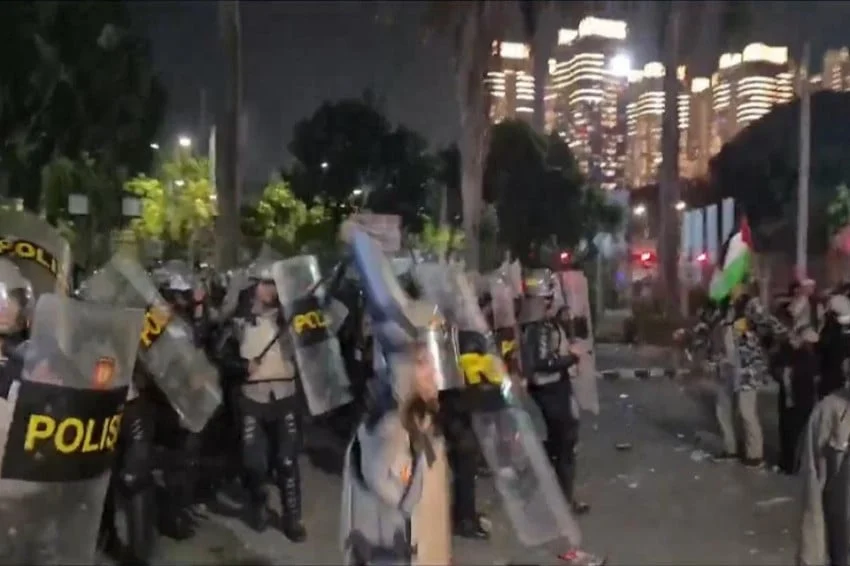
For several hours, the atmosphere outside the venue turned volatile. Protesters began launching projectiles, including paving stones, chunks of metal, and sections of portable fencing, aiming at the law enforcement line. Police officers, initially maintaining a defensive posture behind riot shields and non-lethal formation protocols, endured the barrage before command orders were given to disperse the aggressive factions.
Utilizing tear gas and coordinated tactical advances, security forces systematically pushed the rioting crowd back from the JIExpo entranceways, clearing the surrounding streets and restoring order by late Tuesday night. Minor injuries were reported among both law enforcement personnel and demonstrators, though no official casualty figures have yet been released by medical authorities.
Root Causes and Ideological Context
The violent mobilization against Andrea Bocelli’s performance stems from deep-seated domestic anger regarding the ongoing Middle East conflict and a rigorous scrutiny of international artists’ past associations.

Protesters specifically targeted the Italian tenor due to historical records indicating his involvement in a 2010 fundraising gala associated with organizations supporting the Israeli military. Activists utilized social media platforms and public forums in the days leading up to the concert to circulate these historical ties, framing the performance in Jakarta as culturally and morally objectionable in light of the humanitarian crisis in Gaza.
The protest reflects a broader trend within segments of Indonesian civil society, where global geopolitical alignments significantly influence domestic consumer behavior, cultural curation, and public assembly. Indonesia, the world’s most populous Muslim-majority nation, has maintained a steadfast diplomatic stance in support of Palestinian statehood, leading to heightened public sensitivity regarding any cultural or economic figures perceived to hold opposing affiliations.
Broader Implications for International Events in Jakarta
The violent clashes at JIExpo Kemayoran have raised immediate concerns among event promoters, venue operators, and international artists regarding security protocols and risk assessment for large-scale public gatherings in Indonesia.
Jakarta has long positioned itself as a premier destination for international touring acts, hosting numerous music festivals, orchestral performances, and stadium-concerts annually. The successful execution of these events relies heavily on predictable public safety frameworks and unhindered access for ticket holders.
Industry analysts suggest that the incident could prompt stricter vetting processes by promoters and heightened security postures by municipal authorities for future high-profile international tours. Event management firms may now need to factor in extensive geopolitical risk analyses, particularly when booking legacy artists or public figures whose historical statements or philanthropic activities might attract localized controversy.
Furthermore, the involvement of prominent ideological groups in cultural boycotts highlights the delicate balance local law enforcement must maintain between upholding the constitutional right to peaceful assembly and ensuring public safety, infrastructure protection, and the uninterrupted execution of legal commercial activities.
Official Responses and Ongoing Investigations
As of Wednesday morning, local law enforcement agencies have initiated comprehensive investigations into the orchestrators of the riot and the individuals responsible for property damage and assaults on police personnel.
Jakarta Metropolitan Police representatives emphasized that while peaceful expression is protected under Indonesian law, acts of vandalism, forced entry, and physical violence against law enforcement officers constitute criminal offenses that will be prosecuted robustly. Authorities are currently reviewing CCTV footage from the JIExpo perimeter and digital media recordings of the speeches delivered prior to the clashes to identify key instigators.
Event organizers for the Andrea Bocelli concert have yet to issue a detailed public statement regarding the operational impact of the protests on the event itself, though localized security adjustments remain in effect around the venue to ensure the safety of attendees, staff, and performers.
As Jakarta continues to navigate the intersection of international cultural exchange and fervent domestic socio-political advocacy, the events of November 3 serve as a stark reminder of the complexities governing large-scale public events in an increasingly interconnected and polarized global landscape.