
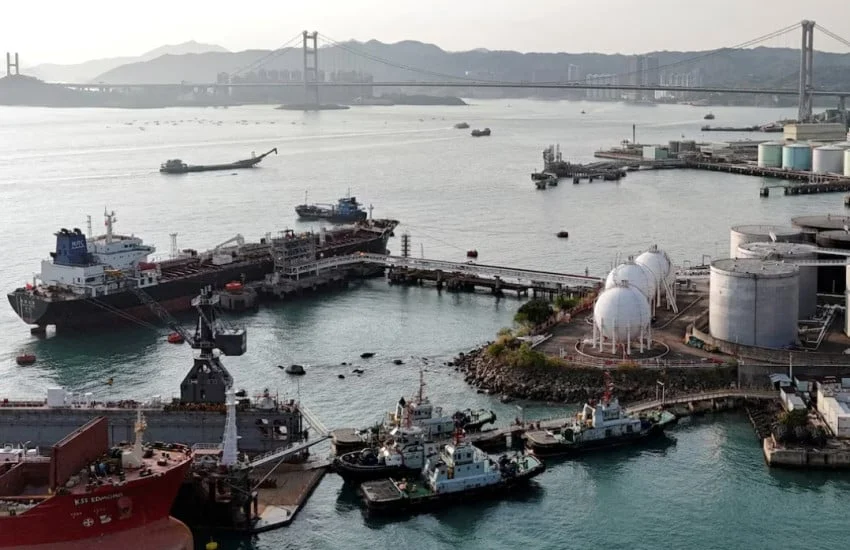
The global crude oil market is witnessing a strategic shift in supply chain logistics as Asian refineries move aggressively to capitalize on a significant correction in maritime shipping costs. Following a period of record-high tanker freight rates that constrained trade flows earlier this year, the recent 50% slump in shipping expenses has incentivized major Asian oil players to resume large-scale imports from distant markets, specifically West Africa and Brazil. This development underscores the critical sensitivity of the refining sector to transportation economics, which frequently dictate the viability of arbitrage opportunities across global trade routes.
The Mechanics of the Freight Correction
To understand the current surge in activity, it is necessary to examine the volatility that characterized the tanker market throughout the third and early fourth quarters. During the peak of the freight cost surge, the economic viability of transporting crude oil from the Atlantic Basin—comprising West Africa, the North Sea, and Brazil—to the Asia-Pacific region was severely compromised. As shipping costs skyrocketed, Asian refiners pivoted toward Middle Eastern suppliers, where the shorter sailing distance to key Asian hubs like Singapore, Ningbo, and Ulsan mitigated the impact of high freight rates.
However, the recent collapse in tanker rates has fundamentally altered this calculus. Industry data indicates that the Worldscale (WS) index—a standard mechanism used to calculate the cost of transporting oil by sea—has seen a dramatic retreat from the historical highs observed in October. This correction is primarily attributed to a stabilization in vessel availability and a recalibration of global oil demand forecasts, which had previously tightened the market for Very Large Crude Carriers (VLCCs) and Suezmax tankers.
Strategic Acquisitions by Industry Titans
The market shift is being spearheaded by industry giants, most notably Unipec, the trading arm of China’s Sinopec. Reports from market participants confirm that Unipec has been active in the spot market, securing multiple cargoes of African crude oil. The company’s move to lock in supply is not merely a reaction to lower freight costs but a calculated effort to optimize feedstocks for its massive refining complexes.
Evidence of this strategy is visible in the procurement of Djeno crude from the Republic of the Congo. Unipec reportedly secured two cargoes at a discount of approximately USD 22 per barrel relative to the dated Brent benchmark on a free-on-board (FOB) basis. This discount, combined with significantly lower shipping overheads, provides the Chinese refiner with a substantial margin advantage.
Beyond China, South Korea’s SK Energy has also moved to secure supply. The company successfully chartered Suezmax tankers to transport crude oil from Gabon to its refining facility in Ulsan for December delivery. The rates secured by SK Energy, specifically around 380 points on the Worldscale index, represent a far more favorable economic profile than the rates seen just six weeks prior.
Chronology of the Shift
The sequence of events leading to this surge in Atlantic-to-Asia trade can be categorized into three distinct phases:
- The Peak (September – October): Freight rates reached historical pinnacles due to geopolitical uncertainties and a temporary mismatch in tanker supply and demand. During this period, the "arbitrage window"—the difference between the price of oil in the Atlantic and the price in Asia—was effectively closed by the sheer cost of delivery.
- The Inflection Point (Late October – Early November): As global inventories adjusted and the initial panic-buying phase in the shipping sector subsided, freight rates began a rapid descent. The 50% correction from the peak served as the primary catalyst for market re-entry.
- The Execution Phase (Mid-November – Present): Major refiners initiated a wave of chartering activities. The fixation of VLCCs and Suezmax vessels for early December loading suggests a sustained commitment to replenishing stocks with Atlantic Basin crudes.
Analytical Perspective: Why Geography Matters
Energy analysts at firms such as Energy Aspects have highlighted that the current freight environment has made long-haul routes from west of the Suez Canal once again economically attractive. The strategic importance of these routes lies in the diversity of the oil quality. Crude oil from West Africa and Brazil often offers a different slate of chemical properties, such as sulfur content and density, which are essential for blending and optimizing output in complex Asian refineries.
When freight rates are high, refineries are forced to rely on "easier" crudes from the Middle East. When rates are low, they have the freedom to access "niche" crudes from the Atlantic that can improve the yield of high-value products like gasoline, diesel, and jet fuel. Therefore, the drop in tanker rates is not just a logistical victory; it is a catalyst for higher-quality refining outputs across the Asian downstream sector.
Supporting Data and Market Metrics
The complexity of these trades is underscored by the specific rates being reported. For instance, the chartering of Suezmax vessels at rates between 410 and 475 Worldscale points, and VLCCs at 500 points for early December loadings, provides a clear benchmark for the current market state. While these figures remain above historical long-term averages, they are a far cry from the prohibitive levels seen at the peak of the recent volatility.
Furthermore, the "Arbitrage Window" is often measured by the spread between the price of Dated Brent and the price of Dubai crude. When this spread widens, it typically covers the cost of shipping. Currently, the market is seeing an equilibrium where the combination of the Brent-Dubai spread and the reduced freight costs makes the landed price of West African and Brazilian oil highly competitive against regional alternatives.
Implications for Global Oil Dynamics
The broader implications of this trend are significant for both producers and consumers:
- For Producers in Africa and Brazil: This shift provides a much-needed lifeline. Countries like Nigeria, Angola, and the Republic of the Congo, as well as Brazil, rely heavily on the Asian market to absorb their export volumes. A return of Asian buying interest stabilizes their export revenues and prevents the build-up of unsold crude inventories in the Atlantic.
- For Asian Refineries: The ability to source cheaper crude allows for improved refining margins. In a landscape where energy inflation remains a concern, the ability to source lower-cost raw materials is a critical competitive advantage for refineries in China, South Korea, and Japan.
- For the Shipping Industry: While tanker owners may be seeing lower rates than their record peaks, the surge in volume is maintaining high vessel utilization. The shift suggests that the shipping market is moving toward a more sustainable equilibrium, rather than the extreme volatility that marked the preceding months.
Future Outlook and Official Responses
While no formal government policy changes have been issued, the consensus among industry observers is that this logistical rebalancing is a natural market correction. The "invisible hand" of the freight market is successfully reallocating global supply to where it is most needed.
Market participants, including traders at major firms and shipping brokers, suggest that as long as the freight market remains stable, we should expect a continued flow of Atlantic crude into Asian ports through the end of the year. However, analysts warn that the situation remains fluid. Any sudden disruption in the tanker market, whether caused by geopolitical tensions or further shifts in demand, could lead to a rapid reversal of these trends.
The current situation serves as a poignant reminder of the interconnectedness of the global energy supply chain. The price at the pump for an Asian consumer is not merely a function of oil prices at the wellhead; it is deeply tied to the daily fluctuations of tanker freight rates, the capacity of the shipping fleet, and the logistical decisions made by traders thousands of miles away. As 2024 approaches, the industry will be watching closely to see if these freight rates hold steady or if the shipping market enters another cycle of volatility.
In summary, the recovery of Atlantic-to-Asia crude trade routes is a direct result of the cooling of the tanker freight market. By leveraging this cost reduction, Asian refiners are not only optimizing their costs but also diversifying their supply sources, ensuring that their refining systems remain resilient in an increasingly complex global energy landscape. The events of November have solidified this trend, setting the stage for a busy end-of-year trading season in the global oil markets.