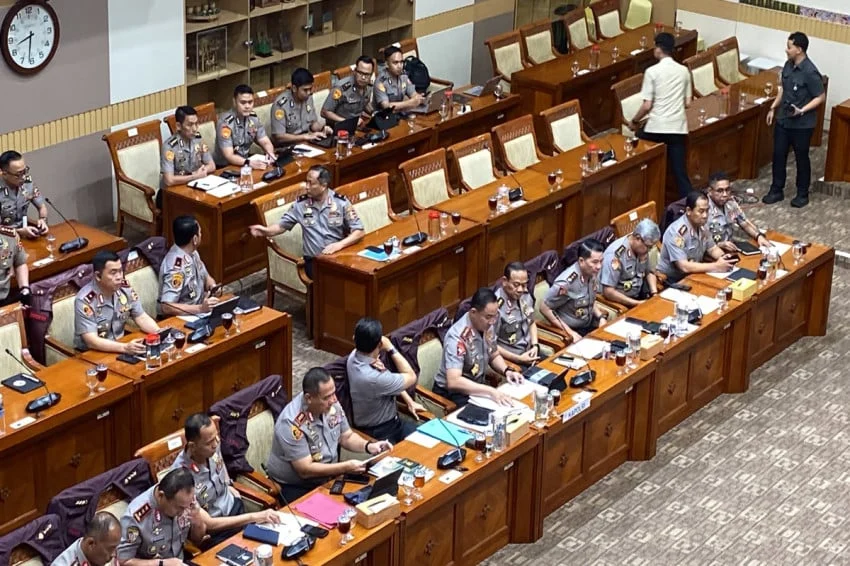
The Indonesian National Police (Polri) has officially brought to light the involvement of a high-ranking officer in the ongoing investigation into the illegal surveillance of President Prabowo Subianto. During a high-stakes working meeting with Commission III of the House of Representatives (DPR RI) in Senayan, Jakarta, on Thursday, November 12, 2026, National Police Chief General Pol Suyudi Ario Seto identified a Brigadier General, identified by the initials TK, as a key figure implicated in the unauthorized surveillance operation.
This revelation marks a critical escalation in the investigation, which has already implicated other senior officers, including Irjen Ahrie Sonta. The disclosure underscores the depth of the internal breach, suggesting a coordinated effort within segments of the police force to monitor the head of state without proper legal authorization or administrative oversight.
Chronology of the Surveillance Operation
According to the testimony provided by General Suyudi to the legislative body, the surveillance apparatus operated under a clandestine chain of command that bypassed standard legal protocols. The operation, which appears to have spanned from October 2025 to October 2026, involved multiple layers of authority to ensure that the unauthorized data collection remained hidden from senior leadership and oversight bodies.
The core of the operation involved the use of technical surveillance tools to monitor the President’s communications. General Suyudi explained that the scheme was initiated under the direction of an officer identified as Jenderal LSP. This individual allegedly utilized Irjen Ahrie Sonta—who served as the Acting Head of Operations (Plt Kabagmon)—to execute the tactical phase of the surveillance.
"AS [Ahrie Sonta], who held the position of Plt Kabagmon from October 7, 2025, until October 1, 2026, is suspected of receiving direct orders from Jenderal LSP. He then relayed these directives to field operators to conduct wiretapping without any formal request from investigators," Suyudi testified.
Furthermore, the operation was not limited to digital wiretapping. Once the technical data was harvested, it was reported directly back to LSP. To ensure a comprehensive surveillance profile, Brigadier General TK was specifically tasked with conducting physical and operational surveillance (surveillance) to track the President’s movements and activities, creating a dual-layered intelligence gathering system that operated entirely outside the bounds of the law.
The Mechanism of Discovery: The WhatsApp Group Clue
The unraveling of this elaborate conspiracy did not occur through conventional intelligence sweeps but rather through an internal procedural slip-up. Reports indicate that the illegal surveillance unit had maintained a dedicated WhatsApp group to coordinate their activities.
The investigation gained significant momentum following an order to disband this group. This move, intended to purge evidence, instead created a digital trail that allowed internal affairs investigators to reconstruct the communication logs. The discovery of this "digital smoking gun" provided the necessary evidence to link the high-ranking officers to the unauthorized activities, ultimately leading to the testimonies currently being presented to the DPR RI.
Internal Accountability and Legal Proceedings
The involvement of a Brigadier General and an Inspector General in an operation targeting the President has sent shockwaves through the Indonesian security establishment. Polri’s Spokesperson, Irjen Pol Johnny Eddizon Isir, emphasized that the force is committed to a transparent and thorough investigation.
"The internal examination process and criminal investigations are ongoing," Isir stated. "We are working to ensure that all facts, the chain of command, and the full extent of the involvement of all parties are revealed clearly and without reservation."
The legal implications for those involved are severe. Under Indonesian law, unauthorized wiretapping and surveillance of state officials constitute a grave violation of the Law on Electronic Information and Transactions (UU ITE), as well as potential charges of treason or subversion depending on the intent behind the surveillance. The involvement of high-ranking police officers also triggers internal military and police disciplinary codes, which likely include dishonorable discharge and potential imprisonment.
Broader Implications for National Security
The surveillance scandal has raised urgent questions regarding the integrity of the state’s internal intelligence apparatus. For an institution tasked with maintaining law and order, the discovery that its own senior officers were monitoring the President suggests a deep-seated vulnerability or a factional rift within the security sector.
Analysts have pointed out that this case serves as a litmus test for the current administration’s ability to purge elements that operate outside of democratic oversight. The role of the DPR RI in this process is critical; as the legislative body responsible for oversight, the Commission III meeting represents a push for accountability that transcends standard internal police procedures.
The case also brings into focus the necessity of reforming the oversight mechanisms for digital surveillance tools. In recent years, the rapid advancement of interception technology has made it easier for actors within security institutions to conduct unauthorized operations. The fact that an operation could be sustained for nearly a year without detection highlights significant gaps in institutional auditing and the lack of robust, independent oversight for technical intelligence units.
The Political Landscape and Public Trust
The incident has undeniably strained public trust in the National Police. In a democratic society, the police force serves as the shield for the government and the citizenry; the inversion of this role—where the police become a source of insecurity for the head of state—undermines the foundational stability of the administration.
President Prabowo Subianto’s administration is now faced with the task of navigating this crisis while maintaining the professional integrity of the Polri. The identification of Brigadier General TK and Irjen Ahrie Sonta is only the beginning. The public and the legislature are now waiting to see whether the investigation will stop at the mid-level leadership or if it will reach the upper echelons of the institution, including the mysterious "Jenderal LSP" mentioned in the testimony.
Future Steps for the National Police
Looking forward, the National Police is expected to implement a series of structural reforms aimed at preventing similar incidents. These reforms may include:
- Enhanced Digital Oversight: Implementing real-time auditing of surveillance software and hardware usage, requiring multiple high-level authorizations for any interception operation.
- Internal Integrity Units: Strengthening the role of the Internal Affairs Division (Propam) to detect and neutralize clandestine units operating outside the chain of command.
- Legal Harmonization: Clarifying the legal definitions and boundaries for surveillance operations in a digital age, ensuring that no officer, regardless of rank, can authorize surveillance without a court warrant or legal clearance.
As the legal proceedings progress, the focus remains on the judicial outcome. The Indonesian public, media, and international observers are closely monitoring the case to ensure that justice is served. The resolution of this case will not only determine the fate of the accused officers but will also define the future trajectory of the National Police as an institution committed to the rule of law.
In conclusion, the revelation by Kapolri Jenderal Pol Suyudi Ario Seto serves as a stark reminder of the challenges involved in managing the security apparatus of a large democracy. The uncovering of the conspiracy involving Brigjen TK is a critical step toward accountability, but the broader task of reforming the systemic issues that allowed such an operation to flourish remains the primary challenge for the police leadership in the months to come. The integrity of the state depends on the successful prosecution of those who sought to weaponize the very tools meant to protect it.