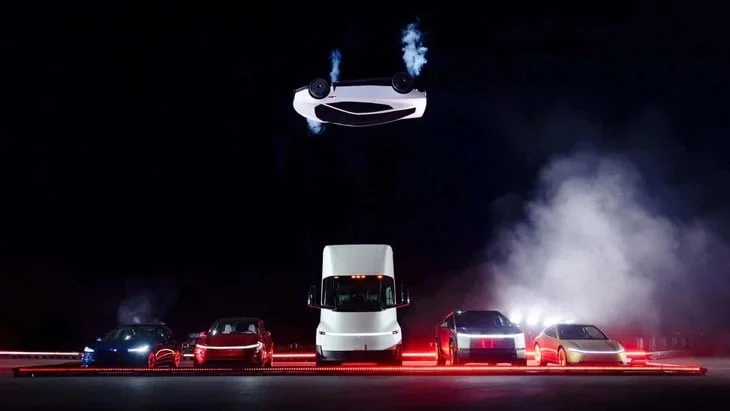
The global automotive landscape is currently witnessing a stark divergence in philosophy between two of the world’s most prominent electric vehicle manufacturers: Porsche and Tesla. At the heart of this ideological rift is the marketing and presentation of next-generation electric sports cars, a sector that demands both technological prowess and brand prestige. The recent discourse, ignited by Porsche CEO Michael Leiters, highlights a fundamental disagreement regarding how luxury and high-performance automotive technology should be showcased to the public, setting the stage for a broader debate on the future of performance engineering.
The Berlin Conference: A Statement of Intent
During a high-profile industry conference held in Berlin on November 11, Michael Leiters addressed the assembly with a focus that many industry analysts interpreted as a direct critique of Tesla’s recent promotional tactics. Leiters, who has led Porsche since 2022, emphasized that the German automaker remains committed to a philosophy of engineering-led innovation rather than theatrical showmanship.
According to reporting from Bloomberg, Leiters stated that Porsche intends to "truly avoid excessive effects and shows," prioritizing instead the demonstration of technological capabilities that provide tangible, real-world value to the consumer. While he did not explicitly name Elon Musk’s company in every sentence of his address, the context of the recent industry cycle—dominated by the dramatic unveiling of the Tesla Roadster—made the target of his remarks clear to those in attendance.
Chronology of the Rivalry
To understand the friction between these two brands, one must look at the timeline of their recent developments. The rivalry reached a new peak in mid-October when both companies simultaneously pushed forward with their flagship electric sports car projects.
- 2017: Tesla first unveils the concept for the second-generation Roadster, promising groundbreaking acceleration and range.
- 2019-2023: Both Porsche and Tesla navigate the complexities of supply chain disruptions and battery technology advancements, with Porsche focusing on the refinement of its Mission series.
- October 15, 2024: A pivotal day for the sector. Porsche introduces the Mission S, a concept vehicle aimed at setting new standards for the electric luxury sports segment. On the same day, Tesla releases promotional footage of the Roadster featuring a highly unconventional aerial maneuver.
- November 11, 2024: Michael Leiters delivers his critique in Berlin, drawing a line in the sand between "performance-first" and "spectacle-first" branding.
The Tesla Roadster: Engineering or Entertainment?
The Tesla Roadster demonstration that drew Leiters’ ire was a spectacle that blurred the lines between automotive marketing and aerospace engineering. The video showcased the Roadster utilizing a pneumatic propulsion system—developed in collaboration with engineers from SpaceX—to launch the vehicle into the air, perform a rotation, and land with precision on its four wheels.
From a technical standpoint, the integration of SpaceX’s cold-gas thruster technology into a consumer vehicle is a significant engineering milestone. It represents the first time such technology has been applied to a production-intent car to influence its dynamics. However, from the perspective of traditional automotive luxury manufacturers like Porsche, such displays are viewed as a departure from the core values of vehicle dynamics, handling, and driver engagement. The concern among Porsche leadership is that such stunts prioritize viral social media engagement over the rigorous, data-driven performance metrics that define the Porsche brand.
Porsche’s Philosophy: The Mission S and Beyond
Porsche’s approach, as embodied by the Mission S concept, leans heavily into the company’s racing heritage. The company’s focus is on the integration of high-voltage systems, sophisticated thermal management, and aerodynamic efficiency—elements that are often invisible to the naked eye but essential to track performance and longevity.
Leiters and the Porsche executive team argue that the target demographics for these vehicles are fundamentally different. Porsche customers, according to the CEO, seek a holistic experience characterized by build quality, steering feel, and the prestige of a vehicle that performs reliably at its limits on a track. Tesla, conversely, targets a broader, tech-focused consumer base that values disruptive innovation, software-defined vehicle features, and the "wow factor" associated with Elon Musk’s brand ecosystem.
Supporting Data: Performance vs. Perception
The divergence in strategy is supported by the brands’ respective performance data and market positioning. Porsche’s electric portfolio, anchored by the Taycan, has been lauded for its sustained performance, particularly its ability to handle repeated high-speed acceleration runs without the performance degradation often seen in earlier EV iterations.
Tesla’s Roadster, on the other hand, claims acceleration figures—such as a 0-60 mph time of under one second—that push the boundaries of what is physically possible for a road-legal vehicle using conventional tire friction. While Tesla utilizes raw power and, now, supplemental propulsion systems to achieve these feats, Porsche focuses on chassis dynamics. The internal debate is whether the future of the "sports car" is defined by the ability to move through space in extreme ways or by the refinement of the driving experience itself.
The Role of SpaceX and Cross-Industry Collaboration
The inclusion of SpaceX technology in the Roadster’s development cycle represents a unique case study in corporate synergy. By leveraging the expertise of a private aerospace firm, Tesla is effectively redefining what a "car" can do. However, this has invited skepticism from established automotive engineers.
Critics within the industry argue that adding weight and complexity through pneumatic systems detracts from the purity of the vehicle. For a legacy manufacturer like Porsche, which prides itself on the "Porsche Intelligent Performance" mantra, the use of thrusters on a road car is a gimmick that introduces unnecessary points of failure and shifts the focus away from the fundamental task of building a superior driver’s car.
Analysis: Market Implications and Brand Positioning
The critique offered by Leiters carries significant weight because it signals that the battle for the electric sports car market is moving beyond just battery capacity and charging speeds. It is now a battle for the "soul" of the high-performance car.
- Brand Differentiation: As electric vehicles become more common, premium brands are desperate to differentiate themselves. Porsche is doubling down on its "sports car" heritage, while Tesla is doubling down on its "tech disruptor" identity.
- Regulatory Challenges: The use of pneumatic thrusters on a production vehicle raises significant questions regarding safety and regulatory approval. It is unclear how such a vehicle would pass standard road safety inspections in major markets like the EU or the United States.
- Consumer Expectations: If Tesla’s marketing succeeds in creating a public expectation for "aerobatic" cars, traditional manufacturers may face pressure to incorporate gimmicks, potentially compromising their brand integrity. Conversely, if Porsche’s focus on substance wins out, it could cement the brand as the "rational" choice for luxury enthusiasts.
Broader Industry Reactions
While public statements from other automakers have been limited, the sentiment in the executive suites of Munich and Stuttgart is largely aligned with Leiters. There is a prevailing view that the automotive industry is entering a "post-truth" era of performance where marketing often outpaces engineering. However, proponents of Tesla argue that the company is simply doing what it has always done: challenging the status quo and forcing the industry to innovate at a faster pace than it would if left to its own devices.
The rivalry is not merely about two cars; it is a clash of two distinct business models. Tesla’s model relies on constant public iteration, high-visibility events, and the cult of personality surrounding its CEO. Porsche’s model relies on institutional heritage, slow-and-steady iterative improvement, and a deeply ingrained culture of engineering excellence that prioritizes long-term brand equity over short-term social media trends.
Conclusion: The Future of the High-Performance EV
As the market continues to transition toward electrification, the tension between the Porsche and Tesla approaches will likely intensify. The success of both companies will ultimately be judged by their ability to convert these disparate philosophies into sales, profitability, and, most importantly, brand loyalty.
Porsche remains committed to its trajectory, focusing on its next wave of electric models, which are expected to balance high-voltage performance with the daily usability that has defined the brand for decades. Meanwhile, Tesla continues to push the boundaries of what is possible with the Roadster, betting that the future of automotive excitement lies in defying expectations and merging the worlds of road and flight.
Ultimately, the consumer will decide whether the future of the sports car is found in the refined, track-focused precision of a German engineering masterpiece or the radical, thrill-seeking innovation of a Silicon Valley-aerospace hybrid. As the industry watches these two giants, one thing is certain: the era of the electric sports car has only just begun, and it promises to be as competitive as it is transformative. The debate between Leiters and the Tesla camp is not just a disagreement over a promotional video; it is a fundamental discussion about what it means to drive in the 21st century.