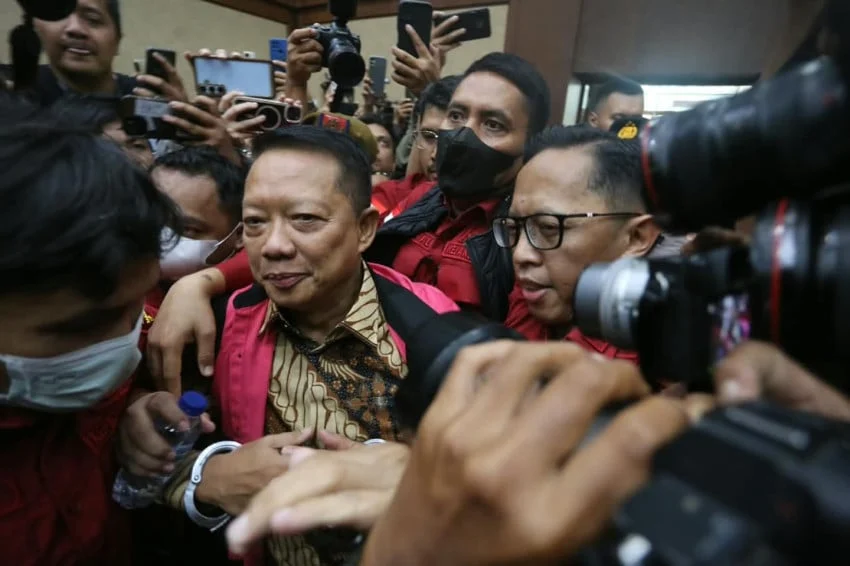
The rejection of the demurrer or eksepsi filed by the former Junior Attorney General for Special Crimes (Jampidsus), Febrie Adriansyah, by the Corruption Court (Tipikor) panel of judges marks a pivotal transition in one of the most high-profile legal cases currently unfolding within Indonesia’s judicial system. By dismissing the defense’s preliminary objections, the court has signaled that the charges brought by the Public Prosecution Office (JPU) are legally sufficient to proceed to the evidentiary phase. This decision places the Attorney General’s Office (Kejagung) under intense scrutiny, as the institution must now transition from the procedural phase to the substantive presentation of material evidence, specifically concerning allegations of extortion and money laundering (TPPU).
The Procedural Significance of the Interlocutory Decision
In the Indonesian legal framework, an interlocutory decision (putusan sela) that rejects an eksepsi does not imply a determination of guilt. Rather, it affirms that the indictment meets the formal requirements stipulated in the Criminal Procedure Code (KUHAP). According to Iwan Setiawan, Director of the Indonesia Political Review (IPR), the court’s decision is a procedural hurdle that has been cleared, but the real challenge for the prosecution lies ahead.
"The rejection of the demurrer signifies that the judges believe the case possesses sufficient merit to warrant a full trial on the facts," Setiawan noted during an interview on Thursday, October 29, 2026. "However, it is vital to distinguish between procedural validity and material truth. This ruling cannot be interpreted as a validation of the prosecutor’s entire narrative, nor does it presuppose the guilt of the defendant. The burden of proof remains entirely on the prosecution to substantiate their claims with empirical evidence."
Chronology of the Case and Legal Trajectory
The legal proceedings against Febrie Adriansyah have evolved over several months, capturing significant public attention due to his former position as the lead official overseeing special crimes, including corruption, human rights violations, and money laundering.
- Initial Allegations: The case surfaced following reports of alleged irregularities in the handling of major corruption files, leading to an internal investigation by the Attorney General’s supervision division and subsequent referral to independent investigative bodies.
- Indictment Phase: The prosecution formally charged the former Jampidsus with multiple counts, focusing on the misuse of authority to demand illicit payments (extortion) and the subsequent layering of these funds through money laundering schemes.
- The Defense Strategy: During the preliminary hearings, the defense team argued that the prosecution’s indictment was flawed, citing inaccuracies in the factual narrative and arguing that the charges were based on unsubstantiated claims that lacked a clear legal nexus to the defendant’s official duties.
- Judicial Ruling: On the recent hearing date, the panel of judges evaluated the defense’s arguments and concluded that the points raised in the eksepsi touched upon the substance of the case rather than formal defects in the indictment. Consequently, the court ruled that these arguments should be addressed during the evidentiary stage, leading to the rejection of the demurrer.
The Challenge of Proving TPPU (Money Laundering)
One of the most complex aspects of this trial is the charge of money laundering. In Indonesia, TPPU cases require prosecutors to demonstrate the existence of a "predicate offense"—the original crime from which the illicit proceeds were derived—and then prove the subsequent acts of placing, layering, or integrating those funds into the financial system.
Legal analysts point out that proving TPPU in high-level corruption cases often requires sophisticated forensic accounting. The prosecution must be prepared to present clear audit trails, banking records, and testimonies that link the alleged extortion to specific asset acquisitions or financial movements. Without this "hard" evidence, the prosecution risks failing to meet the "beyond a reasonable doubt" standard required for a conviction in a criminal court.
Broader Institutional Implications
The prosecution of a former Jampidsus—a position often referred to as the "Super Prosecutor" of Indonesia—serves as a stress test for the integrity of the nation’s law enforcement agencies. The Kejagung is currently under pressure to demonstrate that its internal accountability mechanisms are robust enough to prosecute their own high-ranking officials without fear or favor.
The public, civil society organizations, and international observers are monitoring the trial to assess whether the judiciary can maintain its independence while dealing with a case involving a former senior official from the very institution that usually serves as the state’s primary prosecutor. The transparency of the trial, the quality of evidence presented, and the neutrality of the judges will be the primary metrics by which the success of this judicial process is evaluated.
Expert Perspectives on Evidence Requirements
Observers have emphasized that the evidentiary stage will focus on three key areas:
- The Nexus of Authority: Establishing that Febrie Adriansyah used his position to coerce or solicit payments from parties involved in cases under his supervision.
- Financial Forensic Integrity: Presenting evidence that tracks the flow of funds, ensuring that the evidence is admissible and corroborated by banking institutions or financial intelligence reports.
- Witness Credibility: Assessing the testimonies of witnesses, particularly those who may be co-defendants or have reached plea agreements, to ensure their accounts are consistent and free from coercion.
"This is the moment of truth for the prosecution," noted a legal expert familiar with the case. "They have survived the preliminary stage, but the trial will now shift to the production of evidence. If the prosecution fails to connect the dots between the alleged extortion and the money laundering, the court will have no choice but to acquit the defendant, regardless of the initial public perception."
The Road Ahead: What to Expect
As the trial proceeds, the court will invite witnesses for the prosecution, followed by the presentation of evidence by the defense. The process is expected to be protracted, given the complexity of the documents and the sensitivity of the issues involved.
Key milestones to monitor in the coming weeks include:
- Examination of Witnesses: The JPU will begin calling key witnesses, including those familiar with the internal operations of the Jampidsus office.
- Expert Testimony: The court is expected to hear from forensic accountants and corruption experts who will analyze the financial data submitted by the prosecution.
- Defense Rebuttal: The defense will have the opportunity to cross-examine witnesses and present their own evidence to refute the claims of extortion and money laundering.
Conclusion: Ensuring Judicial Integrity
The rejection of the demurrer is a routine, albeit essential, procedural step in the Indonesian legal system. However, in the context of this specific case, it serves as a gateway to a much more rigorous phase of the trial. The ultimate outcome of the Febrie Adriansyah case will likely have long-term implications for the perceived independence of the Indonesian judiciary and the effectiveness of the nation’s anti-corruption agenda.
For the prosecution, the mandate is clear: the strength of the indictment now matters less than the quality of the evidence on the table. For the judiciary, the challenge is to manage a high-stakes trial with absolute impartiality, ensuring that the verdict—whatever it may be—is rooted in the law and the evidence presented in the courtroom. As the proceedings move forward, the focus remains on the pursuit of justice, ensuring that the process is conducted in accordance with the principles of due process and the rule of law. The coming months will be decisive, as the court determines whether the allegations of systemic abuse of power can be transformed into a legally binding conviction, or if they will fall short of the evidentiary threshold.