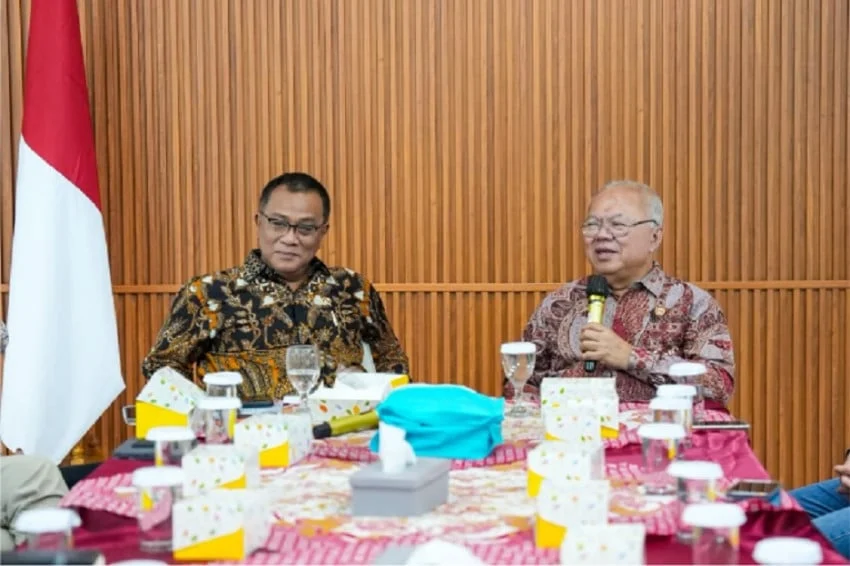
Jakarta — In a compelling alignment of spiritual values and state policy, the High Council of the Confucian Religion in Indonesia (Matakin) has formally declared that damaging the natural environment constitutes the most severe moral transgression possible under Confucian doctrine. This profound assertion was delivered by Matakin Central Board Chairman Budi Santoso Tanuwibowo during a high-profile ministerial visit at the Khonghucu Building within the Tepasalira Foundation complex located in Penjaringan, North Jakarta.
The gathering, which took place on Tuesday, November 3, 2026, brought together key religious leadership and senior government oversight in an effort to forge a unified national strategy for ecological preservation. The central focus of the dialogue centered on the mobilization of interfaith communities to champion the National Ecological Repentance Movement, an ambitious initiative designed to shift public consciousness and arrest the rapid degradation of Indonesia’s fragile ecosystems.
Main Facts and Context of the Ministerial Visit
The meeting at the Tepasalira Foundation served as a strategic platform for dialogue between the Ministry of Environment and the Head of the Environmental Control Agency (BPLH), Moh Jumhur Hidayat, and the spiritual leadership of Indonesia’s Confucian community. The primary objective of the engagement was to integrate moral and religious frameworks into state-led environmental protection policies.
Minister Jumhur Hidayat’s visit to the Confucian landmark underscores a broader governmental strategy to leverage religious organizations as frontline partners in combating climate change, deforestation, and biodiversity loss. While state regulations and law enforcement remain critical instruments for environmental governance, the administration increasingly recognizes that lasting behavioral change requires deep-seated ethical and spiritual foundations.
During the discussions, Budi Santoso Tanuwibowo emphasized that ecological stewardship is not a modern secular concern tacked onto traditional beliefs, but rather an intrinsic pillar of Confucian philosophy. According to Matakin, humanity occupies a vital middle position in the cosmic triad of Heaven, Earth, and Humanity—a triad known as the San Cai. Consequently, human beings bear a sacred responsibility to nurture and protect the Earth, acting as custodians rather than exploiters of natural resources.
Chronology and Development of Interfaith Ecological Initiatives
The alliance between environmental governance and religious institutions in Indonesia has been steadily evolving over the past decade. Historically, environmental policies were formulated strictly through legal, economic, and scientific lenses, often sidelining the moral authority held by religious leaders in the world’s largest archipelagic nation.
However, the escalating frequency of ecological disasters—ranging from catastrophic flooding and severe landslides to transboundary haze and unchecked deforestation—prompted a strategic pivot. By the early 2020s, various religious councils, including those representing Islam, Christianity, Buddhism, Hinduism, and Confucianism, began issuing theological edicts and moral frameworks centered on environmental conservation.
The introduction of the National Ecological Repentance Movement marks a formal escalation of these localized efforts into a synchronized national campaign. The timeline of this initiative reflects a growing urgency among policymakers:
- Phase One (2021–2023): Grassroots religious groups initiate localized conservation projects, including river cleanups, sacred forest protections, and community-based waste management programs.
- Phase Four / Current Stage (2025–2026): Institutional formalization, highlighted by direct collaborations between the Ministry of Environment/BPLH and central religious bodies like Matakin to institutionalize ecological ethics into public education and community outreach.
The meeting on November 3, 2026, represents a milestone in this timeline, bridging high-level government policy with the centuries-old ethical traditions preserved by Indonesia’s Confucian minority.
Philosophical Foundations: Environmental Ethics in Confucianism
To fully appreciate the gravity of Matakin’s declaration, one must examine the deep-rooted ecological commandments embedded within Confucian scriptures. Budi Santoso Tanuwibowo pointed out during the meeting that Confucianism has historically practiced a stringent form of environmental ethics, long before modern sustainability concepts emerged.
In traditional Confucian teachings, filial piety and civic duty extend far beyond interpersonal relationships and obedience to the state. They encompass a profound reverence for the natural world that sustains all life. Damaging the earth, depleting natural resources recklessly, or driving species to extinction is classified as an act of unfilial behavior toward the ancestors who preserved the land, and an injustice toward future generations who must inherit a depleted planet.
Specific injunctions historically practiced and taught within the tradition include:
- Sustainable Forestry: Strict prohibitions against felling trees indiscriminately, particularly during vital growth seasons, paired with mandatory reforestation efforts.
- Controlled Harvesting: Moral bans on capturing fish or birds using excessively fine nets that trap juvenile species, thereby preventing population replenishment.
- Ethical Wildlife Management: Traditional hunting restrictions that forbid the harming of pregnant animals or wildlife resting in their natural shelters, ensuring the preservation of biodiversity.
These ancient codes mirror modern scientific principles of sustainable yield, carrying capacity, and ecosystem equilibrium, demonstrating that traditional wisdom and modern environmental science share identical objectives.
Official Responses and Ministerial Perspectives
Minister Moh Jumhur Hidayat welcomed Matakin’s uncompromising stance on ecological morality, noting that state apparatus alone cannot police every square kilometer of Indonesia’s vast terrain. The active participation of religious communities is viewed as indispensable for fostering a culture of compliance and genuine care for nature.
"Environmental degradation is not merely a technical failure or a legal loophole; it is a profound moral crisis," remarked representatives aligned with the ministry following the discussions. The integration of spiritual doctrines into the National Ecological Repentance Movement aims to transform environmental protection from a burdensome regulatory requirement into an internal spiritual obligation for citizens across all demographic segments.
Furthermore, the Ministry of Environment and BPLH have pledged to work closely with Matakin and other faith-based organizations to develop educational curricula, community outreach programs, and joint monitoring networks. These initiatives are designed to empower local congregations to identify and report environmental infractions while actively participating in grassroots restoration projects.
Broader Impact and Implications for Indonesian Environmental Governance
The collaboration between the Ministry of Environment and Matakin carries significant implications for the future of environmental governance in Indonesia. By framing ecological preservation as a core moral and religious duty, the state effectively transcends cultural and sectarian divides, mobilizing millions of citizens through shared ethical values.
- Policy Enforcement and Moral Authority: While legal penalties enforced by BPLH serve as a deterrent against corporate and individual polluters, the moral weight added by religious institutions addresses the cultural roots of environmental abuse, such as illegal logging, wildlife trafficking, and reckless waste disposal.
- Social Cohesion: Joint environmental campaigns foster interfaith solidarity. When diverse religious communities—including Confucianism, Islam, Protestantism, Catholicism, Hinduism, and Buddhism—unite under the banner of ecological preservation, it reinforces national unity and the foundational principles of Pancasila.
- Long-Term Sustainability: Educating the younger generation through both state schooling and religious institutional teachings ensures that ecological consciousness becomes a permanent fixture of Indonesian identity, safeguarding the nation’s rich biodiversity for decades to come.
As the National Ecological Repentance Movement gains momentum across the archipelago, the partnership established at the Tepasalira Foundation serves as a powerful model for how ancient spiritual wisdom and modern statecraft can converge to address the defining crisis of the contemporary era.