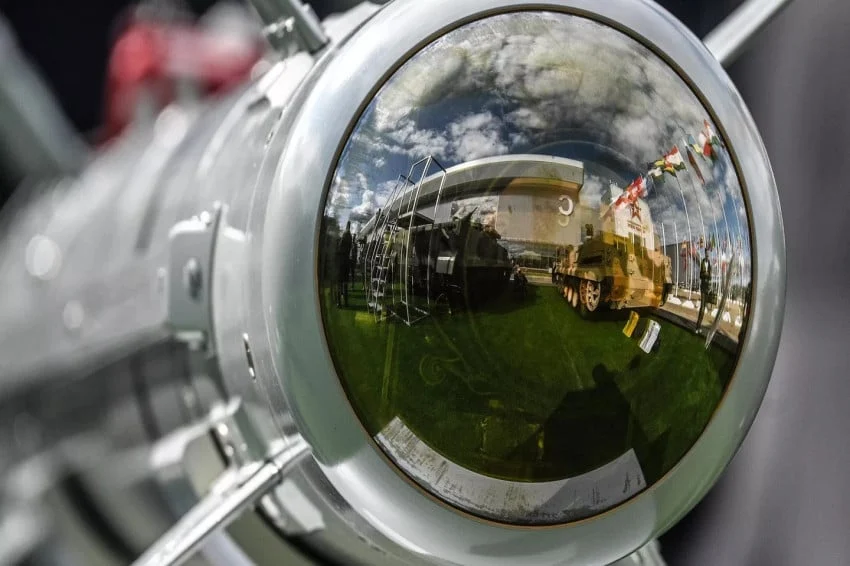
In a significant revelation that underscores the deepening military-industrial alliance between Moscow and Tehran, leaked defense industry documents have surfaced detailing the covert transfer of advanced weaponry from Russia to Iran. The documents, obtained by the Ukrainian private intelligence firm Dallas Analytics and shared with international media outlets, indicate that Moscow has finalized plans to supply 90 units of sophisticated LMUR (Light Multipurpose Guided Missile) launchers to the Islamic Republic. This development occurs against a backdrop of escalating regional tensions, with Iran facing persistent threats of military strikes from the United States and Israel.
The Scope of the Defense Agreement
The leaked documentation provides a granular look at a contract codenamed "K-10." According to production schedules drafted in May 2024 by Vympel, a prominent Russian state-affiliated entity specializing in the design of high-precision missiles and launch systems, the 90 launchers were slated for export to Iran. The production timeline outlined in the documents indicates that the deliveries were scheduled to occur in phases, beginning in late 2024 and concluding by December 2025.
The LMUR system, also known as the Izdeliye 305, represents a formidable addition to any nation’s tactical arsenal. Primarily deployed from Russian attack helicopters such as the Ka-52 Alligator and Mi-28NM, the LMUR is a high-precision, fire-and-forget weapon capable of engaging stationary and moving targets at ranges of up to 14.5 kilometers. Since the onset of the full-scale invasion of Ukraine in 2022, these missiles have been extensively utilized by Russian forces to neutralize hardened bunkers, armored vehicles, and critical infrastructure, demonstrating both operational reliability and destructive efficiency.
Chronology of Expanding Cooperation
The formalization of this deal is not an isolated incident but rather the latest milestone in a rapidly evolving strategic partnership that has gained momentum since 2022. The relationship, often characterized as a "no-limits" partnership by critics, has transitioned from diplomatic alignment to deep-seated technological and military integration.
- Early 2023: Evidence of military collaboration emerged as reports confirmed the delivery of six Yak-130 advanced jet trainers to Iran. The leaked documents corroborate this historical data, as the production schedules for the Yak-130 align perfectly with the actual delivery of these aircraft to the Iranian Air Force.
- Late 2023: Reports indicated increased frequency of high-level military delegations between Moscow and Tehran, focusing on satellite technology and advanced electronic warfare systems.
- May 2024: Vympel’s internal documents formalized the "K-10" contract, explicitly identifying the end-user as the Iranian defense apparatus.
- November 2026: The disclosure of these documents brings the clandestine procurement process into the public domain, providing evidence that Russia is actively bolstering Iran’s defensive and offensive capabilities amidst regional instability.
Strategic Implications and Tactical Utility
The acquisition of the LMUR launchers offers Iran a significant tactical upgrade. While Iran has developed a robust domestic missile program, the LMUR system fills a critical gap in precision-guided air-to-ground capabilities for its rotary-wing assets. The integration of such technology into the Iranian arsenal suggests a strategic shift toward enhancing their deterrent capability against potential incursions.
From an analytical perspective, the timing of these transfers is crucial. With the United States and Israel frequently discussing the necessity of neutralizing Iran’s nuclear program and its network of regional proxies, Tehran has sought to modernize its conventional defense architecture. The LMUR’s ability to operate in complex electromagnetic environments—a feature that has been highly refined during the Russian campaign in Ukraine—makes it an ideal asset for protecting critical Iranian facilities against surgical strikes.
Broader Impact on Regional Geopolitics
The Russia-Iran defense pact has profound implications for the global security architecture. For Moscow, the partnership is a dual-purpose strategy: it secures a reliable supply of low-cost, effective drone technology (such as the Shahed series) for use in Ukraine, while simultaneously ensuring that the United States remains preoccupied with a volatile Middle East.
Observers note that Moscow stands to gain significantly from sustained conflict in the Persian Gulf. Any escalation that threatens the transit of energy through the Strait of Hormuz inevitably triggers a spike in global oil and gas prices. As a major energy exporter, Russia benefits from these price fluctuations, which mitigate the impact of Western economic sanctions. Furthermore, by keeping the U.S. military stretched thin across two major theaters—Eastern Europe and the Middle East—Russia successfully dilutes the focus of the Western security apparatus.
Official Responses and International Skepticism
While neither the Kremlin nor the Iranian Ministry of Defense has provided a formal statement confirming the specific "K-10" contract, both nations have consistently maintained that their military cooperation is strictly defensive and compliant with international law. However, the international community has expressed deep concern.
Western intelligence agencies have previously warned that the deepening military ties between Moscow and Tehran could lead to the transfer of even more sensitive technologies, including advanced air defense systems like the S-400 or even assistance with nuclear-capable delivery vehicles. The disclosure of the LMUR transfer serves as a "canary in the coal mine," suggesting that the scope of cooperation is broader and more granular than previously estimated.
The Biden administration and officials in Jerusalem have repeatedly signaled that any move to bolster Iran’s military capabilities will be met with increased economic and diplomatic pressure. However, the leaked documents suggest that the logistical pipelines between Russia and Iran are already well-entrenched, making it increasingly difficult for external actors to disrupt these supply chains.
Fact-Based Analysis of the Current Climate
The current geopolitical climate is defined by the "Great Power Competition," where the lines between traditional allies and adversaries are being redrawn. The Russia-Iran axis represents a challenge to the established international order. The reliance on leaked internal documents to track this collaboration highlights a new era of "intelligence-led journalism," where the private sector—such as Dallas Analytics—plays an increasingly vital role in uncovering the covert realities of modern statecraft.
Furthermore, the domestic situation in Iran remains a variable of high volatility. Recent reports suggest that as the threat of conflict with the U.S. and Israel grows, a growing segment of the Iranian population has begun to vocalize support for the development of nuclear weapons as an ultimate deterrent. This shift in public sentiment, coupled with the arrival of advanced Russian hardware, creates a feedback loop of escalation.
Conclusion: A New Security Paradigm
The transfer of 90 LMUR missile launchers is a clear indicator that Moscow intends to remain a primary stakeholder in Middle Eastern security. By supplying high-precision weaponry to Tehran, Russia is not only securing its own economic interests but is also ensuring that the Islamic Republic remains a capable force-multiplier against Western interests.
As the international community grapples with the fallout from these revelations, the focus will likely shift toward surveillance of the logistical routes between Russia and Iran. Whether these launchers are already operational or still in the transit phase, their existence marks a significant elevation in the military readiness of the Iranian state. Moving forward, the effectiveness of diplomatic efforts to curb this proliferation will depend heavily on the willingness of global powers to impose costs that outweigh the strategic benefits both Moscow and Tehran derive from their clandestine alliance. The situation remains fluid, and as the regional security landscape continues to deteriorate, the presence of Russian technology in the Iranian theater will undoubtedly remain a focal point of concern for regional powers and the broader international community alike.