The landscape of Indonesia’s Islamic financial sector has officially entered a new chapter with the operational debut of PT FWD Insurance Indonesia Syariah, commonly known as FWD Syariah. In an economic environment marked by global volatility, inflation pressures, and localized employment uncertainties, the newly established entity has positioned insurance not as a discretionary luxury, but as an indispensable primary necessity. Speaking at the official launch event in Jakarta, leadership from FWD Syariah emphasized that financial protection serves as the ultimate backbone for households navigating turbulent financial times. This strategic unveiling follows a major structural transition mandated by national regulators, setting the stage for a competitive, modern approach to Islamic insurance in Southeast Asia’s largest economy.
The Strategic Transformation and Regulatory Compliance
The establishment of PT FWD Insurance Indonesia Syariah is the direct result of a corporate spin-off, wherein FWD Insurance separated its sharia business unit to form a distinct, standalone legal entity. This corporate maneuver was executed to strictly comply with regulatory mandates set forth by the Financial Services Authority of Indonesia, known locally as Otoritas Jasa Keuangan (OJK), under OJK Regulation (POJK) Number 11 of 2023.
Under the stipulations of POJK No. 11/2023, conventional insurance companies operating hybrid business models with dedicated sharia units are required to either spin off their sharia operations into independent entities or fully transfer their sharia portfolios to another Islamic insurance company by the absolute deadline of January 1, 2027. FWD Insurance proactively met these compliance thresholds ahead of schedule. The company officially secured its official business license as a life insurance provider operating strictly on sharia principles via an official OJK decree issued on August 7, 2026. This administrative milestone culminated in the grand public launch event held in Jakarta on Wednesday, November 4.
By transitioning into an independent entity, FWD Syariah gains operational autonomy, enabling more agile decision-making, tailored capital allocation, and a focused strategy designed exclusively around the nuances of Islamic finance. Industry analysts have noted that this spin-off wave is fundamentally reshaping the Indonesian insurance market, compelling institutions to strengthen their capital foundations, improve operational transparency, and scale up their digital infrastructure to compete effectively.
Redefining Insurance as a Primary Necessity in Challenging Economic Times
During the inaugural press conference, Ade Bungsu, President Director of FWD Syariah, addressed prevailing consumer mindsets regarding financial protection. In many developing markets, insurance products have historically been categorized by consumers as secondary or tertiary expenditures—purchased only after discretionary wants are fully satisfied. Ade firmly challenged this paradigm, arguing that macroeconomic unpredictability necessitates a fundamental shift in how society views risk management.
"When it comes to the need for protection, we do not look at the situation through the lens of economic normalcy. In fact, I see that in a poor or challenging economic environment, insurance becomes the primary backbone of financial stability," Ade stated during the launch event.
She elaborated that unexpected life events, ranging from sudden job displacement and health crises to macroeconomic downturns, can devastate unprepared households. Consequently, having a robust financial safety net is critical to preventing families from plunging into sudden poverty.
"Insurance should not be positioned as a tertiary or secondary need; it must be treated as a primary need. Because it serves as our ultimate protection during difficult times," she added. This philosophy underscores the company’s broader mission to drive financial literacy and inclusion, ensuring that risk mitigation tools are accessible to broader segments of the Indonesian population.
Product Differentiation and the Essence of Ta’awun
To capture market share in a rapidly expanding Islamic finance sector, FWD Syariah has adopted a product development strategy that deliberately avoids the mere replication of conventional insurance offerings. In the past, many sharia financial products faced criticism for functioning as identical mirror images of their conventional counterparts, differing only in nomenclature. FWD Syariah aims to disrupt this convention by designing solutions rooted deeply in authentic Islamic jurisprudence and socio-economic realities.
As part of its initial market rollout, the company introduced FWD Harapan, a comprehensive sharia-based life protection solution crafted to help individuals secure their financial futures, protect their dependents, and effectively plan for estate distribution and legacy building. Looking ahead, the company’s product roadmap includes specialized protection solutions tailored to cultural and religious milestones, such as provisions for the Hajj and Umrah pilgrimages, as well as Ramadan-specific financial preparations.
"We are not simply trying to mirror products that exist in the conventional space. That is one of our core strategies for penetrating the sharia market—delivering solutions that genuinely align with sharia principles and directly address what the community needs," Ade explained.
At the heart of FWD Syariah’s operational framework is the concept of ta’awun, an Islamic principle emphasizing mutual assistance, cooperation, and shared responsibility. Rather than viewing insurance purely through a commercial transaction lens, the ta’awun model fosters a community-driven safety net where participants collectively contribute to a risk-sharing pool designed to aid members facing distress.
"We want to present a fresh perspective on sharia-based protection that is modern, transparent, and easy to understand, while remaining firmly anchored in the principle of ta’awun," Ade noted.
The Societal Role of Mutual Aid and Financial Literacy
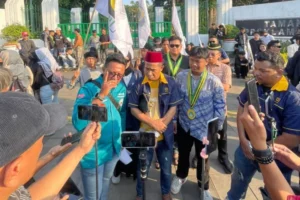
The introduction of modern, transparent sharia insurance models has also garnered attention from prominent public figures and cultural voices. Habib Husein Ja’far, a well-known Islamic content creator and public intellectual who attended the discourse surrounding the launch, emphasized that the foundational ethos of ta’awun extends far beyond individual risk mitigation. He noted that Islamic financial instruments inherently carry a strong social justice and communal care dimension.
"Sharia-based insurance, whose primary principle is ta’awun, embodies mutual cooperation and caring for one another," Habib Ja’far remarked. He pointed out that when individuals participate in a sharia insurance pool, their contributions inadvertently serve a communal good, acting as a structured form of philanthropy and social solidarity that shields community members from catastrophic financial ruin.
However, both industry leaders and commentators agree that scaling Islamic insurance penetration in Indonesia requires overcoming persistent knowledge gaps. Despite housing the largest Muslim population in the world, Indonesia’s Islamic insurance (takaful) penetration rates have historically lagged behind conventional insurance sectors. Habib Ja’far stressed that comprehensive, relatable education remains the single most critical catalyst for demystifying sharia finance and driving broader public adoption.
"Education is the absolute key to elevating public understanding regarding sharia insurance," he asserted. By breaking down complex financial jargon into transparent, culturally resonant concepts, providers can build sustainable trust among prospective policyholders.
Broader Market Implications and Future Outlook
The official launch of PT FWD Insurance Indonesia Syariah arrives at a pivotal juncture for Indonesia’s financial services sector. With the OJK enforcing strict structural separation timelines, the market is witnessing consolidation and the emergence of well-capitalized, dedicated Islamic financial institutions.
Market observers project that independent sharia insurers will experience accelerated growth over the coming years, driven by rising financial literacy, supportive government masterplans for Islamic economics, and an increasing consumer preference for ethical, transparent financial products. By anchoring its business model in the timeless cooperative principles of ta’awun while leveraging contemporary digital distribution channels and tailored product offerings like FWD Harapan, FWD Syariah aims to redefine the standard for modern Islamic protection in Indonesia.
As economic headwinds persist globally and domestically, the institutional shift toward viewing insurance as a primary household defense mechanism may well prove to be the defining trend of Indonesia’s insurance industry evolution through the remainder of the decade.