JAKARTA — The Indonesian Ministry of Housing and Residential Areas (PKP) is facing a critical bottleneck as it enters the final stretch of the 2026 fiscal year, battling low disbursement rates, severe construction delays for disaster-hit regions, and a massive gap in fulfilling national housing quotas. With barely two months remaining before the year concludes, the government’s ambitious flagship initiatives—most notably the Housing Financing Liquidity Facility (FLPP) and permanent housing projects for disaster survivors—are confronting immense pressure to accelerate physical development and budget absorption.
The overarching challenges were laid bare during a high-level year-end evaluation meeting convened by the Ministry of PKP. As revealed in official performance disclosures, the administration of President Prabowo Subianto must navigate a web of bureaucratic hurdles, contractor constraints, and complex supply chain issues if it hopes to salvage the targets set under the broader Three Million Houses Program (Program 3 Juta Rumah). While certain community-driven initiatives have performed admirably, capital-intensive infrastructure and subsidized mortgage quotas are lagging significantly behind projections.
The Staggering Gap in Subsidized Housing Disclosures
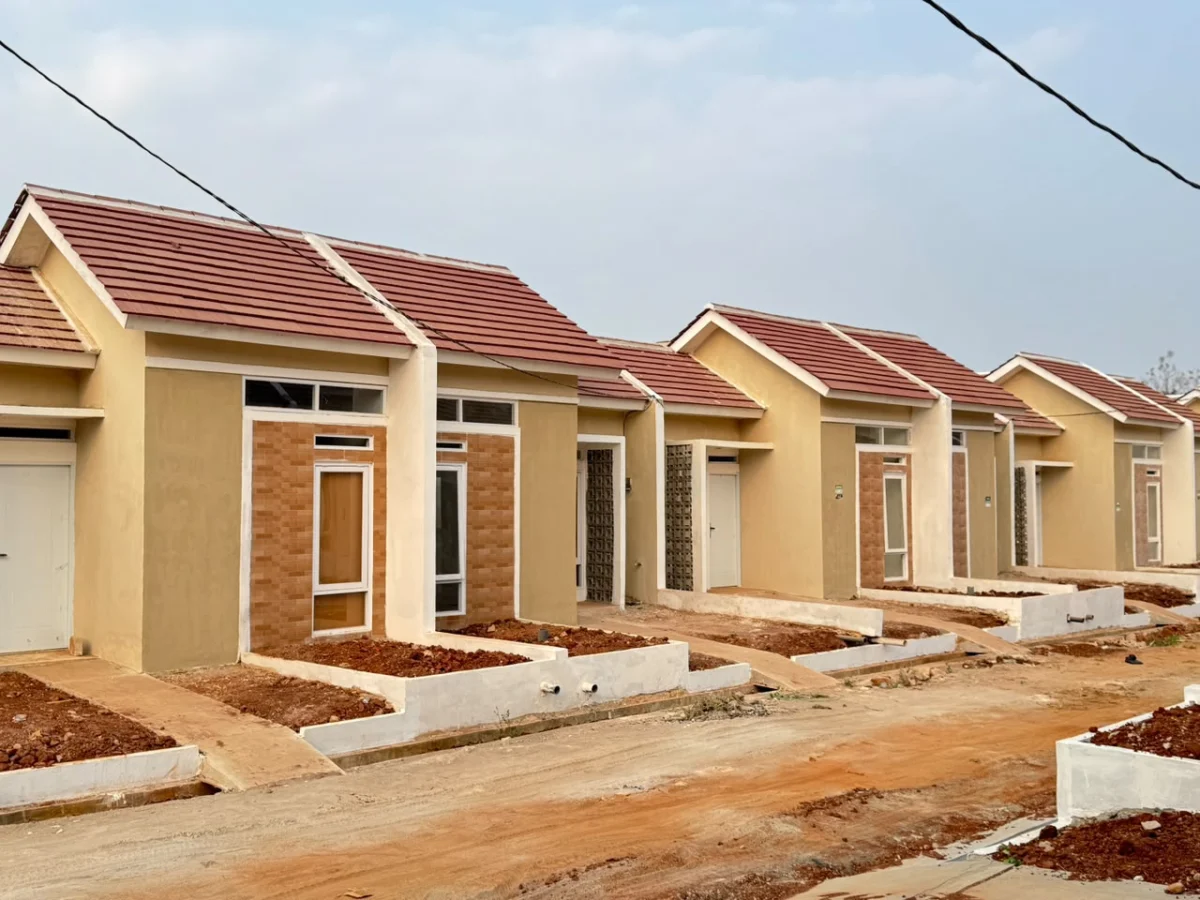
The most prominent hurdle facing the housing sector lies in the stark shortfall of the FLPP mortgage scheme. Designed to expand homeownership access for low-income communities (Masyarakat Berpenghasilan Rendah or MBR), the government established an aggressive target of distributing 350,000 subsidized housing units throughout 2026.
However, official data updated through October 31, 2026, indicates that cumulative realization has only reached 194,360 units, representing a mere 55.53 percent of the annual target. This leaves an unprecedented backlog of 155,640 units that must be verified, financed, and handed over within a compressed timeframe of just sixty days.
Sid Herdi Kusuma, Deputy Commissioner for Fund Utilization at the Housing Savings Agency for Public Employment (BP Tapera), outlined that the realized units were achieved utilizing a State Budget Expenditure Item (DIPA) allocation totaling IDR 15.5 trillion. Despite the substantial capital injection, the velocity of distribution has failed to keep pace with the systemic demand.
Housing market analysts note that bridging this 155,000-unit gap depends heavily on variables outside the direct control of state administrators. These include developers’ inventory readiness, the strict administrative vetting of eligible low-income beneficiaries, and the underwriting velocity of participating commercial and state-owned banks. Without streamlined bureaucratic clearances and synchronized cooperation between banking institutions and real estate developers, the year-end target risks a severe shortfall.
Crawling Progress in Disaster-Stricken Regions
While urban and suburban subsidized mortgages grapple with administrative friction, the humanitarian front faces even more alarming delays. The Ministry of PKP has been tasked with spearheading the construction of permanent housing units (huntap) for communities displaced by natural disasters across Aceh, North Sumatra, and West Sumatra.
The national blueprint outlines the construction of 7,952 housing units, bound by a strict contractual deadline of December 31, 2026. Yet, aggregate progress data paints a troubling picture: as of early November 2026, the combined physical construction progress of these permanent shelters limped at a meager 7.20 percent, while financial budget absorption hovered at 15.17 percent.
The projects are partitioned across 54 active contract packages, comprising 29 physical construction contracts and 25 supervisory packages. Aceh bears the largest share of the workload, slated to receive 6,220 units. Despite this high allocation, physical progress in the region has reached only 5.67 percent. On-site operations have largely remained bottlenecked in preliminary phases, constrained by extensive land-clearing requirements, foundational earthworks, and the assembly of structures utilizing the Rumah Instan Sederhana Sehat (RISHA)—an engineered modular housing technology promoted by the government for seismic zones.
Meanwhile, smaller developments in North Sumatra—comprising 919 units—have recorded a slightly better physical progress rate of 9.75 percent. Conversely, the 813 designated units in West Sumatra lag behind at 6.19 percent. With contractors racing against the clock during unpredictable wet-season weather patterns across Sumatra, the structural viability of meeting the December completion deadline remains highly uncertain.
Budget Absorption Realities at the Ministry of PKP
At the institutional level, the Ministry of PKP is executing a complex financial balancing act. Up to November 1, 2026, total expenditure realization stood at IDR 8.62 trillion. This figure represents 68.79 percent of the ministry’s expanded total ceiling of IDR 12.527 trillion, a ceiling inflated mid-year following structural budget adjustments through Additional Spending Budgets (ABT).
Didyk Choiroel, Secretary-General of the Ministry of PKP, clarified that the performance metrics require nuanced contextualization. When measured against the initial baseline budget—omitting the ABT allocations—actual expenditure reached IDR 8.2 trillion, or a much healthier 80.33 percent of the original IDR 10.3 trillion ceiling. The introduction of supplementary funds diluted the overall percentage ratio, magnifying the appearance of fiscal sluggishness.
Despite this technical variance, the ministry has established aggressive internal benchmarks for the final quarter. "The Ministry of PKP continues to push forward so that budget realization increases to 94.60 percent by early December and reaches 97.37 percent by the end of fiscal year 2026," Didyk stated during the agency’s evaluation briefing.
Beyond single-family mortgages and rural disaster housing, multi-story developments have also introduced fiscal and physical friction. Multi-Year Contracts (MYC) for constructing vertical public flats (rusun) have encountered delays. Spanning an approved budget of IDR 391.76 billion earmarked for 22 residential towers totaling 1,044 units, financial disbursement has reached IDR 295.32 billion (75.38 percent). However, aggregate physical construction lags at 48.85 percent, underlining a persistent structural divergence where financial capital flows outward faster than physical materials materialize on-site.
Bright Spots: The Resilience of Self-Help Housing Upgrades
Amid the systemic delays facing institutional construction and subsidized mortgage quotas, community-based housing interventions have emerged as the primary success story of the Ministry’s 2026 portfolio.
The Self-Help Housing Stimulant Assistance program (Bantuan Stimulan Perumahan Swadaya or BSPS)—commonly known locally as the "Bedah Rumah" (House Renovation) program—has demonstrated high execution efficiency. Fitrah Nur, Director General of Housing and Settlements, reported that the national physical progress of the BSPS initiative has achieved 83.11 percent. This equates to the successful revitalization and structural upgrade of 332,453 residential units out of the targeted 400,000 units nationwide.
Financially, the BSPS program has absorbed IDR 7.1 trillion, translating to a robust 82.24 percent financial realization rate. Geographically, regional implementation has been spearheaded by West Java, which recorded the highest provincial completion rate at 96.85 percent, successfully upgrading 48,774 out of 49,880 targeted substandard homes. Other provinces showing exemplary execution include the Special Region of Yogyakarta (96.84 percent), Bali (95.90 percent), Riau (95.64 percent), and Bengkulu (95.63 percent).
The success of the BSPS program is widely attributed to its decentralized, community-driven execution model, which bypasses large-scale contractor bottlenecks by providing direct material and cash stimulus to local labor groups. Overall, the ministry has directed 92.64 percent of its broader budget allocations toward direct physical housing interventions, retaining just 7.36 percent for administrative management overhead.
Strategic Implications and Broader Socio-Economic Impacts
The widening realization gaps in high-volume programs like the FLPP and disaster-zone housing carry significant socio-economic ramifications. Economists note that housing construction acts as a critical macroeconomic multiplier, directly stimulating dozens of downstream industries, including cement manufacturing, steel fabrication, logistics, and local artisanal labor.
Should the government fail to disburse the remaining 155,640 subsidized housing units and complete the disaster recovery shelters before the fiscal ledger closes on December 31, the implications will ripple through the broader construction ecosystem. For low-income earners, delays in the FLPP pipeline mean prolonged exposure to insecure rental markets and escalating urban property inflation. More critically, for displaced families in Aceh and Sumatra, stalled permanent housing construction prolongs reliance on temporary, often inadequate relief shelters.
In response to these compounding pressures, ministry leadership has vowed to tighten supervisory control. The Ministry of PKP has announced plans to institute rigorous weekly performance audits, intensify cross-departmental coordination, and deploy specialized field inspectors to regional implementation offices (balai pelaksana) across the archipelago.
As the calendar turns toward the final weeks of 2026, the administration’s ability to marshal bureaucratic resources, clear administrative backlogs, and accelerate on-the-ground engineering will serve as the ultimate litmus test for the viability of Indonesia’s grand national housing agenda.