For those new to the sport, the National Basketball Association (NBA) is often perceived as a separate entity entirely from the standard game of basketball. While the basic tenets remain—five players per side, four quarters, two and three-point field goals, a 24-second shot clock, and overtime periods—the NBA operates within a unique ecosystem that diverges significantly from the global standards established by the International Basketball Federation (FIBA). As the Indonesian Basketball League (IBL) continues its maturation, comparing its structural framework with that of the NBA reveals not just differences in gameplay, but profound distinctions in strategic objectives, financial management, and player development philosophies.
The Temporal Dimension: Duration and Pace of Play
The most immediate distinction between the NBA and FIBA-compliant leagues, including the IBL, is the duration of the contest. An NBA game is structured into four 12-minute quarters, totaling 48 minutes of regulation play. In contrast, leagues adhering to FIBA regulations utilize four 10-minute quarters, totaling 40 minutes. While a difference of eight minutes may appear marginal to a casual observer, it is a significant factor in professional sports.
This discrepancy influences every aspect of team management. In the NBA, the extended duration necessitates deeper rotations and superior aerobic capacity, directly impacting how coaches manage stamina and tactical substitutions. When players transition from the NBA to international competition or vice versa, the "statistical inflation" or deflation observed is often a direct byproduct of this time difference. Possession counts, cumulative points, and player efficiency ratings in the NBA are calibrated for a 48-minute cycle, rendering direct statistical comparisons with IBL figures complex and often misleading without proper adjustment.
Court Dimensions and Specialized Regulations
Beyond the clock, physical and regulatory nuances further define the NBA experience. While the standard height of the rim remains a universal 3.05 meters (10 feet), court dimensions vary. The NBA mandates a 94-by-50-foot court, and the three-point line geometry differs from the FIBA arc.
Perhaps more influential is the "defensive three-second rule" unique to the NBA. Under this regulation, a defensive player is prohibited from lingering in the "restricted area" (the paint) for more than three seconds unless they are actively guarding an opponent within arm’s reach. This rule is designed to prevent "clogging the lane," thereby encouraging a more fluid, perimeter-oriented, and high-scoring style of play. FIBA rules, by comparison, do not feature this restriction, allowing for more compact, interior-focused defensive schemes. This architectural difference is a primary reason why certain defensive specialists who thrive in international tournaments may struggle to adapt to the NBA’s defensive spacing, and why offensive players who dominate the paint internationally face greater challenges against the high-paced, space-demanding NBA environment.
The Marathon vs. The Sprint: Season Structure
The scale of the NBA regular season is an outlier in professional sports. Each of the 30 teams competes in 82 games, a logistical endeavor that spans nearly six months. For the 2026/2027 season, the schedule began on October 20, 2026, and is slated to conclude on April 11, 2027. This schedule forces teams to navigate rigorous travel demands, back-to-back game scenarios, and complex load-management strategies to ensure roster health for the postseason.
The IBL operates on a more compact but equally demanding schedule. The 2026 IBL season featured 110 games played over four months, from January 10 to May 10. Unlike the NBA’s centralized travel structure, the IBL emphasizes a home-and-away format that is critical for fostering local fanbases across the Indonesian archipelago. While the NBA functions as a high-frequency endurance test, the IBL is structured to provide consistent engagement while maintaining a sustainable operational tempo for its 11 competing clubs.
Roster Construction and Developmental Mandates
The philosophies governing roster composition represent the clearest divergence in organizational intent. The NBA allows a maximum of 15 players per roster, with 12 active on any given game night, primarily focused on competitive dominance and depth.
The IBL, however, integrates explicit developmental mandates into its regulations. Clubs are required to register a roster of local players, with a specific focus on youth development—mandating that teams carry at least two players under the age of 23 who must meet specific minimum playing time thresholds. This creates a regulatory framework where the league’s health is measured not only by ticket sales or television ratings but by the pipeline of talent provided to the national team.
Furthermore, the IBL has taken aggressive steps to prioritize domestic talent. As of October 2026, the league and club owners agreed to reduce the foreign player quota to two per team for the 2027 season. This contrasts with the NBA’s approach, where there is no limit on international players, provided they meet league entry requirements. The NBA currently benefits from a global talent pool, with 135 international players from 43 countries represented on opening-night rosters for the 2025/2026 season. The IBL’s restrictive foreign player policy is a conscious trade-off, prioritizing the long-term growth of the domestic basketball ecosystem over immediate, import-driven competitive success.
Financial Architecture: The Salary Cap Paradox
The NBA’s financial model is characterized by a sophisticated, multi-tiered salary cap system. To prevent the wealthiest franchises from monopolizing talent, the NBA employs a complex structure involving luxury taxes, the "second apron," and various salary exceptions. This creates an environment of parity, though it requires an army of specialists to navigate the legal and financial intricacies of the Collective Bargaining Agreement (CBA).
The IBL has begun to mirror this approach, albeit scaled to the reality of the Indonesian market. In 2026, the league implemented a salary cap for foreign players, setting a ceiling of 30,000 USD (approximately Rp530 million) per month. Non-compliance is met with strict punitive measures, including fines and point deductions. While the complexity of the NBA’s system remains unrivaled, the IBL’s introduction of financial guardrails signifies a shift toward sustainable professional management, ensuring that competitive equity is maintained even as the league’s economy expands.
Postseason Dynamics: Best-of-Seven vs. Best-of-Five
The climax of the NBA season is the postseason, which utilizes a rigorous best-of-seven format for every round. This format is designed to minimize the impact of "fluke" outcomes, ensuring that the team with the deeper roster, superior adjustments, and greater endurance ultimately prevails. The introduction of the "Play-In Tournament" has added a layer of intensity to the final weeks of the regular season, preventing teams from coasting into the playoffs.
The IBL, following the 2026 season, utilized a best-of-five format for its semifinals and finals. The 2026 championship served as a testament to the competitiveness of this format, as the Bogor Hornbills defeated Pelita Jaya Jakarta in a 3-2 series. This victory marked a significant milestone, as it crowned a new champion in a league that has seen five different winners in the last five years. While the NBA’s best-of-seven series is a war of attrition, the IBL’s best-of-five structure provides a high-stakes, high-impact series that emphasizes the importance of every single possession.
Implications and Future Outlook
The question of whether the NBA is "better" than other leagues is a categorical error. The NBA is a global entertainment powerhouse, a multi-billion dollar industry that operates at the pinnacle of athletic performance. Its rules, schedule, and financial structures are designed to sustain that level of mass-market, high-frequency consumption.
The IBL, conversely, is an emerging professional entity tasked with the dual challenge of commercial viability and national development. Its rules—limiting foreign players, mandating youth participation, and implementing local salary caps—are not "inferior" to NBA standards; they are essential tools for building a sustainable sport in a specific cultural and economic context.
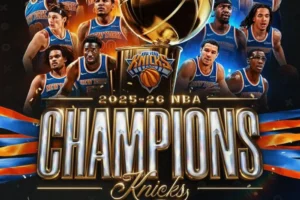
As the 2026/2027 NBA season unfolds, with established giants like the New York Knicks defending their title and rising stars continuing to shift the balance of power, the league remains the global gold standard for professional basketball. Simultaneously, as the IBL prepares for its 2027 season, it continues to prove that basketball’s growth is not a zero-sum game. By fostering local talent and implementing structured financial growth, the IBL is carving out a unique identity that serves the Indonesian market while contributing to the overall global appreciation of the sport. The divergence between these two leagues reflects the versatility of basketball—a game that can simultaneously be a global commercial spectacle and a foundation for national athletic identity.