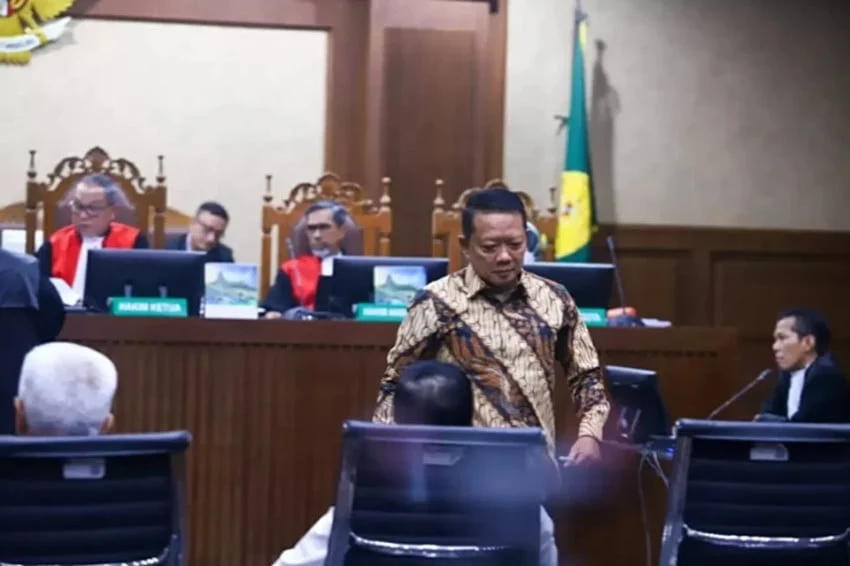
JAKARTA — The ongoing legal proceedings involving former Junior Attorney General for Special Crimes (Jampidsus) Febrie Adriansyah have brought to light complex questions regarding the intersection of corporate legal expenditures and criminal investigations. Central to the recent discourse is the necessity to establish a clear analytical boundary between standard corporate governance practices and the specific legal constructs of criminal offenses, particularly within the framework of alleged money laundering and corruption.
This debate gained significant traction following disclosures at the Jakarta Pusat Corruption Court (Tipikor), where witness testimonies and evidentiary documents revealed that PT Sinarmas Agro Resources and Technology (SMART) disbursed substantial professional fees totaling approximately IDR 3 billion to DR Law Firm. The disbursement was tied to legal representation and consultation services concerning an ongoing investigation into the Palm Oil Plantation Fund Management Agency (BPDPKS) corruption case handled by the Attorney General’s Office (AGO).
The revelation prompted intense public and legal scrutiny regarding how corporate funds flow into legal defense mechanisms during high-profile white-collar crime investigations. As legal experts, public policy analysts, and anti-corruption watchdogs dissect the implications of these financial transactions, stakeholders emphasize the importance of maintaining objectivity to ensure that legitimate commercial and legal engagements are not improperly conflated with illicit activities.
Context and Background of the BPDPKS Investigation
The legal scrutiny surrounding the BPDPKS case represents one of the most high-profile corruption inquiries undertaken by the Indonesian Attorney General’s Office in recent years. The BPDPKS, tasked with managing state funds derived from palm oil exports to support domestic biodiesel programs, smallholder replanting, and market stabilization, became the subject of sweeping investigations following allegations of systematic financial irregularities and mark-ups in procurement and export approval processes.
As the investigation widened, investigators from the Jampidsus directorate scrutinized numerous corporate entities connected to the palm oil sector. Among these entities, large conglomerates such as PT SMART faced extensive audits and inquiries regarding their compliance with export regulations and fund utilization. In response to the mounting regulatory and legal pressure, corporations frequently retain specialized legal counsel to navigate complex administrative, civil, and criminal proceedings.
The engagement of DR Law Firm by PT SMART falls into this conventional category of corporate risk management and legal defense. However, the discovery of multi-billion rupiah honorariums during the evidentiary phase of the trial introduced a new layer of complexity, drawing the attention of prosecutors who are tasked with tracing the potential laundering of proceeds through professional intermediaries.
Fact-Finding at the Tipikor Court: The Flow of Professional Fees
During the court sessions at the Jakarta Pusat Corruption Court, the exact nature of the financial transactions between PT SMART and DR Law Firm became a focal point of examination. Public policy observer Yanuar Winarko weighed in on the testimonies, emphasizing that the transaction must be analyzed strictly through the lens of commercial law and professional contracting.
According to Winarko, the factual record established during the hearings demonstrates that the transfer of funds was executed pursuant to a valid professional services agreement. He stressed that there was no evidentiary basis presented in court to suggest that the funds were transferred under duress, coercion, or as part of an extortion scheme linked to Febrie Adriansyah.
"From the testimonies delivered during the trial, there is not a single narrative indicating that the funds were handed over due to intimidation or extortion orchestrated by Febrie Adriansyah," Winarko stated. "The payment was strictly situated within the corridor of professional legal consultant fees."
This distinction is critical within Indonesian criminal law, particularly concerning the application of the Law on the Eradication of Criminal Acts of Corruption and the Law on the Prevention and Eradication of the Crime of Money Laundering (TPPU). Prosecutors pursuing a money laundering charge must prove that the assets in question constitute the proceeds of a predicate crime and that the transfer, conversion, or receipt of these funds was executed with the intent to conceal or disguise their illicit origin. When payments made to legal counsel represent legitimate, bona fide compensation for professional services rendered, establishing criminal intent becomes significantly more intricate.
Analytical Perspectives on Legal Defense and Money Laundering
The utilization of law firms by corporations under investigation has long been a subject of debate in international and domestic criminal jurisprudence. Regulatory bodies globally monitor the potential vulnerability of professional enablers—including lawyers, accountants, and corporate service providers—being unwittingly or knowingly utilized to launder illicit funds or facilitate bribery.
In this context, the Public Prosecutor’s Office (JPU) has faced both scrutiny and commendation for its strategic approach in dissecting financial trails that pass through legal entities. Observers note that scrutinizing payments made to law firms is a legitimate investigative technique designed to ensure that defense expenditures are not merely conduits for concealing kickbacks or channeling bribes back to corrupt officials.
However, legal scholars caution against overreaching interpretations that could criminalize the fundamental right to legal representation. Under Indonesian law and universal legal principles, every corporate entity or individual facing criminal allegations possesses the legal prerogative to retain competent legal counsel. The remuneration of these legal professionals, even when involving substantial sums commensurate with the complexity and scale of multi-billion-rupiah corporate investigations, remains protected under professional contracts unless clear, convincing evidence demonstrates that the fees constitute a sham designed to launder money or mask illicit payoffs.
Implications for Corporate Governance and Legal Practice
The developments in the Febrie Adriansyah trial carry profound implications for corporate governance and compliance standards across Indonesia’s major business sectors. Corporations engaged in highly regulated industries, such as agribusiness, natural resources, and finance, are re-evaluating their internal controls concerning the appointment and remuneration of external legal and advisory services.
- Enhanced Due Diligence on Professional Services: Corporations are increasingly implementing stringent compliance protocols to vet external legal consultants, ensuring that fee structures are transparent, well-documented, and directly proportional to the scope of work performed.
- Clear Separation of Commercial and Legal Spheres: Corporate boards must maintain clear demarcations between operational lobbying, public relations, and legitimate legal defense work to mitigate the risk of regulatory misunderstandings or allegations of illicit influence peddling.
- Transparency in Billing and Retainers: Law firms representing corporate clients in high-stakes corruption trials are advised to maintain meticulous records of billable hours, advisory deliverables, and formal contracts to withstand judicial scrutiny if summoned as factual or expert witnesses in subsequent proceedings.
Broader Institutional Impact on the Attorney General’s Office
The handling of the case also reflects on the institutional integrity and reform trajectories within the Attorney General’s Office. By allowing the judicial process to unfold transparently at the Tipikor Court—where financial flows, defense expenditures, and investigative strategies are openly debated—the judicial system demonstrates its capacity to adjudicate complex white-collar matters with procedural rigor.
The trial serves as a test case for how anti-corruption institutions balance aggressive prosecution of state officials with respect for due process rights and commercial realities. The ability of the prosecution to distinguish between illicit asset concealment and legitimate professional fee payments will set a critical precedent for future prosecutions involving corporate intermediaries and legal enablers in Indonesia.
Conclusion
As the judicial proceedings continue at the Jakarta Pusat Corruption Court, legal analysts and the public alike await further evidentiary disclosures. The core challenge for the judiciary remains anchoring its verdicts firmly in verifiable facts rather than circumstantial speculation.
By maintaining a clear analytical separation between standard corporate governance practices—such as retaining legal counsel for substantial fees—and actionable criminal conduct under the TPPU framework, the legal system can safeguard the integrity of corporate defense rights while simultaneously holding accountable any individuals proven to have engaged in corruption and money laundering. The discourse ignited by the Febrie Adriansyah trial ultimately underscores the ongoing maturation of Indonesia’s legal framework in addressing the intricate financial architectures of modern economic crime.