The Islamic Republic of Iran has formally declared that its domestic aerospace and defense capabilities have reached a level of maturity that allows the nation to stand on equal footing with the world’s leading military powers. This assertion, delivered by Brigadier General Hossein Mohebbi, spokesperson for the Islamic Revolutionary Guard Corps (IRGC), highlights a critical shift in the regional security architecture. According to Tehran, the country’s ability to project power and maintain sovereignty is no longer reliant on external supply chains, as the state has successfully navigated nearly 47 years of stringent economic and military embargoes to cultivate a robust, indigenous industrial-military complex.
The Evolution of Iran’s Defense Strategy
The recent briefing in Tehran, which focused on the advancements in Iran’s aerospace sector, marks a strategic milestone for the Islamic Republic. General Mohebbi described these developments as a historical achievement, noting that the sanctions regime—which has been in place since the aftermath of the 1979 Revolution—failed to achieve its intended goal of crippling Iran’s military progress. Instead, Iranian officials argue that these restrictions acted as a catalyst for "technological autarky," forcing the country to pivot away from foreign reliance toward localized research, development, and mass production.
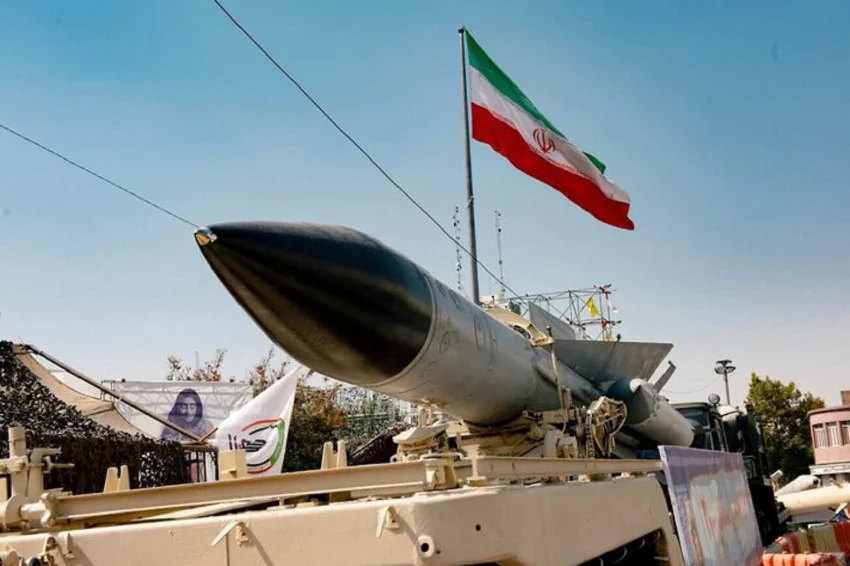
For decades, Iran has been subject to various iterations of United Nations, European Union, and United States sanctions. These measures were designed to limit the proliferation of nuclear-capable ballistic missiles and to curtail the state’s influence in regional conflicts. However, the IRGC claims that these very pressures necessitated the creation of the current Aerospace Force, which now boasts an array of domestically produced ballistic missiles, cruise missiles, and sophisticated unmanned aerial vehicles (UAVs) that have garnered international attention for their operational reach and cost-effectiveness.
A Chronology of Sanctions and Resistance
The narrative of Iranian military self-sufficiency is deeply rooted in the history of the 1979 Islamic Revolution. Following the hostage crisis at the U.S. Embassy in Tehran, the United States imposed the first major round of sanctions. This was followed by the Iran-Iraq War (1980–1988), which proved to be the crucible for Iran’s defense industry. Denied access to global weapons markets, Iran was forced to reverse-engineer existing equipment and innovate new solutions to sustain its war effort.
- 1979–1980: Initial U.S. sanctions imposed following the revolution and the embassy seizure.
- 1980–1988: The Iran-Iraq War forces a shift toward domestic manufacturing and the development of asymmetric warfare tactics.
- 1990s–2000s: Continued development of the Shahab-series ballistic missiles, often cited by Western analysts as being based on North Korean and Soviet-era designs.
- 2006: The UN Security Council passes Resolution 1737, imposing sanctions on Iran’s nuclear and missile programs.
- 2015: The Joint Comprehensive Plan of Action (JCPOA) provides temporary relief, but the subsequent 2018 U.S. withdrawal and the "maximum pressure" campaign lead to further isolation.
- 2023–2026: Iran accelerates the deployment of advanced drone technology, which has become a focal point of current geopolitical tensions.
Supporting Data: The Aerospace Shift
The IRGC’s claim of "technological superiority" is supported by a shift in their military doctrine, which emphasizes precision-guided munitions (PGMs) and a "swarm" approach to air defense. Intelligence reports from various international defense think tanks, such as the International Institute for Strategic Studies (IISS), have noted a marked improvement in the accuracy and range of Iran’s missile inventory.
The transition from importing weapon systems to manufacturing them locally is evidenced by the proliferation of the Shahed-series drones. Initially developed as reconnaissance platforms, these systems have been refined into loitering munitions that can bypass traditional radar signatures. Furthermore, the development of the "Fattah" hypersonic missile, which Iran claims can reach speeds of Mach 15 and maneuver within the atmosphere to evade interception, serves as the cornerstone of their current defensive posture. While Western military experts remain skeptical of the performance specifications provided by Tehran, the consistent investment in these technologies has fundamentally altered the security calculus for regional rivals and foreign navies operating in the Persian Gulf.
Geopolitical Implications and Regional Reactions
General Mohebbi’s remarks were not merely a technical briefing; they served as a pointed message to the United States and its regional allies. By highlighting the failure of the 47-year sanctions regime, the IRGC is signaling to the international community that the "maximum pressure" policy has reached its limit of effectiveness.
From a strategic standpoint, this creates a volatile environment. The assertion that Iranian technology can counter global "superpowers" suggests a move toward a deterrent-based policy. Tehran’s narrative is that its military strength is a guarantor of peace, while Western analysts argue that this advancement facilitates regional instability. The recent claim by an IRGC advisor that U.S. naval forces have retreated significantly from the Iranian coastline during previous confrontations serves as an attempt to project confidence and shift the regional balance of power.
However, the international reaction remains divided. The U.S. Department of Defense and its allies continue to view Iran’s advancements as a threat to regional stability, particularly regarding the security of maritime transit through the Strait of Hormuz. Several Gulf Cooperation Council (GCC) nations have expressed concerns over the proliferation of these technologies to non-state actors, which has led to increased defense spending and closer security cooperation with Western partners.
Analytical Perspective: The Cost of Autarky
While Iran’s military progress is undeniable, economic analysts point out the high domestic cost of this development. The "resistance economy" model, which prioritizes military R&D, often diverts resources from civilian infrastructure and social services. The inflation rates and currency devaluation experienced in Iran over the last decade are, in part, attributed to the immense capital allocation required to maintain a sophisticated military-industrial complex under the pressure of international isolation.
Furthermore, the technological leap claimed by the IRGC relies heavily on the integration of dual-use technologies. While Iran has mastered the production of airframes and basic guidance systems, the reliance on illicit procurement networks for high-end microchips and semiconductors remains a significant vulnerability. Whether Iran can sustain this level of growth as global technology standards advance—particularly in the fields of artificial intelligence and cyber-warfare—remains a subject of intense debate among security analysts.
Conclusion: The Future of Deterrence
The declaration from the IRGC reflects a broader shift in the global order, where middle powers are increasingly capable of developing localized technological solutions to counter the influence of dominant military nations. As Iran looks to the future, the focus is expected to shift toward integrating AI-driven autonomous systems into its defense architecture.
The next phase of this geopolitical dynamic will likely be defined by a "shadow war" of technology and intelligence. While Tehran celebrates its ability to withstand four decades of sanctions, the international community continues to monitor these developments with caution. Whether or not Iran’s aerospace sector can truly compete with the world’s leading military superpowers is a question that will ultimately be decided by the evolving nature of global warfare, where the lines between economic endurance and military capability continue to blur. For now, the message from Tehran is clear: the era of isolation has not weakened their resolve; it has, in their view, forged a more capable and self-reliant military machine.