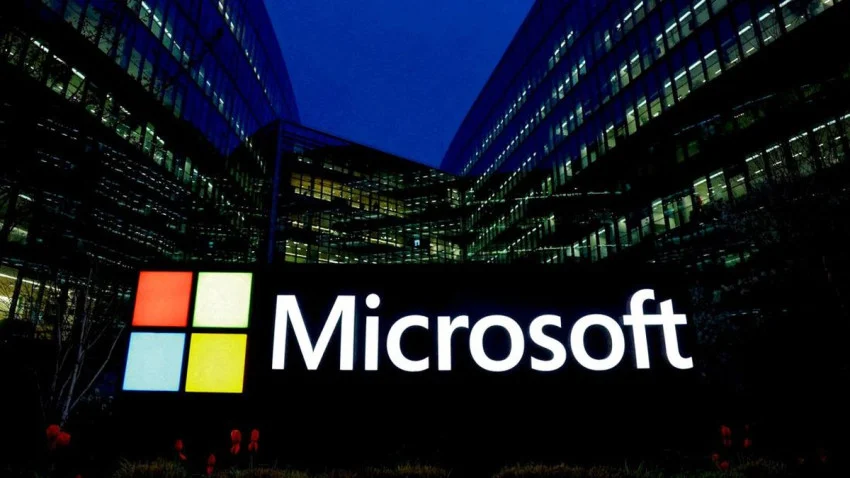
The global technology landscape is undergoing a significant structural transformation as Microsoft, one of the world’s most valuable companies, has officially initiated a voluntary separation scheme (VSS) targeting approximately 60,000 employees. This strategic workforce reduction represents nearly 25 percent of the company’s total global headcount, signaling a profound shift in corporate priorities. As the tech giant pivots its massive financial resources toward the rapidly evolving sector of generative artificial intelligence (AI), the decision reflects a broader industry trend of trimming operational costs to fund high-stakes innovation in machine learning and cloud-based AI infrastructure.
The Scope of the Voluntary Separation Scheme
The VSS program is specifically designed to target eligible employees across several key global hubs, including the United States, Canada, India, and the United Kingdom. According to internal documentation and statements issued via the company’s corporate communications channels, the offer is directed at staff members holding positions up to the level of vice president, specifically those within grade levels 70 and below.
By implementing this program, Microsoft aims to streamline its organizational hierarchy and reduce overhead in business units that are not central to its immediate AI-centric roadmap. The move is not a broad-based layoff in the traditional sense, but rather a voluntary exit path that provides departing employees with severance packages in exchange for their resignation. While the company has not publicly disclosed the exact financial terms of these packages, such programs typically include extended healthcare benefits, career transition services, and lump-sum payments based on tenure.
Affected Business Units and Exclusions
The restructuring initiative is not uniform across the company’s vast portfolio. Reports indicate that the program impacts several high-profile divisions, including the AI Experience team, the Copilot development unit, finance, human resources, the Xbox gaming division, and the Windows + Devices group. These departments, which have historically been the backbone of Microsoft’s software and hardware success, are now being evaluated for leaner operation models.
However, Microsoft has explicitly carved out exemptions for critical operational sectors. Personnel involved in data center operations, commercial business sales, global marketing, and cybersecurity units remain largely unaffected. This distinction highlights the company’s strategic imperative: while it seeks to optimize its internal software and administrative processes, it refuses to compromise on the physical infrastructure required to power its Azure cloud services or the security architecture that protects its enterprise clients.
Chronology of Microsoft’s AI Pivot
To understand the current workforce reduction, one must look at the timeline of Microsoft’s aggressive push into artificial intelligence. Since the launch of OpenAI’s ChatGPT in late 2022, Microsoft has moved with unprecedented speed to integrate large language models (LLMs) into its product suite.
- January 2023: Microsoft announced a multi-billion dollar investment in OpenAI, signaling its intent to become the primary backer and infrastructure provider for the company behind ChatGPT.
- February 2023: The company unveiled the "new Bing," featuring integrated AI capabilities, marking the start of a massive product overhaul.
- Throughout 2023: Microsoft systematically integrated Copilot into Microsoft 365, GitHub, and its security software, forcing a massive reallocation of engineering talent and capital.
- Early 2024: The company reported record-breaking capital expenditures, largely driven by the acquisition of high-end NVIDIA H100 GPUs and the construction of massive data centers required to train and run AI models.
- Late 2024: The announcement of the VSS program serves as the latest milestone in this transition, as the company seeks to align its operational budget with the sustained high costs of AI-driven research and development.
Financial Implications and Market Context
The financial pressure on Microsoft is significant. While the company remains highly profitable, the cost of AI is astronomical. Training a frontier AI model now requires billions of dollars in hardware, energy, and electricity. Furthermore, the "inferencing" costs—the daily cost of running AI services for millions of users—are orders of magnitude higher than those of traditional software applications.
For shareholders, the VSS is a signal of fiscal discipline. By reducing the headcount in mature, slower-growth segments of the business, Microsoft can improve its operating margins, which are essential for maintaining the massive capital expenditure (CapEx) budgets required to compete with Google, Amazon, and Meta. Analysts suggest that the move could save the company billions in annual compensation expenses, effectively self-funding a portion of its AI-related growth.
Labor Market and Industry Reactions
The news of the VSS has sent ripples through the tech industry, prompting discussions about the future of employment in an era of automation. Economists point out that this move is indicative of a "structural shift" rather than a cyclical downturn. As AI tools become more efficient at coding, drafting reports, and performing administrative tasks, the need for human labor in specific corporate functions is diminishing.
"We are witnessing a decoupling of revenue growth from headcount growth," said a lead analyst at a prominent financial firm. "Historically, tech companies hired in direct proportion to their expansion. Today, thanks to AI, companies can scale their digital operations without scaling their human workforce."
While the voluntary nature of the program offers a softer landing than mass involuntary layoffs, it nonetheless highlights the vulnerability of middle management and administrative staff in the face of rapid technological disruption. Employee advocacy groups have raised concerns about the long-term impact on company culture, noting that constant restructuring can lead to "change fatigue" and diminished morale among those who remain.
Broader Economic Implications
Beyond the internal dynamics at Microsoft, this development serves as a litmus test for the wider technology sector. If a company as robust as Microsoft finds it necessary to shed nearly 25 percent of its workforce to chase the AI dream, other organizations are likely to follow suit. This trend suggests a potential contraction in high-paying tech sector jobs over the next several years, even as the AI industry itself creates new, highly specialized roles in machine learning engineering, data science, and AI ethics.
However, the transition is fraught with challenges. The loss of institutional knowledge from long-tenured employees who choose to take the voluntary separation packages could, in the long run, impact the company’s ability to maintain legacy software. Balancing the urgency of innovation with the stability of core operations remains the central challenge for Microsoft’s executive leadership.
Official Stance and Future Outlook
In its formal communication regarding the program, Microsoft spokespeople emphasized that the company remains committed to supporting employees through this transition. The emphasis on "voluntary" participation is intended to mitigate the trauma associated with typical layoffs and allows the company to maintain a positive employer brand while fundamentally reshaping its organizational structure.
As Microsoft enters the next fiscal cycle, the focus will shift to how effectively the company can monetize its AI investments. The success of the Copilot suite and the broader Azure AI platform will be the primary metrics by which the company’s current strategic pivot is judged. If these products generate sufficient revenue to offset the massive costs of development and the loss of human capital, the VSS will be viewed as a masterstroke of corporate efficiency. If not, the company may face scrutiny over whether it sacrificed too much of its human expertise in a premature pursuit of an unproven AI future.
For now, the industry watches closely. The transformation occurring at Microsoft is not merely a change in personnel; it is a fundamental reconfiguration of what it means to be a modern technology enterprise. As the dust settles on this voluntary separation scheme, the tech landscape will be left with a leaner, faster, and more automated version of one of its most dominant players. The long-term impact on the labor market, the culture of the tech industry, and the trajectory of artificial intelligence will continue to unfold as this massive transition progresses throughout the coming fiscal year.