PT Bank Tabungan Negara (Persero) Tbk (BTN) has officially accelerated its comprehensive business transformation strategy, shifting its long-term positioning to become the ultimate financial partner for Indonesian families. While anchoring its core identity deeply within the national housing ecosystem, the state-owned mortgage giant is actively expanding its financial services spectrum, scaling up residential financing, and aggressively fast-tracking digital innovation. This strategic pivot is meticulously designed to reinforce BTN’s indispensable role in spearheading national housing initiatives, bridging financial inclusion gaps, and addressing the evolving lifestyle and wealth management needs of modern households across the archipelago.
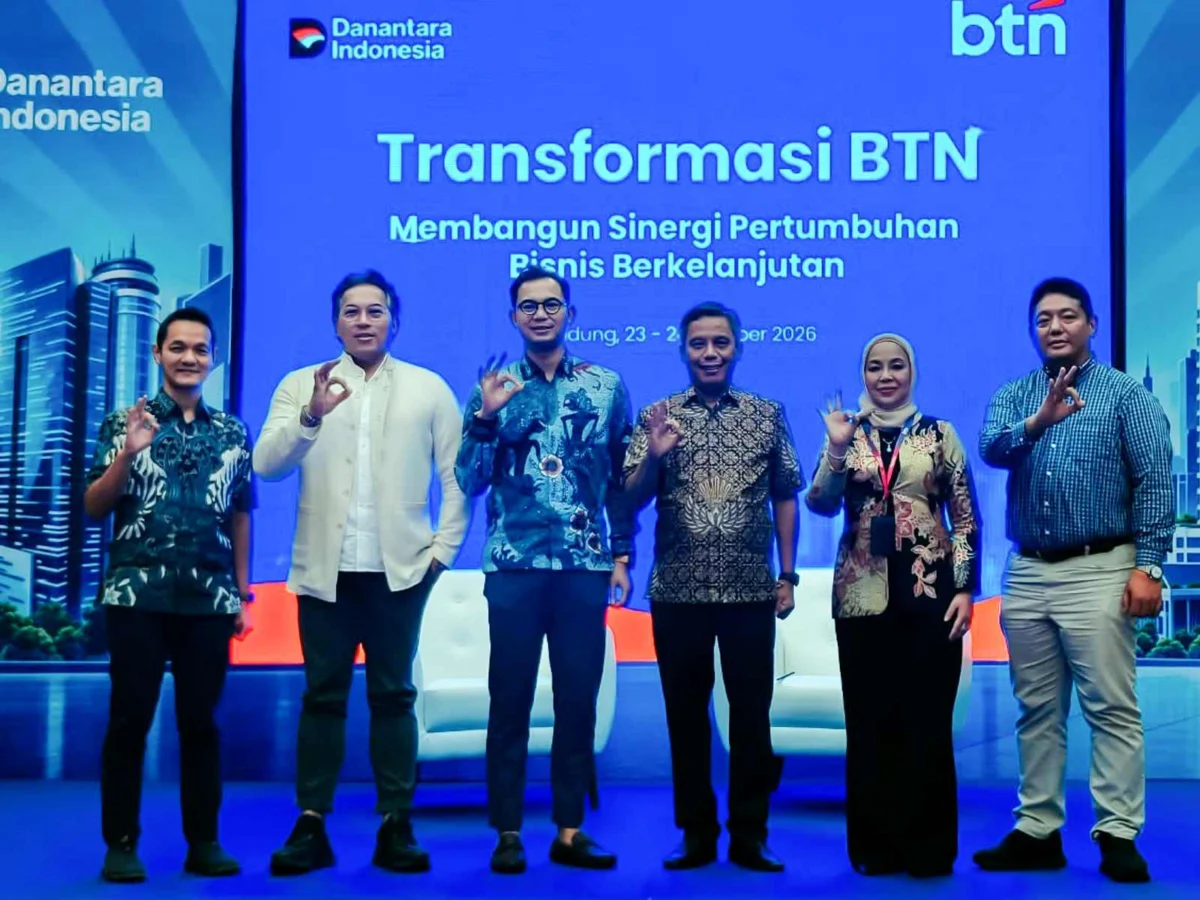
The announcement was spotlighted during a high-level Focus Group Discussion (FGD) themed Transformasi BTN, Membangun Sinergi Pertumbuhan Bisnis Berkelanjutan held in Bandung, West Java. Speaking before industry stakeholders, financial analysts, and media representatives, BTN President Director Nixon L.P. Napitupulu elaborated on the institution’s multidimensional growth trajectory. He emphasized that while BTN remains fundamentally committed to its identity as a premier mortgage bank, contemporary market demands necessitate a broader scope of financial solutions that cater to customers across every stage of their life cycles.
A 76-Year Legacy Rooted in National Housing Mandate
For over seven decades—spanning an impressive 76 years of continuous public service—BTN has remained steadfastly at the forefront of expanding equitable housing access throughout Indonesia. The bank’s historical mandate has primarily focused on empowering low-income communities (Masyarakat Berpenghasilan Rendah or MBR) through subsidized Home Ownership Loans, widely known as Kredit Pemilikan Rumah (KPR) Subsidi.
The scale of BTN’s footprint in the national housing sector is underscored by robust macroeconomic data. By September 2026, the cumulative volume of mortgage financing channeled by the institution reached an astounding Rp552 trillion. Furthermore, market penetration metrics reflect undisputed dominance: BTN captured a commanding 39 percent market share in the broader residential financing sector as of June 2026, while its stronghold in the subsidized KPR segment reached a staggering 69 percent by September 2026.
A cornerstone of this subsidized housing distribution relies on the government-backed Housing Financing Liquidity Facility (FLPP) scheme. To ensure that these economic lifelines reach deep into the informal labor market—segments traditionally overlooked by conventional banking due to irregular income streams—BTN has forged strategic alliances with a diverse array of community groups, labor unions, and professional organizations.
Between January and September 2026 alone, housing allocation programs executed in collaboration with various government ministries and state agencies successfully delivered 35,808 residential units. These targeted initiatives successfully accommodated educators, healthcare professionals, media practitioners, industrial laborers, employees of the National Population and Family Planning Board (BKKBN), members of the Indonesian National Police (Polri), and underserved populations residing in remote regions such as Maluku Province.
Dual-Engine Financing: Strengthening Supply and Demand Dynamics
Beyond traditional homeownership lending, BTN has significantly scaled up its Housing Program Credit (Kredit Program Perumahan or KPP) framework. This advanced mechanism operates on a dual-engine approach, simultaneously optimizing supply-side financing and demand-side capital accessibility to stimulate the entire property ecosystem.
On the supply side, BTN collaborates with an extensive network of over 8,000 trusted property developer partners. Crucially, the bank’s capital injection extends far beyond major developers, opening vital financing channels for downstream and upstream operators, including independent contractors, building material suppliers, logistics distributors, and local hardware stores. By integrating these entities into the financing pipeline, BTN delivers critical working capital to Micro, Small, and Medium Enterprises (MSMEs) embedded within the housing supply chain.
Conversely, the demand-side strategy focuses on identifying and empowering prospective high-potential debtors. This target demographic encompasses independent entrepreneurs, active merchants utilizing BTN’s merchant acquisition networks, and retail clients demonstrating impeccable credit histories.
Official financial disclosures as of October 20, 2026, reveal that BTN’s realized KPP ceiling reached an impressive Rp6.16 trillion, with total disbursements distributed across 9,236 qualified debtors. A breakdown of this allocation indicates that Rp4.02 trillion was funneled into supply-side infrastructure and developer support, while Rp2.14 trillion directly facilitated demand-side acquisitions. This holistic economic approach ensures that financial liquidity simultaneously reaches those who build homes and those who purchase them.
Rigorous Risk Management and Asset Quality Resilience
BTN’s aggressive expansion into diverse financial ecosystems is balanced by a decade-long methodical internal restructuring. Over the past ten years, the management team has systematically optimized corporate governance, reinforced credit underwriting standards, accelerated operational digitization, and fortified risk management frameworks.
Maintaining pristine asset quality remains a top operational priority for the state-owned lender. As of June 2026, BTN’s consolidated Non-Performing Loan (NPL) ratio was successfully maintained at a healthy 3.0 percent. This achievement is attributed to the strict enforcement of prudential banking principles, rigorous credit monitoring systems, and proactive portfolio restructuring. Moving forward, executive leadership has reiterated its commitment to maintaining a delicate, sustainable equilibrium between aggressive business growth, robust net profitability, and comprehensive risk mitigation.
Digital Innovation and Operational Efficiency
In tandem with its physical financing expansion, BTN has rapidly matured its digital banking infrastructure, deploying modern platforms designed to seamlessly integrate financial transactions with everyday lifestyle requirements.
Since its official public launch in February 2025, BTN’s proprietary super-app digital ecosystem has witnessed exponential growth in both user acquisition and gross transaction volume. By June 2026, the active user base surged to approximately 4.3 million accounts—representing an impressive 62.4 percent year-on-year (YoY) expansion. Concurrently, total transaction value climbed by 55.5 percent YoY, expanding from Rp43 trillion in June 2025 to Rp67 trillion by June 2026.
The platform transcends traditional banking utility by offering a comprehensive suite of digital services, including instant utility bill settlements, bespoke financing solutions, travel booking integrations, ticketing services, promotional vouchers, and specialized property-related e-commerce features.
Operationally, BTN has modernized its core banking systems by incorporating advanced Artificial Intelligence (AI) and Optical Character Recognition (OCR) technologies. These technological deployments have fundamentally transformed branch-level workflows, eliminating operational redundancies and drastically cutting down administrative friction.
A prime manifestation of this digital overhaul is the optimization of consumer credit processing times. BTN has established an ambitious target to reduce the turnaround time (TAT) for mortgage approvals to just five days. This acceleration is achieved through end-to-end process automation and automated document verification protocols, which effectively minimize application resubmissions caused by missing or incomplete client paperwork.
Pioneering Low-Emission Housing and ESG Integration
As part of its long-term strategic vision, BTN has deeply embedded Environmental, Social, and Governance (ESG) criteria into its core business practices, particularly within the residential property sector.
A flagship environmental initiative championed by the bank is the Low-Emission Housing Program. Capitalizing on partnerships with forward-thinking developers, BTN successfully financed the construction of approximately 18,000 low-emission residential units by June 2026. Demonstrating serious environmental accountability, the institution has established an ambitious roadmap targeting the cumulative development of 200,000 low-emission homes nationwide by 2030.
Complementing its green housing initiatives, BTN oversees comprehensive community-based waste management programs within supported residential townships. Furthermore, the bank runs specialized entrepreneurial incubation programs designed to nurture green housing startups, engaging university students, local communities, property developers, and independent green businesses.
Cultivating Global Human Capital and Future-Ready Competencies
Recognizing that sustainable corporate transformation ultimately hinges on human capital excellence, BTN has overhauled its talent acquisition and workforce development architectures. The institution has established a strategic benchmark to recruit and integrate more than 100 top-tier graduates from prestigious global universities by 2027, injecting international perspectives and advanced technological competencies into the organizational culture.
Simultaneously, internal training programs have been intensified to elevate the digital literacy and professional proficiencies of existing personnel, preparing the workforce for rapid disruptions in the global financial services landscape. Strict adherence to good corporate governance (GCG) underpins all human resource and business operations, ensuring long-term institutional resilience.
Through these concerted strategic initiatives—spanning inclusive mortgage expansion, supply-chain financing integration, digital ecosystem scaling, ESG commitment, and global-standard talent acquisition—BTN continues to redefine its historical identity. By successfully bridging its social mandate with modern commercial agility, BTN cements its status as a robust financial institution capable of fulfilling the diverse financial aspirations of every Indonesian family for generations to come.