The new capital city of Indonesia, Nusantara (IKN), is steadily redefining modern urban planning by anchoring its foundational design on human-centric principles aimed at maximizing residents’ overall quality of life. Unlike conventional metropolises such as Jakarta, which historically evolved around the dominance of private vehicles and high-rise commercial structures, Nusantara has been conceptualized from its inception to cater directly to the everyday needs, well-being, and mobility of its inhabitants. This paradigm shift was prominently highlighted on the international stage by Rusmin Lawin, Vice Chairman of International Relations at the Indonesian Real Estate Association (REI) and President of the International Real Estate Federation (FIABCI) Asia-Pacific Regional.

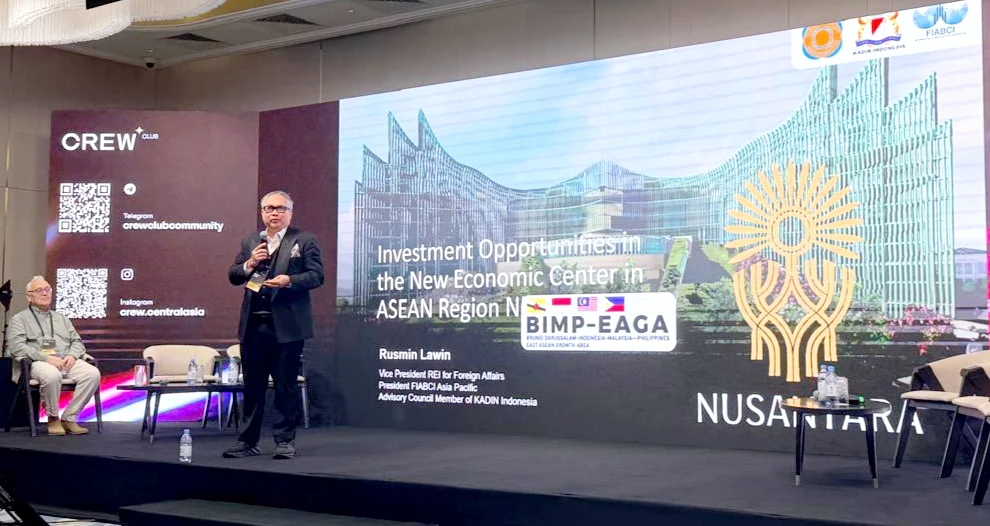
Delivering a comprehensive presentation titled "Investment Opportunity in the New Economic Center in the ASEAN Region" at the prestigious CREW ASIA 2026 property forum in Kazakhstan on Friday, October 23, Lawin detailed how Nusantara breaks away from traditional urban development models. He emphasized that the success of a modern, forward-thinking city is no longer evaluated merely by the architectural grandeur of its physical structures or skyscrapers. Instead, true urban achievement is measured by the efficiency of public mobility, seamless accessibility, and the proximity of essential services to the general population.
According to Lawin, the development blueprint of Nusantara aligns seamlessly with the global benchmarks of a "Human-Centered City 2040." The city’s core philosophy dictates that success is determined not by how high buildings rise, but by how short a distance residents must travel to reach public parks, educational institutions, healthcare facilities, and vital economic opportunities. This progressive philosophy stems directly from the eight core principles established for Nusantara, out of which four primary pillars deliberately place human beings at the very center of urban construction, governance, and long-term sustainability.

The 10-Minute City Concept and Sustainable Mobility
The first foundational pillar of Nusantara’s human-centric design is the implementation of the "10-Minute City" concept. In his address at CREW ASIA 2026, Lawin explained that the city’s master plan is meticulously engineered to ensure that roughly 80 percent of a resident’s daily necessities—ranging from schools and medical centers to neighborhood markets and professional workspaces—can be reached within a ten-minute timeframe. Crucially, this accessibility relies entirely on active mobility, such as walking and cycling, or efficient public transportation networks.
Unlike sprawling urban centers choked by traffic congestion, the core precinct of Nusantara is designed to be free from the traditional dominance of private combustion-engine vehicles. Instead, the transportation framework relies heavily on zero-emission electric vehicles (EVs) and autonomous public transit fleets. This intentional reduction in vehicular pollution not only drastically cuts carbon emissions but also creates a safer, quieter, and more pedestrian-friendly environment that encourages active lifestyles and fosters community interaction among residents from diverse backgrounds.

Economic Inclusivity and Local Empowerment
The second pillar focuses on broad-based economic opportunities and inclusivity for all segments of society. Urban planners and policymakers have anchored Nusantara’s development in Law Number 3 of 2022 concerning the State Capital, which explicitly mandates fair and equitable economic distribution across the region rather than concentrating wealth exclusively among corporate conglomerates or incoming elites.
A critical component of this inclusivity is the deliberate prioritization of local communities, particularly indigenous and long-term residents residing in the North Penajam Paser regency and surrounding areas of East Kalimantan. To prevent local populations from being marginalized by rapid modernization and escalating property values, the government and real estate stakeholders have rolled out comprehensive vocational training programs, entrepreneurship workshops, and secure land tenure rights. Lawin emphasized that protecting the economic interests of original inhabitants is vital to ensure that the historical population grows alongside the new capital rather than being displaced by it.

Integration of Forest City and Sponge City Frameworks
The third pillar addresses environmental resilience and mental well-being through the dual concepts of the "Forest City" and the "Sponge City." Urban planners have designated approximately 75 percent of the total designated IKN area as dedicated green open spaces and protected natural zones. This ambitious ecological strategy combines large-scale tropical rainforest restoration initiatives with modern green architecture.
The presence of vast urban forests is scientifically proven to reduce psychological stress, promote mental health, and dramatically improve overall air quality for the city’s workforce and families. Concurrently, the integrated "Sponge City" water management system utilizes permeable surfaces, bioretention basins, and advanced water recycling infrastructure to absorb, store, and purify rainwater. This innovative hydrological network effectively prevents urban flooding during heavy tropical downpours while simultaneously mitigating the urban heat island effect, naturally cooling local microclimates by two to three degrees Celsius compared to conventional concrete-heavy cities.

People-Centric Smart City and Digital Equity
The fourth and final pillar centers on the deployment of a "People-Centric Smart City" infrastructure. Lawin pointed out that the incorporation of cutting-edge technology in Nusantara is not pursued simply for the sake of modernizing infrastructure or creating a futuristic aesthetic. Rather, digital innovation serves primarily as a practical instrument designed to elevate human capacity, bridge social divides, and improve the daily lives of everyday citizens.
The strategic implementation of smart technology in the new capital focuses on four critical sub-pillars: digital equity, ensuring that high-speed internet and technological resources are accessible to all demographic groups; physical and digital accessibility, tailoring interfaces and public spaces to accommodate the elderly and individuals with disabilities; robust cybersecurity and data protection, safeguarding citizen privacy; and proactive digital literacy capacity building, ensuring that all residents can effectively participate in the digital economy.

Broader Implications for Regional Real Estate and Investment
The articulation of Nusantara’s human-centric model on an international platform such as CREW ASIA 2026 underscores Indonesia’s strategic effort to attract high-value, sustainable foreign direct investment (FDI). By prioritizing environmental sustainability, social equity, and technological integration, Nusantara positions itself as a competitive alternative to traditional regional hubs in Southeast Asia.
Real estate analysts note that global institutional investors are increasingly incorporating environmental, social, and governance (ESG) criteria into their capital allocation decisions. Nusantara’s adherence to rigorous green building codes, low-carbon transit systems, and inclusive community development makes it an attractive sandbox for global developers seeking to pioneer the future of urban living. As construction phases progress toward establishing Nusantara as a fully functioning economic center, the successful execution of these four human-centric pillars will ultimately serve as a litmus test for sustainable mega-city development in the 21st century.